

Quick Answer
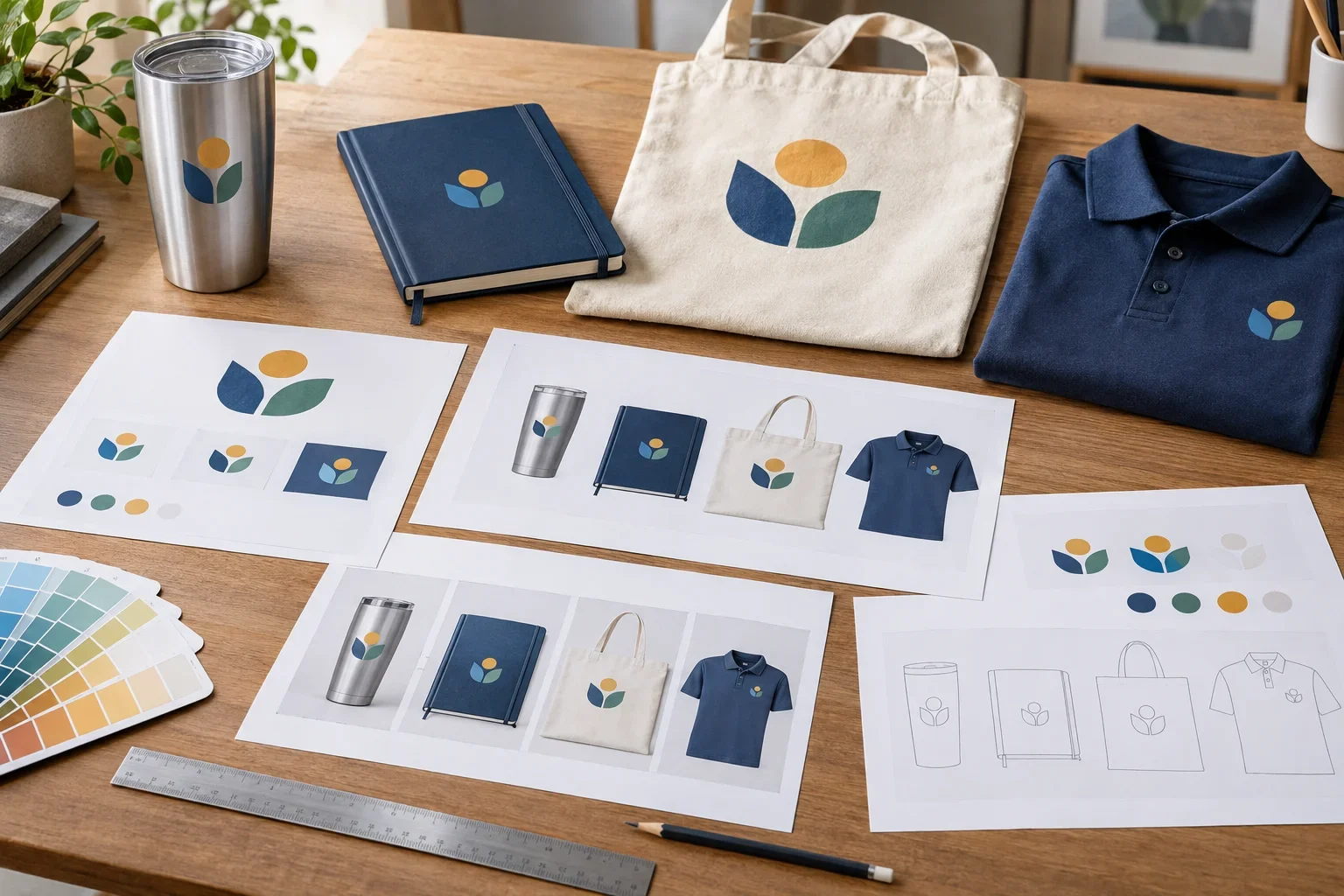
A print proof, also called an artwork proof or digital proof, is a preview of how your logo or design is intended to appear on a promotional product. It allows you to review important details such as artwork, size, placement, spelling, imprint colors, and decoration specifications before production. Most promotional product proofs are digital documents rather than physical samples. Once the proof is approved, the order can move forward according to the supplier's production process.
Imagine ordering 500 custom tumblers for an upcoming company event.
You choose the tumbler, upload your logo, select the imprint color, and place your order. Everything looks good.
Then you receive an email with an artwork proof attached.
At first glance, it looks like a picture of your tumbler with your logo on it. You might wonder why you need to approve something you've already selected.
But the proof serves an important purpose. It is your opportunity to catch mistakes and confirm the production details before your order is manufactured.
Maybe the logo is smaller than you expected. Maybe the artwork includes an old company tagline. Maybe the imprint is positioned differently than you imagined.
Those are exactly the kinds of things a proof is designed to help catch.
What Does an Artwork Proof Show?
An artwork proof shows how your design is intended to be applied to the selected product.
Depending on the supplier and decoration method, it may include a product image, a representation of your logo, imprint dimensions, artwork placement, color specifications, and other production information.
Some proofs are relatively simple, showing the logo positioned on a product image. Others include more detailed technical information about the decoration process.
Not every supplier uses the same proof format, but the purpose is generally the same: to communicate the intended artwork and decoration details before production begins.
What You'll Typically Find on an Artwork Proof
The details vary by product, but these are some of the most important things a proof may show.
Your Logo
The artwork version intended to be reproduced on the product.
Imprint Placement
Where the logo will appear, such as the front, back, left chest, or another available location.
Imprint Size
The intended physical dimensions of the logo or design.
Imprint Colors
The selected ink colors, Pantone references, thread colors, or other applicable color specifications.
Decoration Method
The production method, such as screen printing, embroidery, engraving, or full color printing, when included.
Product Details
Product identification, selected color, or other information relevant to the artwork approval.
The proof is meant to give you enough information to confirm that the decoration is being prepared correctly.
However, it is important to understand that a digital proof is not necessarily an exact photograph or physical representation of the finished product.
What Is the Difference Between a Digital Proof and a Physical Sample?
This is one of the most common points of confusion when ordering promotional products.
A digital proof and a physical pre-production sample are not the same thing.
Digital Proof vs. Physical Sample
Both can help with approval, but they provide different kinds of information.
Digital Artwork Proof
- A digital representation of the intended decoration
- Usually delivered by email or electronically
- Shows artwork, placement, and available specifications
- Useful for checking spelling, layout, and imprint size
- Does not physically demonstrate the final printing result
Physical Pre-Production Sample
- An actual decorated product produced for review
- Allows examination of physical materials and decoration
- May help evaluate color, texture, and workmanship
- May require additional cost and production time
- Availability depends on the product and supplier
Most promotional product orders use digital proofs because they are practical and allow artwork details to be reviewed before production.
Physical pre-production samples may be available for certain products, particularly when additional verification is needed. However, they are not automatically included with every order.
A digital proof is a preview, not a finished sample
Think of the proof as the plan for how your product will be decorated. It helps confirm the instructions before production, but it does not show every detail of how ink, thread, engraving, or other decoration will appear on the actual material.
What Should You Check Before Approving a Print Proof?
This is the most important part of the proofing process.
When you receive an artwork proof, don't just glance at it to see whether your logo looks familiar. Take a moment to check the details.
Here are the things worth reviewing carefully.
1. Make Sure It's the Correct Logo
Companies often have several versions of their logo.
You may have a full color version, one-color version, horizontal layout, stacked layout, or an older logo that is no longer used.
Make sure the proof shows the correct version.
Pay attention to small details such as taglines, registered trademark symbols, website addresses, and other elements that may have changed.
2. Check Every Word and Number
Spelling mistakes are among the most frustrating problems to discover after production.
Even if you supplied the artwork yourself, check every word on the proof.
Look carefully at:
- Company names and slogans
- Website addresses
- Phone numbers
- Email addresses
- Event names and dates
- Employee names and job titles
- Any additional custom wording
It's especially easy to overlook a mistake when you're familiar with the wording and your brain automatically reads what you expect to see.
3. Check the Logo Placement
Make sure your logo is positioned where you intended.
For example, if you ordered embroidered polos, is the logo on the correct side of the chest?
If you're ordering tumblers, is the artwork positioned on the correct side or location?
If you're ordering tote bags, is the imprint centered and located where you expected it?
Remember that some products offer multiple imprint locations, and each location may have different size limitations.
4. Review the Imprint Size
Check the physical dimensions of the logo when they are listed on the proof.
A logo that appears large on a digital product image may actually be relatively small when measured in inches.
Likewise, a logo that appears modest on your computer screen may be appropriately sized for the actual product.
For this reason, the stated imprint dimensions are more useful than judging size entirely from the image on your monitor.
If the dimensions are not clear, ask for clarification before approving the proof.
For more information, read how large can my logo print?
5. Confirm the Imprint Colors
If your logo uses specific brand colors, make sure the correct specifications are listed.
This may include Pantone numbers, standard ink colors, or thread color references, depending on the product and decoration method.
Keep in mind that the colors displayed on your computer screen may not perfectly represent the final printed colors.
If color matching is particularly important, focus on the specified color references and available production options rather than relying entirely on the screen image.
6. Confirm the Product and Decoration Details
Check that the proof corresponds to the product and decoration you intended to order.
If the proof lists a product color, decoration method, imprint location, or other relevant specification, make sure it matches your expectations.
For orders involving multiple products or artwork variations, check that each proof corresponds to the correct item.
Before you click approve
Ask yourself: Is this the correct logo? Is every word spelled correctly? Is the placement right? Is the imprint size what I expected? Are the color and decoration specifications correct? If something looks wrong or is unclear, request clarification or a revision before approving the proof.
What a Print Proof Does Not Guarantee
Artwork proofs are extremely useful, but they have limitations.
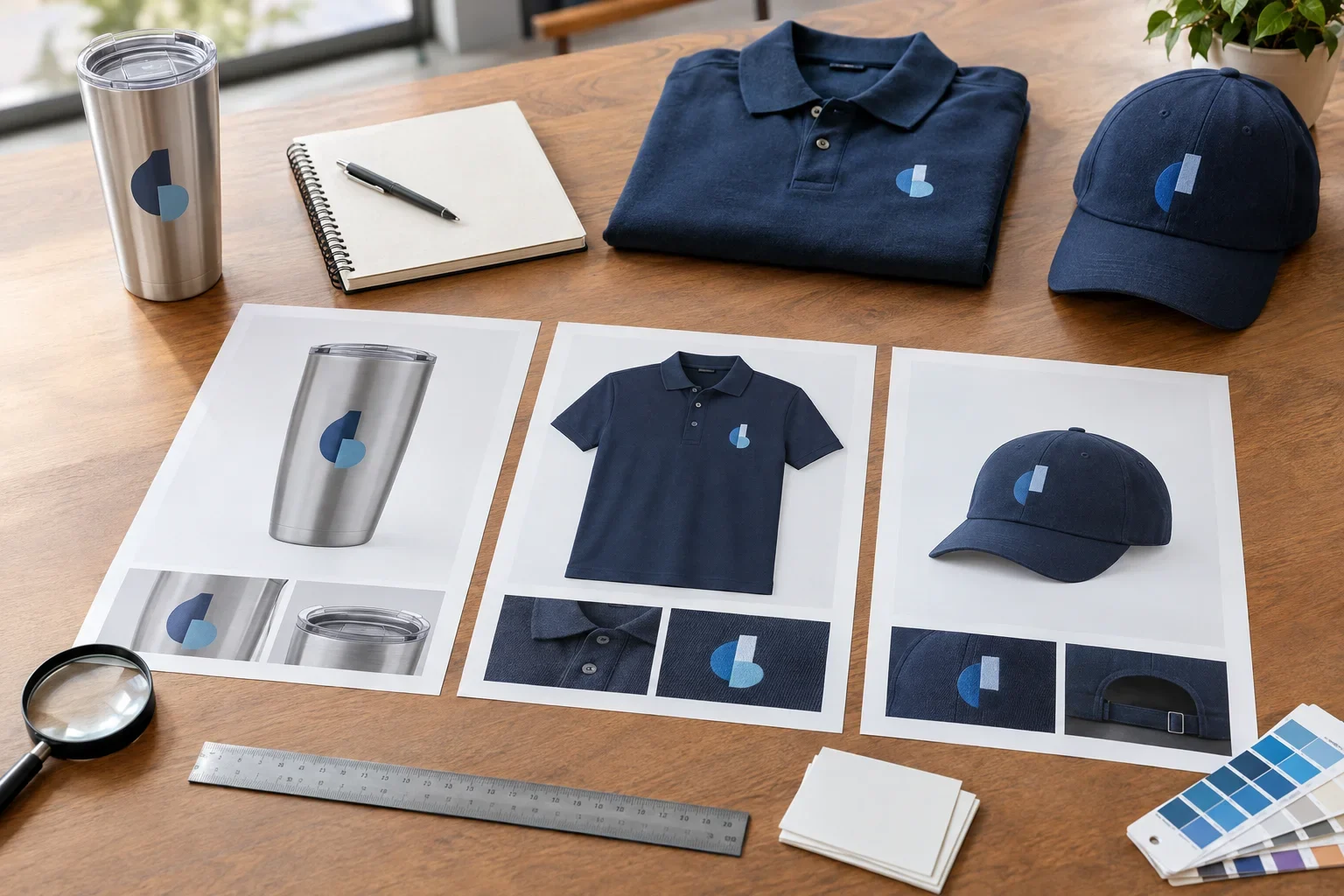
A digital proof communicates the intended decoration. It does not always show exactly how every physical material, ink, thread, or printing process will behave.
Understanding these limitations can help prevent unrealistic expectations.
What a Digital Proof Can and Cannot Show
Use your proof to approve the artwork and specifications, while understanding the limitations of a digital preview.
What It Helps Confirm
- Correct artwork and logo version
- Spelling and other written information
- Intended imprint location
- Listed imprint dimensions
- Specified imprint colors
- General design layout
What It May Not Show Exactly
- Final physical ink colors
- Thread texture or embroidery details
- How engraving interacts with a coating
- Subtle material and surface variations
- Every manufacturing tolerance
- The exact appearance under different lighting
For example, a digital proof may show a clean white logo on a dark tumbler. The actual appearance of the finished imprint can depend on the selected decoration method and product coating.
Similarly, an embroidered logo may look smooth in a digital preview, but the final design will be made from physical stitches with their own texture and limitations.
This doesn't make proofs unreliable. It simply means they should be understood as artwork approval documents rather than exact physical reproductions.
Does a Print Proof Show Exact Colors?
Not necessarily.
Most digital proofs are viewed on computers, tablets, or phones. These devices display colors using light, and their appearance can vary depending on the screen and its settings.
The final product may be decorated using ink, embroidery thread, engraving, or another method that reproduces color differently.
For this reason, a digital proof should not automatically be considered an exact color match to the finished product.
If your company uses specific Pantone colors, check that the appropriate references are included in the artwork specifications when applicable.
Some products may offer custom color matching or physical sample options, while others are limited to standard imprint colors or available full color printing processes.
For more information, read what are Pantone colors? and why do colors look different on products?
Is the Logo on My Proof Shown at Actual Size?
Not always.
A product mockup displayed on your computer may be enlarged or reduced to fit the document or screen.
That means a logo that looks enormous in a digital preview might only measure a few inches on the actual product.
The opposite can also happen. A small-looking logo on a product image may be appropriately sized when reproduced at its intended physical dimensions.
Whenever possible, use the stated imprint measurements rather than estimating dimensions from the visual mockup alone.
Check the measurements, not just the picture
If your proof shows an imprint size of 2 inches wide, that is a more useful reference than how large the logo appears on your laptop screen. If you are unsure about the intended dimensions, ask before approving.
What Happens If I Find a Mistake on My Proof?
If something looks incorrect, request a revision before approving the artwork.
For example, you might notice that the logo is too small, an outdated tagline is included, or the imprint is positioned differently than expected.
Explain what needs to change as clearly as possible.
If you want the logo larger, specify that. If the website address is incorrect, provide the exact corrected address. If you want a different approved logo version, send that artwork or identify the correct file.
Depending on the change, the artwork may need to be adjusted and another proof issued for review.
It is much easier to address an issue before production than after hundreds of items have already been decorated.
Can I Request Changes After Approving a Proof?
Possibly, but approval can be an important production milestone.
Once a proof has been approved, the supplier may begin preparing screens, embroidery files, engraving setups, transfers, or other production materials.
Depending on the production status, changes may cause delays, additional costs, or may no longer be possible.
This is why it is important to review the proof carefully before providing final approval.
Approval is an important step
Once you approve artwork, production may proceed based on the approved specifications. Changes requested afterward are subject to the supplier's production status and policies. Make sure the artwork and details are correct before authorizing production.
What Happens After I Approve My Artwork Proof?
Once the required artwork and order approvals are complete, the order can move into the appropriate production process.
The exact steps vary by supplier, product, and decoration method.
From Artwork to Production
A simplified look at how artwork approval fits into the promotional product ordering process.
For screen printing, the supplier may prepare screens or other printing materials. For embroidery, the artwork may be converted into an embroidery-ready stitch file. For engraving, the design may be prepared for the available engraving equipment.
The timing of these steps varies, but the approval process helps establish what artwork and specifications should be used.
Does Approving a Proof Mean My Order Has Already Been Printed?
No. Artwork approval and completed production are different things.
Approving a proof generally authorizes the supplier to proceed with the approved decoration details, subject to the order's other requirements and production process.
It does not mean the products have already been printed, embroidered, engraved, or shipped.
Production schedules depend on the supplier, product, quantity, decoration method, and other order details.
Why Does My Logo Look Different on the Proof?
Sometimes your artwork may appear slightly different from the file you uploaded.
There are several possible reasons for this.
The Artwork Was Prepared for Printing
Some logos require adjustments before they can be reproduced using the selected decoration method.
For example, a detailed full color logo may need a simplified one-color version for engraving or certain screen printing applications.
Any material changes to the design should be reviewed before approval.
The Product Has a Limited Imprint Area
Your logo may have been resized to fit the available decoration space.
If the design includes small text or detailed graphics, those elements may become less readable when reduced.
The Decoration Method Has Limitations
Embroidery, engraving, screen printing, transfers, and digital printing all reproduce artwork differently.
Gradients, shadows, thin lines, and very small details may need special consideration.
The Proof Uses a Simplified Product Image
Some digital proofs use illustrations, templates, or virtual product mockups rather than photographs of the exact finished item.
These are useful for showing placement, but they may not perfectly represent the finished appearance.
If your logo looks unexpectedly different, don't approve the proof until you understand why.
For more information about preparing artwork, read why artwork quality matters.
What If My Logo Looks Blurry on the Proof?
A blurry logo deserves a closer look before approval.
Sometimes the issue is simply the quality of the image used in the digital preview. In other situations, the original artwork itself may be too low resolution for the intended decoration.
Those are different problems, and they should not be treated the same way.
If the original artwork is poor quality, approving a proof does not automatically make the file suitable for production.
If you notice fuzzy lettering, jagged edges, or other visible problems, ask whether the actual production artwork is suitable for the selected method.
For more information, read why does my logo look blurry?
Common Print Proof Mistakes to Avoid
Many proof-related problems happen because customers focus on the overall appearance without reviewing the smaller details.
Here are some common mistakes worth avoiding:
- Approving a proof without checking every word and number.
- Assuming the logo on the proof is shown at actual physical size.
- Overlooking an outdated logo, tagline, or website address.
- Failing to check the selected imprint location.
- Assuming the colors displayed on a computer screen will match the finished product exactly.
- Not reviewing the listed imprint dimensions.
- Approving a simplified logo without confirming the changes are acceptable.
- Assuming a digital proof guarantees the exact appearance of embroidery, engraving, or other physical decoration.
- Waiting until after approval to request changes.
- Assuming a proof automatically corrects problems with low-resolution artwork.
For additional advice, read common artwork mistakes.
Print Proof Approval Checklist
Before you approve your next promotional product proof, take a moment to review these details.
Your Final Proof Checklist
A few minutes of careful review can help prevent avoidable mistakes on your finished products.
- Correct logo: Is the right version of your logo being used?
- Spelling: Are all names, slogans, websites, dates, and phone numbers correct?
- Placement: Is the artwork positioned in the intended location?
- Imprint size: Are the listed dimensions what you expected?
- Logo proportions: Does the artwork look natural and undistorted?
- Imprint colors: Are the appropriate ink or thread color specifications listed?
- Product details: Does the proof correspond to the correct product and color?
- Decoration method: Is the selected method consistent with your order?
- Small details: Are important fine lines and lettering appropriate for the imprint?
- Final approval: Are you comfortable authorizing production based on the information shown?
If anything is unclear, ask for clarification before approving the artwork.
For more general preparation advice, visit our artwork checklist before ordering.
Frequently Asked Questions About Print Proofs
Is an artwork proof the same as a printing sample?
No. An artwork proof is usually a digital preview of the intended decoration. A physical sample is an actual product produced for review. Physical samples may not be available for every product and can involve additional cost or time.
Do I have to approve my artwork before production?
Artwork approval is an important part of the ordering process at Purple Pie Promos. Your artwork and applicable order details are reviewed and approved before the order is authorized to move into production.
Can I ask for a larger logo after seeing the proof?
Yes, you can request a size adjustment before approval. Whether the logo can be enlarged depends on the available imprint area, decoration method, and artwork.
Can I change the imprint color on my proof?
You can request a color change before approval, but the available options depend on the product, supplier, and decoration method. Some changes may affect pricing or other production requirements.
What if the proof shows the wrong logo?
Do not approve it. Request a correction and provide the appropriate artwork if needed.
What if I notice a mistake after approving?
Contact Purple Pie Promos as soon as possible. Changes may still be possible depending on production status, but they cannot be guaranteed once the artwork has been approved and production preparations have begun.
Does a digital proof guarantee exact color matching?
No. A digital proof helps confirm artwork and stated color specifications, but screens do not reproduce physical ink, thread, or material colors exactly. Color matching capabilities depend on the product and decoration method.
Can I request a physical sample instead?
You can ask whether a physical pre-production sample is available. Options, costs, minimum quantities, and production timing vary by product and supplier.
The Bottom Line
A print proof is one of the most important checkpoints in the promotional product ordering process.
It allows you to review your logo, imprint placement, size, spelling, colors, and other available decoration specifications before production.
Most proofs are digital previews rather than physical samples, so they should not be treated as exact representations of every finished material or printing characteristic.
The best approach is simple: review the proof carefully, ask questions when something is unclear, and request corrections before approving the artwork.
Check twice, print once
Your artwork proof is your opportunity to catch mistakes before they become part of your finished promotional products.
At Purple Pie Promos, we review artwork and decoration details before production. If something on your proof doesn't look right, we'll help address it before you approve the order.

Have questions about your artwork proof?
Purple Pie Promos can help review your logo, imprint placement, size, colors, and available decoration options before production. If you're unsure about something on your proof, we're here to help you understand the details before approving your order.
Ask an Artwork Question