

Quick Answer
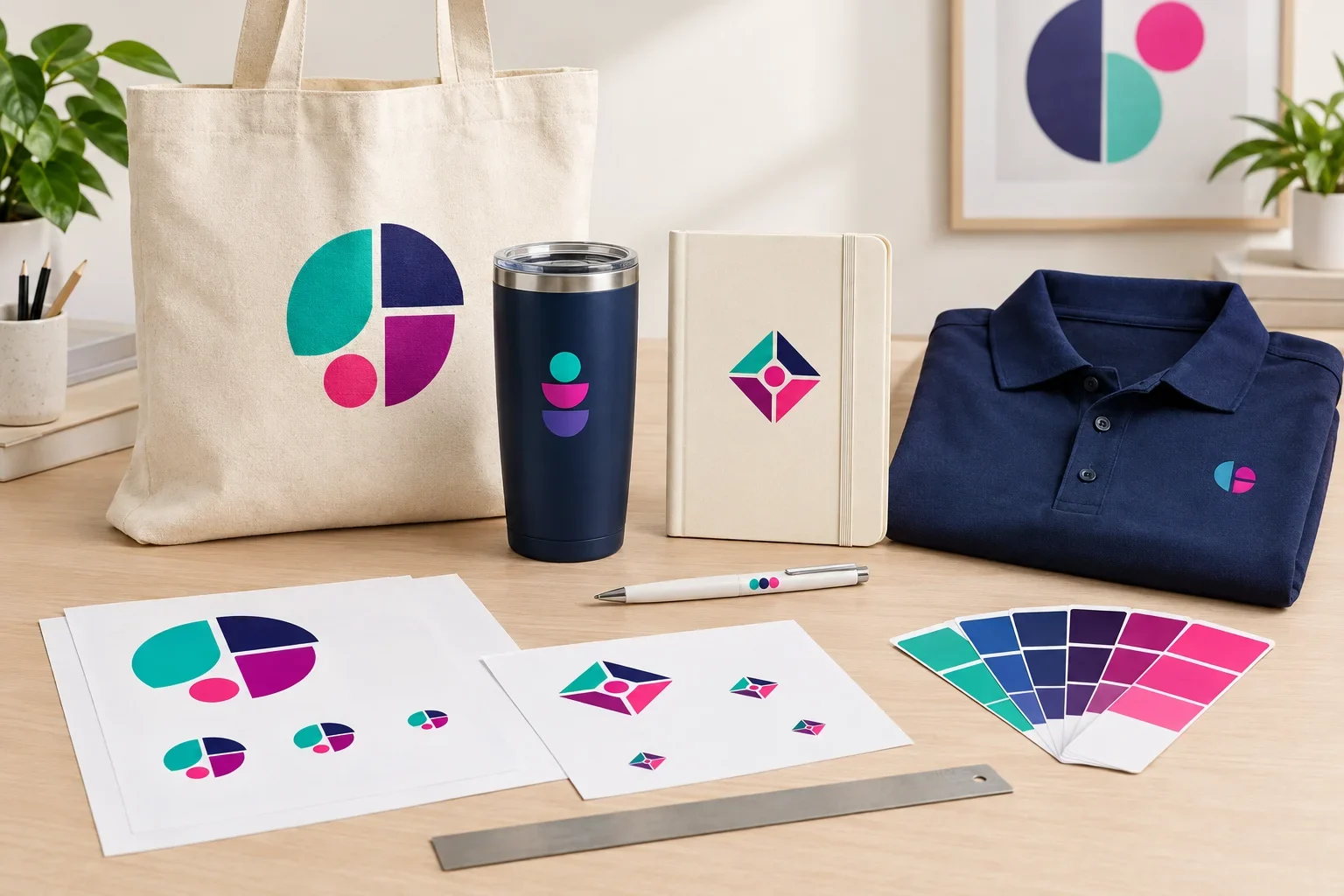
The maximum size of your printed logo depends on the product's available imprint area and decoration method. A tote bag may allow a relatively large logo, while a pen or small tech accessory may have room for only a compact design. The maximum imprint area is not always the ideal logo size. Your artwork's proportions, small details, placement, and the product's shape all affect how large the logo should actually be.
You've found the perfect promotional product. Maybe it's a beautiful stainless steel tumbler, a soft hoodie, or a tote bag that your customers will actually want to use.
Now comes the logo.
You want it large enough to be noticed, but not so large that it looks awkward. You might also wonder why the product page shows a seemingly generous imprint area, yet your logo appears smaller on the artwork proof.
There is a reason for that.
Promotional product decoration involves more than simply stretching a logo across whatever space is available. Every product has physical limitations, and the shape of the artwork matters just as much as the dimensions of the imprint area.
Let's look at how imprint sizes work, why they vary, and how to get the best-looking logo on the products you order.
What Is an Imprint Area?
An imprint area is the designated space on a promotional product where artwork can be applied using a particular decoration method.
This area is determined by factors such as the product's shape, material, surface, available printing equipment, and decoration process.
For example, a stainless steel tumbler may have a relatively large visible surface, but that does not mean the entire surface can be printed.
The printing equipment may only accommodate a certain area. The tumbler's curved shape may also limit how close the imprint can extend toward the top, bottom, or sides.
Similarly, a tote bag may have a large front panel, but the printable area may need to stay away from seams, handles, pockets, or other construction features.
Imprint area vs. product size
The physical size of a promotional product is not the same as its available imprint area. A large product can have a relatively small decoration area, depending on its design and the available printing method.
How Are Imprint Areas Measured?
Imprint areas are commonly listed using width and height measurements.
For example, a product might show an imprint area measuring 3 inches wide by 2 inches high.
That describes the maximum available dimensions for the specified imprint location and decoration method. It does not mean every logo will automatically be printed at exactly those dimensions.
Consider three different logo shapes within that same hypothetical 3-inch by 2-inch imprint area.
One Imprint Area, Different Logo Shapes
Example only: imagine a product with a maximum imprint area of 3 inches wide by 2 inches high.
Wide Horizontal Logo
A long company name might use most of the available width but only a portion of the height. The logo could be approximately 3 inches wide without being 2 inches tall.
Square Logo
A square design might use the full available height while leaving extra space along the sides. Its proportions determine how it fits.
Tall Vertical Logo
A vertically arranged logo may use most of the available height but much less of the available width.
In each case, the logo's original proportions determine how it fits inside the available space.
Trying to force every design to fill both dimensions would stretch or distort the artwork.
Maximum Imprint Size vs. Recommended Logo Size
Here's an important distinction that often gets overlooked.
The largest possible imprint is not necessarily the best-looking imprint.
A logo that fills every available inch may look crowded or overpower the product. In other cases, using most of the available area might create exactly the bold appearance you want.
The right size depends on the product, artwork, audience, and intended look.
Maximum Size Is Not Always the Best Size
The goal is an attractive, readable logo that fits the product naturally.
Using Every Available Inch
- Can create a bold, highly visible design
- May make a small product look crowded
- Can place artwork close to physical printing limits
- May not suit premium or understated products
- Still depends on the logo's proportions
Choosing a Balanced Logo Size
- Allows the design to fit the product naturally
- Preserves appropriate visual spacing
- Can improve the overall appearance
- Works well for subtle or premium branding
- Keeps the focus on readability and proportion
For example, an oversized logo might be perfect for a promotional tote bag being handed out at a trade show.
That same approach may not look as attractive on a premium metal pen or executive notebook.
Sometimes a smaller, well-positioned logo makes a stronger impression than a larger one.
Why Different Promotional Products Have Different Imprint Sizes
One of the most interesting things about promotional product decoration is how much the available imprint area can vary.
Two products that appear similar in size may offer very different decoration options.
Pens and Small Writing Instruments
Pens usually have narrow imprint areas because the barrel is small and curved.
Depending on the pen design, the imprint may also need to avoid clips, grips, buttons, or other features.
Simple logos, company names, short websites, and uncomplicated graphics often work best.
If your logo includes several lines of tiny text, a pen may not provide enough space to reproduce everything clearly.
Stainless Steel Tumblers and Water Bottles
Drinkware often provides more room than pens, but the available imprint area depends on the shape of the item and the selected decoration method.
A straight-sided tumbler may offer different printing possibilities than a tapered bottle or cup with a handle.
Some drinkware supports larger prints or wraparound decoration, while other products offer only a designated front imprint area.
Tote Bags and Backpacks
Tote bags often provide generous front-panel imprint areas, making them useful for larger logos, event graphics, and bold promotional designs.
However, the available area may be limited by seams, straps, pockets, zippers, and the placement of the printing equipment.
Backpacks and more structured bags can have even more limitations because their panels may be smaller, padded, curved, or interrupted by construction details.
T-Shirts, Polos, and Hoodies
Apparel imprint sizes depend heavily on the decoration location and method.
A full front screen print on a t-shirt may allow a much larger design than a left chest embroidered logo.
Hoodies may have front pockets, zippers, or seams that affect placement. Hats have curved surfaces and comparatively limited decoration areas.
The garment style and available decoration locations determine what is possible.
Notebooks and Journals
Notebooks can offer attractive spaces for branding, but the imprint area depends on the cover material, construction, and decoration method.
A flat hardcover notebook may support a relatively generous printed area, while a notebook with an elastic closure, textured cover, or specialty finish may have more limited options.
Debossing, screen printing, full color printing, and other available methods may also have different size restrictions on the same notebook.
Why Your Logo's Shape Matters
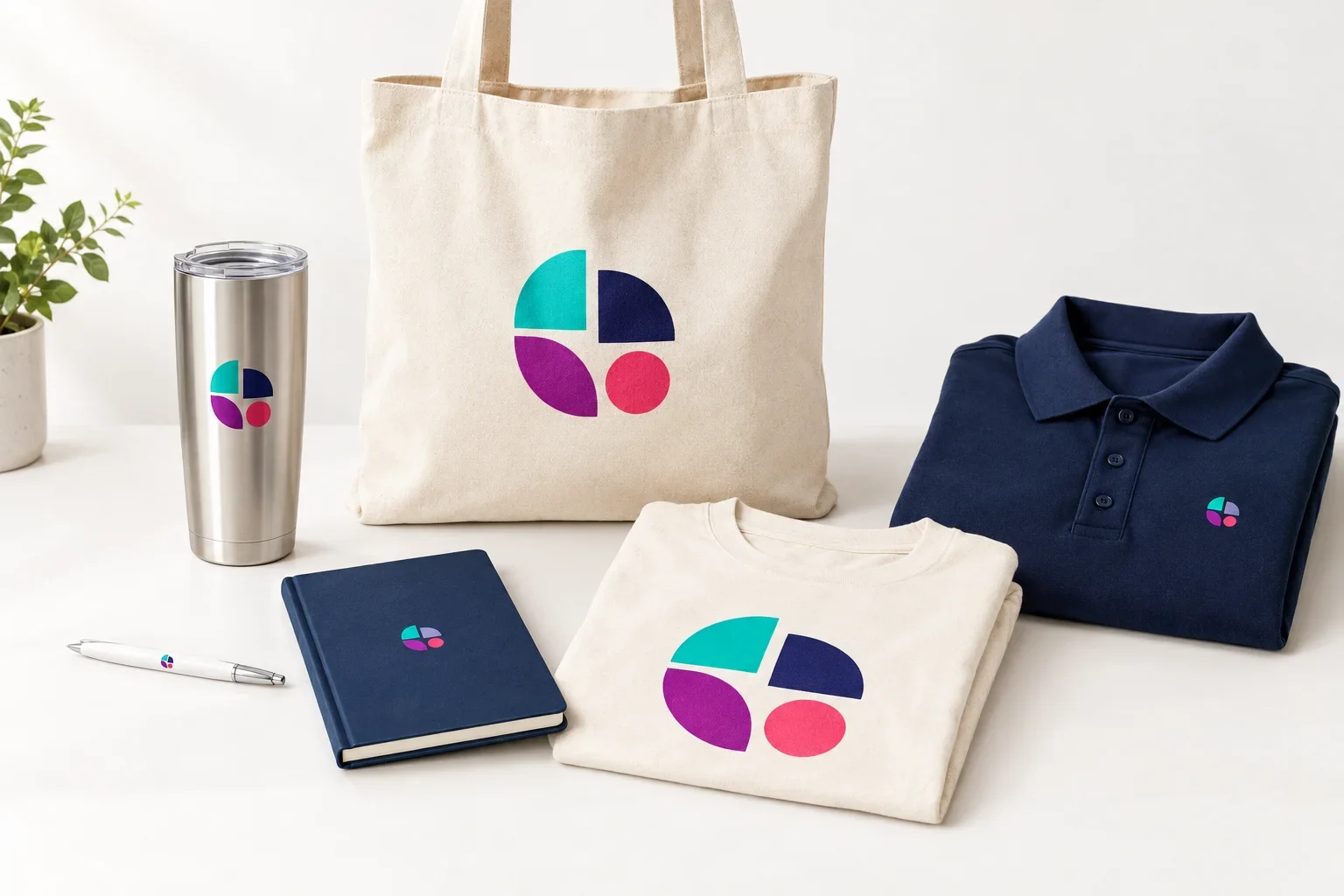
Not all logos are shaped the same way.
Some businesses have long horizontal logos. Others use square designs, stacked lettering, circular emblems, or tall vertical marks.
These differences can dramatically affect how large a logo appears when it is fitted into an imprint area.
Horizontal Logos
Horizontal logos often work well on wide imprint areas such as pen barrels, rectangular notebooks, tote bags, and certain drinkware locations.
However, they may appear relatively small when placed inside a square or narrow vertical imprint area.
Square and Circular Logos
Square and circular logos can fit naturally into compact imprint areas.
They are often useful for products where width and height are relatively balanced.
However, if the product has a long narrow imprint area, a square logo may not take advantage of the available width.
Stacked Logos
A stacked logo places different elements of the design above or below one another.
This can be helpful when a horizontal logo does not fit well on a narrow product or decoration area.
For example, a company might have a wide primary logo and an approved stacked version for smaller products.
Icon-Only Logos
Some companies have recognizable symbols or icons that can be used without the full company name.
An approved icon-only version may be a good choice for products with very limited imprint areas, particularly when the complete logo contains small lettering.
One logo does not have to fit every product
If your company has approved horizontal, stacked, simplified, or icon-only logo versions, different products may benefit from different layouts. The goal is to use an appropriate version of your brand, not to squeeze the same design into every available space.
Why Can't I Just Stretch My Logo to Fill the Imprint Area?
Stretching a logo changes its original proportions.
For example, a circular logo may become oval. Letters may become unusually wide or tall. The spacing between elements may look unnatural.
Even if the stretched logo technically fits the imprint area, it may no longer represent your brand correctly.
Professional artwork preparation generally preserves the original proportions of the logo unless an approved alternate layout is available.
If a logo does not fit well, the better solution is often to adjust its overall size or use a different approved version.
Can My Logo Be Too Detailed for the Imprint Area?
Absolutely. And this is where imprint size becomes more complicated than simply measuring width and height.
A logo can fit comfortably inside the maximum imprint area and still contain details that are too small to reproduce clearly.
Consider a logo containing a company name, tagline, website address, small decorative lines, and a detailed illustration.
On a large tote bag, those elements may be easy to reproduce.
On a pen, the same artwork may become unreadable even if the entire logo technically fits.
That is because different decoration methods have practical limits on the smallest lines, lettering, gaps, and details they can reproduce.
Details That May Become Difficult at Small Sizes
A logo may need simplification even when the file itself is high quality.
Tiny Lettering
Small company taglines, phone numbers, and website addresses can become difficult to read.
Thin Lines
Delicate lines may be too narrow for certain printing, embroidery, or engraving processes.
Small Gaps
Closely spaced details may fill in or become difficult to distinguish.
Complex Illustrations
Detailed graphics may lose definition when reduced for a small imprint area.
The important thing to understand is that a sharp artwork file does not eliminate the physical limitations of the decoration method.
For more information, read why artwork quality matters.
What Is Minimum Line Thickness?
Many decoration methods have minimum requirements for line thickness, lettering size, or spacing between design elements.
These requirements help ensure that fine details can actually be reproduced using the selected process.
For example, a very thin line that looks perfect in a vector design file may be too delicate for embroidery or a particular screen printing application.
Similarly, tiny lettering may be difficult to engrave clearly on a small curved surface.
There is no single minimum line thickness that applies to every promotional product.
The requirements depend on the material, decoration method, equipment, and supplier.
Vector artwork doesn't eliminate size restrictions
Vector artwork can be resized without becoming pixelated, but it cannot make physically impossible details reproducible. A perfectly sharp vector logo may still need simplification if the final imprint is too small for its lettering, lines, or intricate shapes.
Can My Logo Wrap Around a Tumbler or Bottle?
Sometimes, depending on the product and available decoration options.
Some drinkware products support wraparound printing, which allows artwork to extend across a larger portion of the bottle or tumbler.
Other products offer only a standard front imprint, a designated panel, or a limited decoration area.
Even when wraparound printing is available, the printable area may not extend completely around the item or all the way to its edges.
The product's shape can also affect how the artwork is prepared.
Straight-Sided Drinkware
Straight-sided bottles and tumblers may provide more predictable printing surfaces for certain wraparound methods.
Tapered Drinkware
Tapered cups and bottles can require specialized artwork preparation because the circumference changes along the product.
Handled Mugs
Handles can restrict where artwork is placed and how far a design can extend around the mug.
Curved or Contoured Products
Products with curves, ridges, tapered sections, or unusual shapes may have more limited printable areas.
For any drinkware order, the product's specific imprint options determine whether a standard front print, larger design, or wraparound decoration is available.
Does the Decoration Method Affect Logo Size?
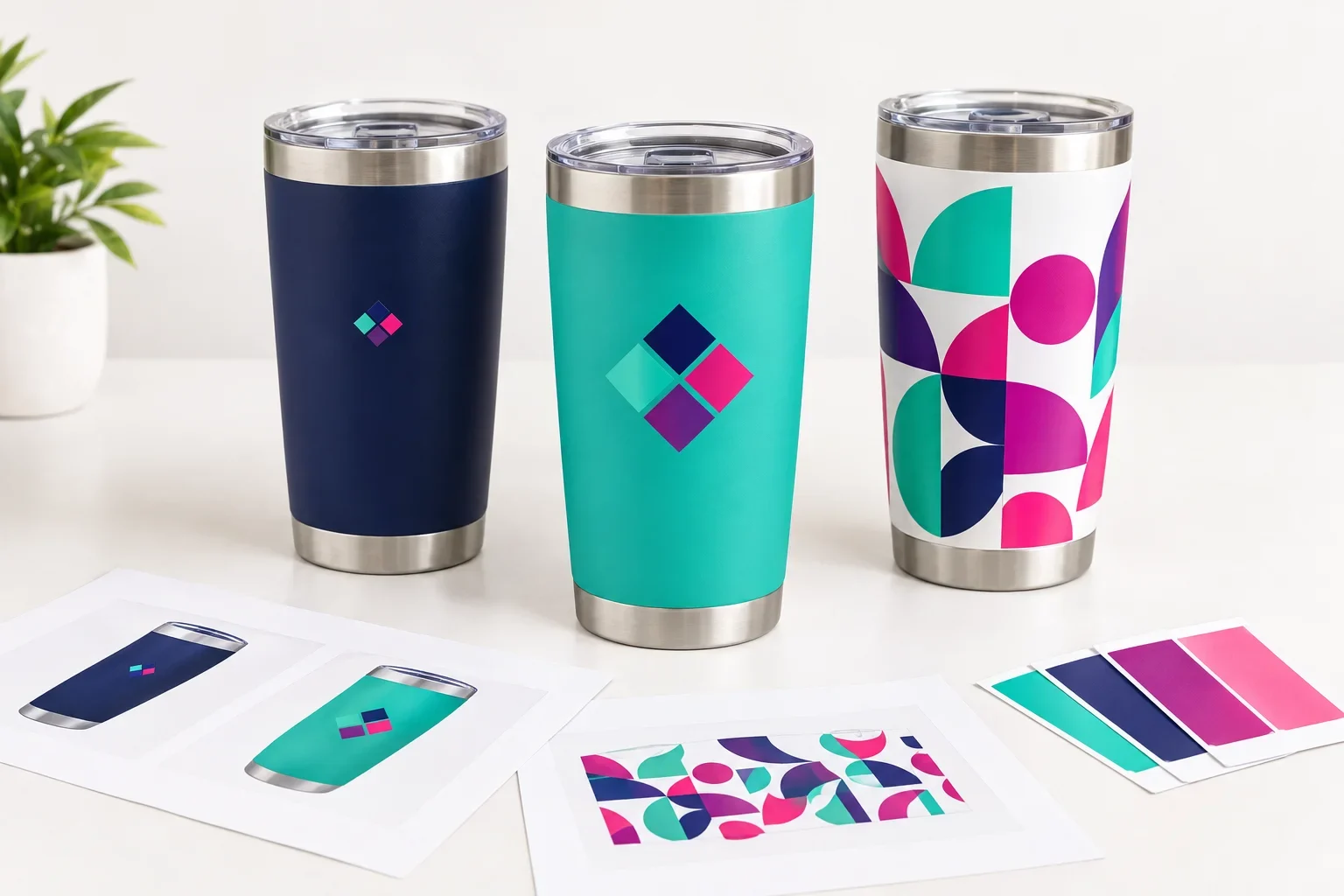
Yes. Different decoration methods may offer different maximum imprint areas, even on the same product.
For example, a shirt may support a large screen printed design on the front but a much smaller embroidered logo on the chest.
A notebook might support a larger full color print than a debossed imprint.
A tumbler may offer different imprint dimensions for laser engraving and screen printing.
These differences depend on the exact product and supplier.
Screen Printing
Screen printing can accommodate relatively large designs on many apparel items and bags. However, the available area still depends on the garment, printing equipment, and decoration location.
Embroidery
Embroidery areas are often smaller for common placements such as left chest logos and caps.
The amount of detail, stitch count, fabric, and design density may also influence practical sizing.
Laser Engraving
Laser engraving size depends on the available marking area, product material, shape, and equipment.
Some products support relatively large engraved designs, while others have very limited engraving areas.
Full Color Digital Printing
Full color printing can be useful for detailed artwork and colorful designs, but its maximum dimensions depend on the product and equipment.
Some full color methods allow larger decoration areas than traditional spot color methods on the same item, while others do not.
Debossing and Embossing
These methods often use dies or specialized equipment to press designs into or raise them from a material.
The available size depends on the product surface, material, and production process.
Read our guide to which decoration method should I choose? for more information about how different processes work.
Can I Print My Logo Bigger Than the Listed Imprint Area?
Usually, the listed imprint area represents the maximum supported dimensions for that particular decoration location and method.
It is generally not possible to exceed those dimensions without using a different available decoration option, changing the artwork placement, or selecting another product.
In some cases, a similar product may offer a larger imprint area or a different decoration method that better accommodates your design.
However, a larger imprint area should never be assumed to be available unless the supplier specifically offers it.
What if you need a bigger logo?
If the available imprint area is too small for your artwork, Purple Pie Promos can help review the product and available decoration options. Sometimes another imprint location, decoration method, or similar product may provide more space. Availability depends on the specific item and supplier.
Why Does My Logo Look Smaller on the Proof?
This is a common question, especially when customers compare the listed imprint dimensions with a digital artwork proof.
There are several possible explanations.
- Logo proportions: A wide logo may use most of the available width but only a small portion of the height.
- Recommended spacing: The artwork may be positioned to leave appropriate space around the design.
- Product shape: Curved surfaces or construction features may make a smaller imprint more practical.
- Decoration requirements: Certain methods may have limitations that affect the usable size.
- Artwork details: A complicated logo may need a different layout or simplified version to reproduce well.
- Proof presentation: A digital mockup may not display the product at actual physical size on your screen.
If the logo appears smaller than expected, check the listed imprint measurements on the proof rather than judging size entirely by how large the product image appears on your monitor.
If you would prefer a larger imprint, ask whether the artwork can be increased within the available production limits before approving the proof.
Does a Bigger Logo Make a Better Promotional Product?
Not necessarily.
Large logos are useful when visibility is the priority. A trade show tote bag, event t-shirt, or giveaway item may benefit from a bold design that can be recognized from a distance.
But some promotional products look more attractive with subtle branding.
A premium notebook with a small debossed logo can feel refined. A stainless steel tumbler with a modest engraved logo may look more gift-worthy than one with an oversized design.
There is also a difference between making a logo noticeable and making it visually overwhelming.
The best size is the one that fits the product, remains readable, and supports the impression you want to create.
Choose Logo Size Based on the Goal
Different promotional products benefit from different approaches to branding.
Maximum Visibility
Trade show bags, event shirts, banners, and some giveaways may benefit from larger, bolder designs.
Everyday Use
Drinkware, pens, office accessories, and notebooks often look best with readable, appropriately balanced branding.
Premium Gifts
Subtle engraving, embroidery, or debossing can create an understated appearance on higher-end products.
What If My Logo Doesn't Fit the Imprint Area?
If your logo is too wide, too tall, or too detailed for the available space, there may be several options worth considering.
Use an Approved Alternate Logo
Many businesses have horizontal, stacked, simplified, or icon-only versions of their logo.
Using an approved alternate version can help the artwork fit more naturally without distorting the brand.
Remove Unnecessary Small Details
Sometimes a tagline or tiny secondary text can be omitted when using a logo on a very small product.
Any changes should follow your company's brand guidelines or be approved by the appropriate person.
Choose a Different Imprint Location
Some products offer multiple imprint locations with different dimensions.
For example, one side of a bag may offer more space than a pocket panel, or a different area of an apparel item may accommodate a larger design.
Consider Another Decoration Method
If a product supports multiple methods, one may offer a more suitable imprint size or better reproduction of your artwork.
This is not guaranteed, but it can be worth reviewing the available options.
Select a Similar Product With More Space
Sometimes the simplest solution is choosing a product with an imprint area better suited to the design.
For example, a wider pen barrel or a notebook with a larger decoration area may work better for a logo containing multiple words.
How to Choose the Right Logo Size Before Ordering
You do not need to calculate everything yourself. However, a few simple steps can help you make more informed decisions.
From Product Selection to Final Imprint
A practical approach to choosing logo size.
Frequently Asked Questions About Logo Imprint Sizes
Can I make my logo as large as the product itself?
Usually not. The available imprint area is determined by the product and decoration method. Some products offer larger decoration options, but the entire visible surface is not necessarily printable.
Can I request a smaller logo than the maximum imprint area?
Generally, yes. A logo can often be printed smaller than the maximum available area, provided it still meets the decoration method's minimum size and detail requirements.
Will my logo be stretched to fit the imprint area?
Artwork should generally maintain its correct proportions. A wide logo may not use the full available height, and a tall logo may not use the full available width.
Can I print a tiny website address under my logo?
It depends on the imprint size and decoration method. Very small text can become difficult to reproduce or read. If the artwork is too detailed, a simplified logo or a product with more space may be a better option.
Does vector artwork let me print my logo at any size?
Vector artwork can be resized without becoming pixelated, but physical decoration methods still have size limitations. Extremely small details may not print, engrave, or embroider clearly.
Can I choose a different imprint location?
Some products offer multiple locations, while others have only one. Available locations and their associated dimensions depend on the product and supplier.
Can my logo be printed across the entire front of a shirt?
Some apparel decoration methods support large front designs, but maximum dimensions depend on the garment, equipment, size range, and available printing locations. A full-front design does not necessarily cover the entire garment panel.
How can I tell how big my logo will actually be?
Check the physical imprint dimensions listed on your artwork proof. Those measurements are more useful than estimating size from a digital product mockup displayed on your computer or phone.
Logo Imprint Size Checklist
Before approving your promotional product artwork, use this checklist to help make sure the logo is appropriately sized.
- Check the product's available imprint locations and maximum dimensions.
- Confirm which decoration method is being used.
- Use the best available artwork, preferably original vector files for logos.
- Make sure the logo maintains its correct proportions.
- Consider whether small text, thin lines, and fine details will reproduce clearly.
- Use an approved alternate logo version if the original layout does not fit well.
- Remember that curved surfaces, seams, pockets, handles, and other features may affect placement.
- Consider whether bold or subtle branding better suits the product.
- Review the actual imprint dimensions shown on your proof.
- Request any size or placement adjustments before approving production.
For more artwork preparation advice, visit our artwork checklist before ordering.
The Bottom Line
The maximum size of your printed logo depends on the available imprint area, decoration method, and physical characteristics of the product.
A larger product does not always mean a larger imprint area, and the maximum printable dimensions are not necessarily the best dimensions for every logo.
Your artwork's proportions, lettering, fine details, and intended appearance all influence the best size.
If your logo does not fit well, an approved alternate logo version, different imprint location, another available decoration method, or a different product may provide a better solution.
The best logo size is the one that fits the product
A well-sized logo should be readable, properly proportioned, and appropriate for the product and decoration method.
Bigger isn't always better. Purple Pie Promos can help review your artwork and imprint options before production so your logo looks right on the products you choose.
Not sure how large your logo should be?
Purple Pie Promos can help review your artwork, product selection, available imprint areas, and decoration options. Whether you're looking for bold branding on a tote bag or a subtle engraved logo on a premium gift, we can help you understand the options before production.
Request Artwork & Imprint Help