


Quick Answer
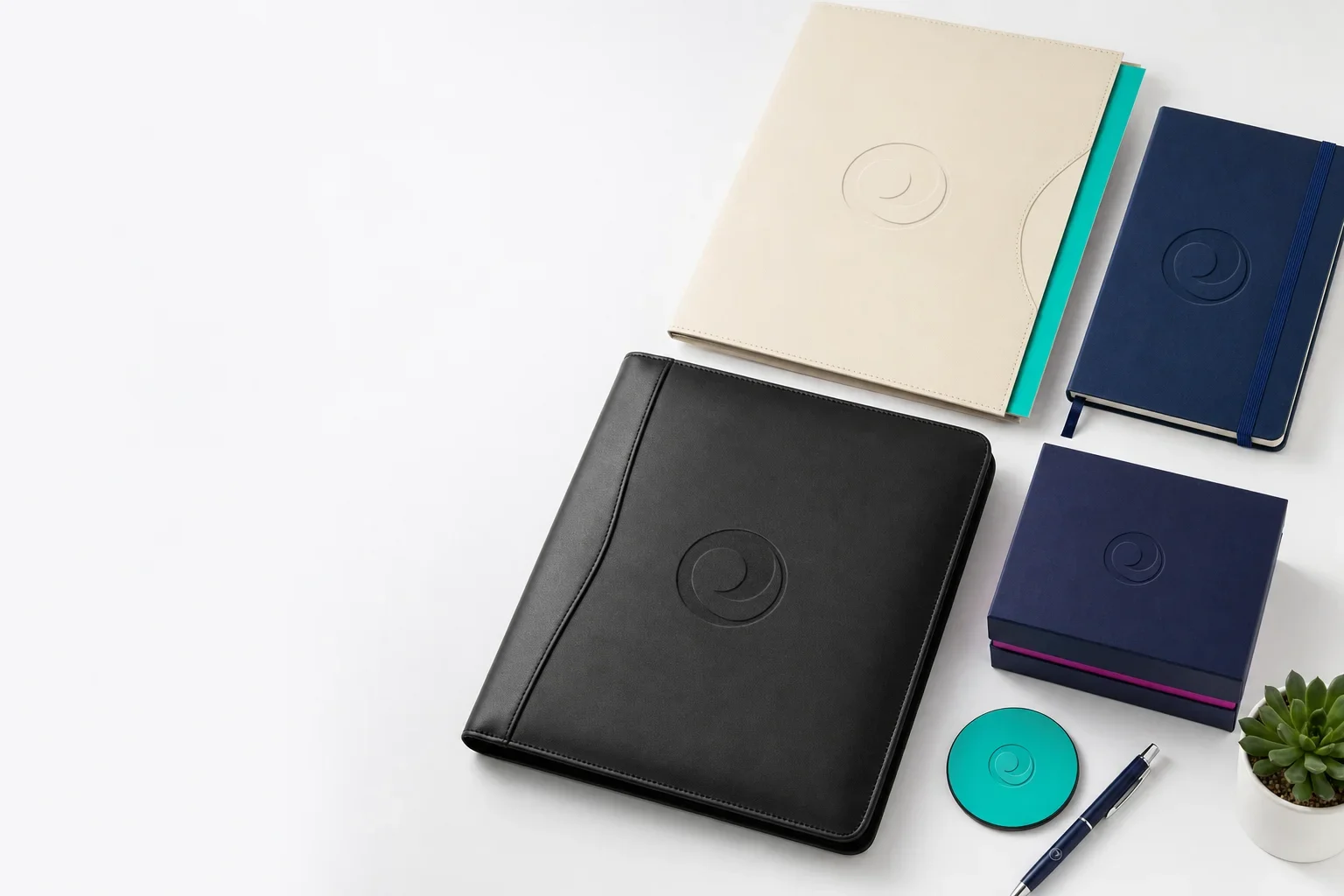
Debossing presses a logo or design down into the surface of a product, creating a recessed impression. Embossing raises a logo or design up from the surface, creating a raised texture. Debossing is common on leatherette notebooks, padfolios, journals, patches, folders, and premium soft goods. Embossing is common on paper, packaging, folders, cards, and select products where a raised design is possible. Both methods are best for simple artwork and a subtle premium look.
Debossing and embossing are often confused because the words sound similar and both methods create texture instead of a standard printed logo.
The easiest way to remember the difference is this: deboss goes down and emboss comes up. Debossing creates an indented design. Embossing creates a raised design.
Both methods can make a promotional product feel more premium, especially when the goal is subtle branding instead of a loud printed logo. They are popular for notebooks, journals, folders, padfolios, packaging, leatherette items, paper products, and refined corporate gifts.
This guide explains the difference between debossing and embossing, when to choose each one, what products they work best on, and what artwork limitations to keep in mind.
You do not need to choose perfectly
If you are not sure whether your logo should be debossed, embossed, printed, engraved, or hot stamped, Purple Pie Promos can review your artwork, product, material, imprint area, and available decoration options before production. If one method will create a better result than another, we will help guide you before the order moves forward.
What Is Debossing?
Debossing uses pressure to press a logo or design into the surface of a product. The result is a recessed impression that sits below the surrounding surface.
Debossing is often used when you want a subtle, tactile, premium look. Instead of adding ink or thread, the decoration becomes part of the product texture.
This method is common on leatherette notebooks, journals, padfolios, portfolios, patches, folders, luggage tags, desk accessories, and select soft goods. It can also be combined with foil or color in some cases, depending on the product and decoration options.
Debossing at a Glance
Debossing presses the design down into the product surface.
Best For
Leatherette notebooks, journals, padfolios, folders, patches, luggage tags, and premium soft goods.
Finished Look
Subtle, recessed, textured, tone-on-tone, and refined.
Watch Out For
Tiny text, thin lines, complex artwork, gradients, and designs that need strong color visibility.
What Is Embossing?
Embossing uses pressure to raise a logo or design above the surface of a product. The result is a raised design that stands up from the surrounding material.
Embossing is common on paper products, packaging, folders, cards, covers, and select promotional items where the material can support a raised impression.
Because embossing creates a raised effect, it can feel elegant and tactile. It is often used when the product should feel more custom, premium, or gift-worthy.
Embossing at a Glance
Embossing raises the design up from the product surface.
Best For
Paper products, folders, packaging, cards, covers, certificates, and select premium items.
Finished Look
Raised, dimensional, tactile, polished, and premium.
Watch Out For
Material thickness, product structure, small details, and whether the item can support a raised design.

Deboss vs Emboss: Main Difference
The main difference is direction. Debossing creates a recessed design. Embossing creates a raised design.
Both methods use pressure, and both create a textured effect. Neither one is primarily about color. They are about dimension, feel, and surface detail.
Deboss vs Emboss
The easiest way to remember it: deboss goes down, emboss comes up.
Deboss
- Pressed down into the surface
- Creates a recessed impression
- Often used on leatherette items
- Subtle and refined
Emboss
- Raised up from the surface
- Creates a dimensional raised design
- Often used on paper and packaging
- Tactile and premium
When Debossing Is Usually Best
Debossing is usually best when you want a subtle tone-on-tone look on a product that can accept a pressed impression.
It works especially well on leatherette and soft cover products because the recessed mark can look clean, professional, and understated. It is a strong choice for corporate gifts, executive notebooks, padfolios, journals, folders, and items where a printed logo might feel too loud.
Debossing is also useful when employees or clients may prefer a product that does not feel overly promotional. A debossed logo can still represent the brand, but it does so quietly.
Good Fit for Debossing
Debossing works best when the product should feel subtle and premium.
Notebooks and Journals
Great for executive gifts, employee welcome kits, conferences, and client gifts.
Padfolios
A recessed logo can create a polished professional look.
Leatherette Items
Debossing works well on many leatherette surfaces and gift products.
Subtle Branding
Good when the logo should be present without dominating the product.
When Embossing Is Usually Best
Embossing is usually best when the product material can support a raised design and the goal is a dimensional premium effect.
It is often used on paper products, presentation folders, packaging, cards, certificates, covers, and select promotional products. The raised effect can make a product feel more custom and tactile.
Embossing can be especially effective when the design is simple and the product has enough structure to hold the raised detail clearly.
Good Fit for Embossing
Embossing works best when the material can hold a clean raised design.
Folders
Great for presentation folders, sales packets, event materials, and professional documents.
Packaging
Raised logos can make gift boxes, sleeves, and packaging feel more premium.
Cards and Covers
Useful for invitations, certificates, stationery, and printed collateral.
Dimensional Branding
Good when the logo should have a tactile raised effect instead of a printed look.
Is Debossing or Embossing More Premium?
Both can feel premium. The better choice depends on the product and the impression you want to create.
Debossing often feels quiet, refined, and understated. It can look especially elegant on notebooks, padfolios, and leatherette products. Embossing often feels dimensional, tactile, and polished, especially on paper, folders, and packaging.
If the goal is subtle executive branding, debossing may be better. If the goal is a raised tactile effect on paper or packaging, embossing may be better.
Helpful way to think about it
Choose debossing when you want the logo pressed in and subtle. Choose embossing when you want the logo raised up and dimensional.
What Products Work Best for Debossing?
Debossing works best on products with materials that can accept and hold a recessed impression.
Leatherette products are especially common because the surface can often show the impression clearly. Some paper, soft goods, patches, packaging, and specialty items may also support debossing depending on the product.

Common Deboss Products
Debossing is often used when the product should feel refined and understated.
Notebooks
Popular for executive gifts, onboarding kits, conferences, and client meetings.
Journals
A recessed logo can create a tasteful retail-style look.
Padfolios
Useful for professional audiences, meetings, training, and sales presentations.
Leatherette Items
Great for products where a printed logo would feel less premium.
Patches
Can create a dimensional look on select apparel, hats, bags, or soft goods.
Gift Products
Useful when subtle branding supports a more polished gift experience.
What Products Work Best for Embossing?
Embossing works best on products and materials that can hold a raised design. Paper and packaging are common examples because they can often be shaped to create a clean raised effect.
Embossing may be used on presentation folders, packaging, cards, certificates, paper covers, and select specialty products.
Common Emboss Products
Embossing is often used when the design should be raised and tactile.
Presentation Folders
Creates a polished look for proposals, sales materials, onboarding packets, and events.
Packaging
Raised logos can make boxes, sleeves, and gift packaging feel more premium.
Cards
Useful for invitations, thank-you cards, certificates, and premium printed pieces.
Covers
Select paper covers, folders, and presentation materials may support embossing.
Artwork for Debossing and Embossing
Debossing and embossing work best with simple artwork. Clean logos, bold shapes, monograms, icons, and simple marks usually reproduce better than complicated artwork.
Because both methods rely on physical pressure and surface texture, they are not ideal for gradients, shadows, photographs, tiny text, or very thin lines.
If your logo has small details, it may need to be simplified before debossing or embossing. A simplified version of a logo can often look more premium than trying to force every tiny detail into a tactile decoration method.
Artwork That Works Best
Simple artwork usually creates cleaner debossed and embossed results.
Good Fit
- Simple logos
- Bold icons
- Clean shapes
- Readable marks
Not Ideal
- Gradients
- Photographs
- Tiny text
- Fine detail
Can Debossing or Embossing Use Color?
Debossing and embossing are primarily texture-based methods, not full color print methods. The decoration is created by changing the surface, not by printing a full color image.
However, some products may offer additional options like foil, color fill, hot stamp, or pigment combined with debossing or embossing. Availability depends on the product and supplier.
If you need a colorful logo, full color printing, transfer, decal, or another decoration method may be a better choice. If you want subtle texture, debossing or embossing may be better.
Texture vs Color
Debossing and embossing are usually chosen for feel and dimension, not color reproduction.
Deboss
Creates a recessed mark, often tone-on-tone and subtle.
Emboss
Creates a raised mark, often used for dimensional effects.
Hot Stamp
May add foil or color to certain products when available.
Full Color Print
Better when the logo needs multiple colors, gradients, or detailed artwork.
Debossing vs Hot Stamp
Hot stamp is another decoration method that is often used on notebooks, folders, packaging, and leatherette products. It uses heat and pressure to apply foil or pigment to the surface.
Debossing presses the logo into the surface. Hot stamp adds a visible finish, such as metallic foil or color. Some products may combine a debossed effect with foil or color, depending on the item.
If you want a subtle tone-on-tone look, debossing may be better. If you want a more visible metallic or colored mark, hot stamp may be a better option.
Helpful way to think about it
Debossing changes the surface. Hot stamp adds a finish. Embossing raises the surface. Full color printing adds a colorful image.
Debossing and Embossing for Employee Gifts
Debossing and embossing can be excellent for employee gifts because they feel subtle and refined.
Employees may not always want gifts with large, high-contrast logos. A debossed notebook, padfolio, journal, or leatherette item can feel more retail-inspired and less like a walking advertisement.
For appreciation gifts, onboarding kits, milestone gifts, and executive items, subtle decoration can make the product feel more thoughtful and premium.
Employee Gift Uses
Subtle tactile branding can make employee gifts feel more personal and less promotional.
Welcome Kits
Debossed notebooks and journals pair well with apparel, pens, drinkware, and tech items.
Milestone Gifts
Premium journals, padfolios, and desk accessories can mark work anniversaries or achievements.
Executive Gifts
Subtle debossing can make professional items feel polished and understated.
Remote Employee Gifts
Debossed desk items and notebooks can feel refined in a home office.
Debossing and Embossing for Client Gifts
Client gifts often benefit from subtle branding. A product with a large printed logo can feel promotional, while a debossed or embossed mark can feel more like a thoughtful gift.
Debossed notebooks, padfolios, journals, folders, and packaging can be especially useful for professional services, financial firms, law firms, real estate, technology companies, and executive audiences.
Embossed packaging or presentation materials can also make a gift or proposal feel more polished.

Cost and Setup Considerations
Debossing and embossing often require a die, plate, or setup to create the physical impression. The cost depends on the product, design size, artwork complexity, quantity, and production requirements.
Because these methods involve pressure and tooling, they may not price the same way as a simple printed logo.
However, the finished product can have a higher perceived value, especially for notebooks, folders, packaging, and professional gifts.
What Affects Cost?
Debossing and embossing may involve setup, tooling, and product-specific requirements.
Common Debossing and Embossing Mistakes
Debossing and embossing are elegant methods, but they are not right for every logo or product. Most issues happen when the artwork is too detailed or when the method is chosen for color instead of texture.
- Confusing debossing and embossing
- Expecting debossing or embossing to reproduce full color artwork
- Using tiny text that may not show clearly
- Using thin lines or fine details that may not hold the impression well
- Choosing embossing on a product that cannot support a raised design
- Choosing debossing when the logo needs high contrast or strong visibility
- Using artwork that is better suited for printing, engraving, or hot stamp
- Forgetting that subtle decoration may be harder to see from far away
Deboss vs Emboss Checklist
Before choosing debossing or embossing, use this checklist to think through the order.
Deboss and Emboss Checklist
A strong tactile decoration choice should fit the product, artwork, and desired impression.
Direction
Do you want the logo pressed down into the surface or raised up from it?
Product
Does the product support debossing, embossing, hot stamp, printing, or another method?
Material
Is the surface leatherette, paper, packaging, fabric, plastic, or another material?
Artwork
Is the logo simple enough to reproduce clearly as a tactile mark?
Visibility
Should the logo be subtle and premium or bold and easy to see from far away?
Review
Has the artwork and decoration method been reviewed before production?
The Bottom Line
Debossing and embossing are both tactile decoration methods that can make promotional products feel more refined. Debossing presses the design down into the surface. Embossing raises the design up from the surface.
Debossing is often used on notebooks, journals, padfolios, leatherette items, patches, and subtle corporate gifts. Embossing is often used on paper, folders, packaging, cards, and products that can support a raised design.
Both methods work best with simple artwork and are usually chosen for texture, dimension, and perceived value rather than bright color or full detail.
Deboss goes down. Emboss comes up.
Choose debossing for a recessed, subtle mark. Choose embossing for a raised, dimensional mark.
The best choice depends on the product material, artwork, and the kind of premium finish you want.
Need help choosing debossing or embossing?
Purple Pie Promos can review your logo, product, material, imprint area, and decoration options to help determine whether debossing, embossing, hot stamp, printing, engraving, or another method makes the most sense.
Request Decoration Help