

Quick Answer
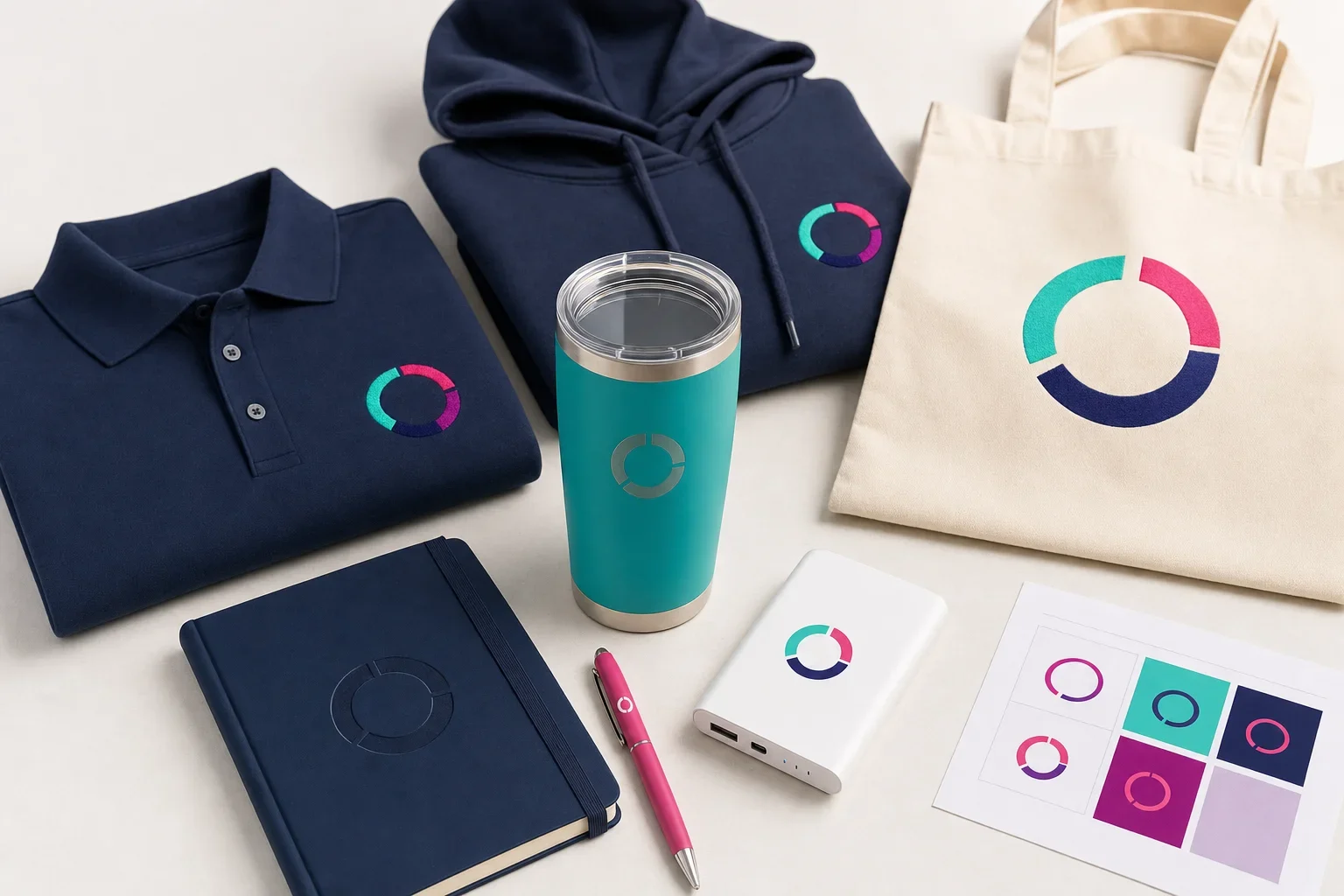
The right decoration method depends on the item and your artwork. Screen printing is common for simple logos on apparel and bags. Transfers are useful for multi-color apparel designs. Embroidery works well for polos, jackets, hats, and premium apparel. Laser engraving is great for metal drinkware and certain hard goods. Pad printing works well on small or curved items. Full color digital printing is useful for detailed logos, photos, or colorful designs. Deboss, emboss, and hot stamp create a more subtle premium look on select materials.
Choosing a decoration method can feel confusing because promotional products are made from so many different materials. A logo that works beautifully on a stainless tumbler may not work the same way on a fleece jacket, a pen, a silicone item, a notebook, or a cotton tote bag.
The good news is that you do not need to memorize every imprint method before placing an order. It helps to understand the basics, but the best method is usually determined by the product, artwork, imprint area, quantity, and available decoration options.
This guide explains the most common decoration methods, when each one works best, and why some logos or products need a different approach than others.
You do not have to choose perfectly
When you place an order with Purple Pie Promos, you do not need to be an expert in decoration methods. Before anything goes to production, we review your artwork, product, imprint area, and available decoration options to make sure the method makes sense for your logo and the item you selected. If another method would produce a better result, we will help guide you before the order moves forward.
What Is a Decoration Method?
A decoration method is the process used to apply your logo, artwork, or message to a promotional product. Different products support different methods because materials react differently to ink, thread, heat, pressure, engraving, decals, and transfers.
For example, a t-shirt might be screen printed or decorated with a transfer. A polo shirt might be embroidered. A stainless steel bottle might be laser engraved. A pen might be pad printed. A notebook might be debossed, screen printed, or full color printed depending on the cover material.
The decoration method affects how the finished product looks, how many colors can be used, how durable the logo may be, how much detail can be reproduced, and how the product feels in the hand.
What Affects Decoration Method?
The best imprint method depends on more than the logo alone.
A Simple Way to Think About Decoration Methods
You do not have to start by memorizing the technical differences. Instead, start with the product and the logo.
If your logo is simple and one color, you may have more options. If your logo has many colors, gradients, tiny details, or photographic elements, full color printing or transfers may be a better fit. If you want a premium apparel look, embroidery may be better. If you want a subtle metal finish, laser engraving may be best.
Decoration Method Shortcut
These are general guidelines. The best option still depends on the exact product and artwork.
Simple Logo
Screen printing, pad printing, embroidery, laser engraving, or debossing may work well depending on the item.
Many Colors
Transfers, full color digital printing, decals, or sublimation may be better than traditional screen printing.
Premium Apparel
Embroidery is often a strong choice for polos, jackets, hats, vests, and professional apparel.
Metal Drinkware
Laser engraving can create a clean, permanent-looking finish on many stainless steel items.
Small Hard Goods
Pad printing is often used on pens, small items, curved surfaces, and irregular shapes.
Subtle Luxury Look
Deboss, emboss, hot stamp, tone-on-tone decoration, or engraving can create a more understated finish.
Screen Printing
Screen printing is one of the most common decoration methods. It uses ink pushed through a screen to apply a design to the product.
It is especially common on t-shirts, tote bags, certain apparel, and some flat promotional items. Screen printing works best with simple artwork, solid colors, and designs that do not require tiny details or gradients.
Because each print color may require a separate screen, screen printing can become more expensive or limited when the design has multiple colors. On many promotional products, screen printing may only be available for one color.
When Screen Printing Works Best
Screen printing is a strong choice for simple, bold artwork on compatible products.
Best For
T-shirts, tote bags, simple apparel, flat items, and designs with solid colors.
Strengths
Bold, familiar, cost-effective for many simple designs, and widely available.
Watch Out For
Multiple colors, gradients, tiny details, and artwork that needs photographic reproduction.
For more detail, read our guide to screen printing vs transfers and what a screen is in screen printing.
Transfers
Transfers are used when artwork is printed or produced separately and then applied to a product with heat, pressure, or another application process. They are common on apparel, bags, and other fabric items.
Transfers can be helpful when a logo has multiple colors, more detail, or artwork that cannot be reproduced well with a simple one-color screen print. If a product offers both screen printing and transfer decoration, the transfer option may be used when the design needs more color or detail.
This is one of the most common areas where customers get confused. If screen print is available, it can seem like that should always be the right choice. But if the logo needs two, three, four, or full color, a transfer may produce a better result.
Helpful way to think about it
Screen printing is often great for simple one-color designs. Transfers are often better when the design needs more colors or detail than the screen print option can support.
DTG and DTF Printing
DTG stands for direct-to-garment printing. DTF stands for direct-to-film printing. Both are used for apparel decoration, especially when designs include multiple colors, gradients, or detailed artwork.
DTG prints directly onto the fabric, while DTF creates a printed transfer that is applied to the garment. The best choice depends on the fabric, artwork, quantity, garment color, and supplier capabilities.
These methods can be helpful when a design is too colorful or detailed for traditional screen printing, especially for apparel orders where full color artwork is important.
Screen Print vs DTG vs DTF
Each apparel method has different strengths depending on the design and garment.
Screen Printing
Great for simple designs, solid colors, and many standard apparel projects.
DTG
Useful for detailed, full color artwork printed directly onto compatible garments.
DTF
Useful for colorful designs applied as a transfer to many apparel types.
For more detail, read our guide to screen printing vs DTG vs DTF.
Embroidery
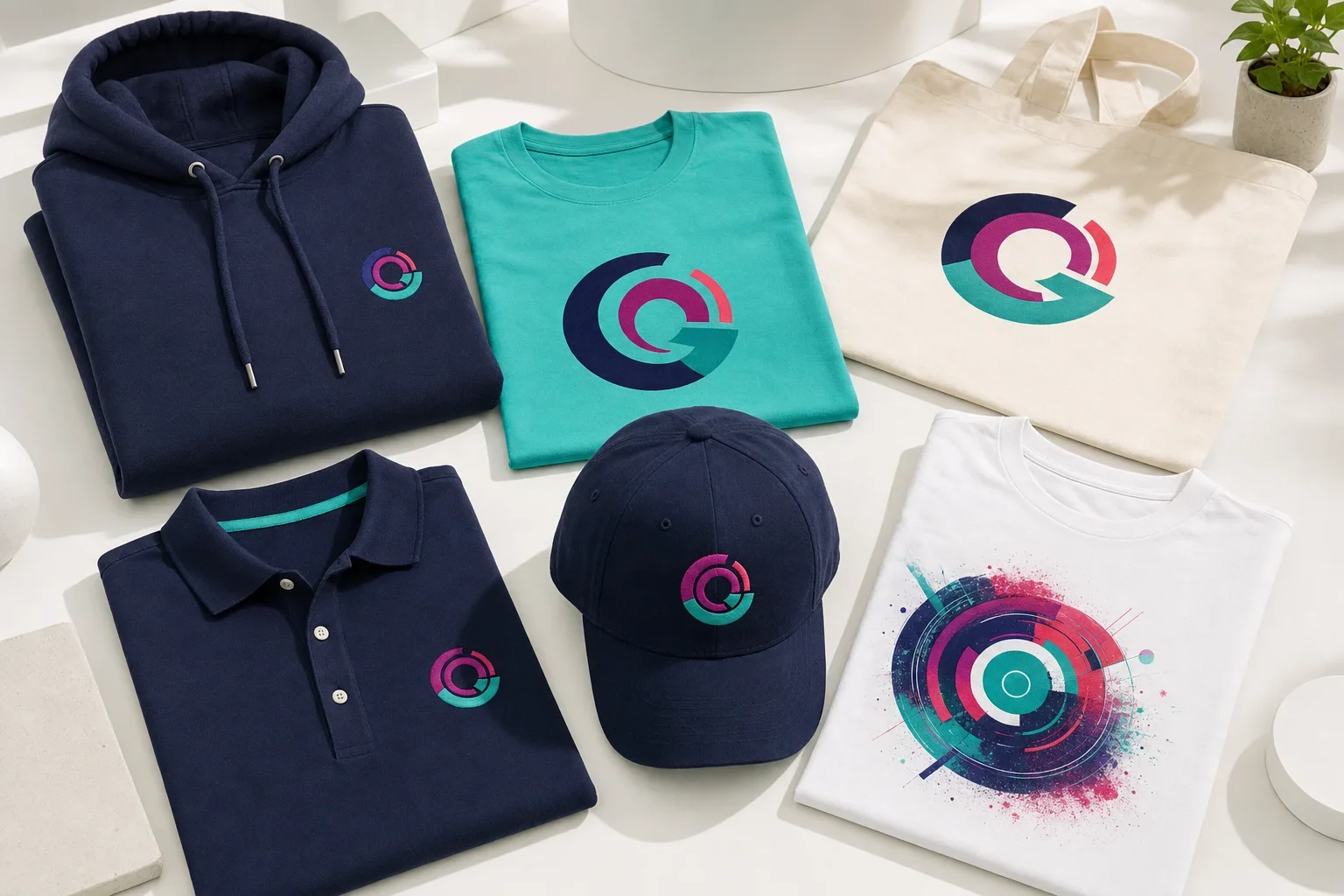
Embroidery uses thread to stitch a logo or design onto fabric. It is popular for polos, jackets, hats, quarter zips, vests, bags, and other products where a more premium or professional look is desired.
Embroidery works best with clean logos and designs that can be simplified into stitches. Very small text, gradients, fine details, and complicated artwork may not embroider clearly.
Embroidery can make apparel feel more polished, but it is not always the best choice for every logo or garment. A large, detailed design may look better as a screen print or transfer, while a clean chest logo on a polo may be perfect for embroidery.
Embroidery may require artwork simplification
Some logos need small adjustments before they can be embroidered well. Thin lines, tiny text, gradients, and detailed icons may need to be simplified so the finished stitch-out looks clean.
For more detail, read our guide to embroidery vs screen printing.
Laser Engraving
Laser engraving uses a laser to mark or remove the surface of a product. It is commonly used on stainless steel drinkware, metal pens, metal tools, flashlights, some awards, and certain hard goods.
Engraving often creates a more subtle, permanent-looking finish than printed ink. It can feel especially premium on metal products.
One important thing to know: laser engraving usually does not print your logo in full color. The final appearance depends on the product material and coating. On some items, the engraved area may appear silver, gray, tone-on-tone, or another underlying material color.
When Laser Engraving Works Best
Laser engraving is a strong option for many metal and premium hard goods.
Best For
Stainless drinkware, metal pens, tools, flashlights, awards, and select hard goods.
Strengths
Premium, durable-looking, subtle, and ideal for many metal products.
Watch Out For
Not full color, may vary by coating or material, and may not suit every logo style.
For more detail, read our guide to laser engraving vs pad printing.
Pad Printing
Pad printing is often used for small, curved, or irregularly shaped products. It uses a flexible pad to transfer ink onto the item.
This method is common for pens, small plastic items, stress relievers, keychains, tech accessories, drinkware, and other hard goods with limited imprint areas.
Pad printing can be a good option when a logo needs to go on a smaller surface, but it may have limits on color count, detail, and imprint size depending on the product.
Full Color Digital Printing
Full color digital printing is useful when artwork includes multiple colors, gradients, detailed graphics, or photographic elements. It is commonly used on select hard goods, notebooks, tech items, packaging, decals, and other products that support full color decoration.
This method can be a strong choice when a one-color imprint would not represent the logo well.
However, full color digital printing is not available on every product or material. It depends on the item, surface, equipment, and supplier capabilities.
Full Color Transfers and Decals
Full color transfers and decals are used when colorful artwork needs to be applied to a product surface. These options can be helpful for logos with multiple colors, gradients, shadows, or more complex artwork.
A full color transfer may be used on apparel or bags, while a full color decal may be used on certain hard goods, drinkware, or accessories. The exact method depends on the product.
If your logo has a lot of color and the product does not support a simple full color digital imprint, a transfer or decal may be the better option.
For more detail, read our guide to full color digital vs full color transfer.
Deboss, Emboss, and Hot Stamp
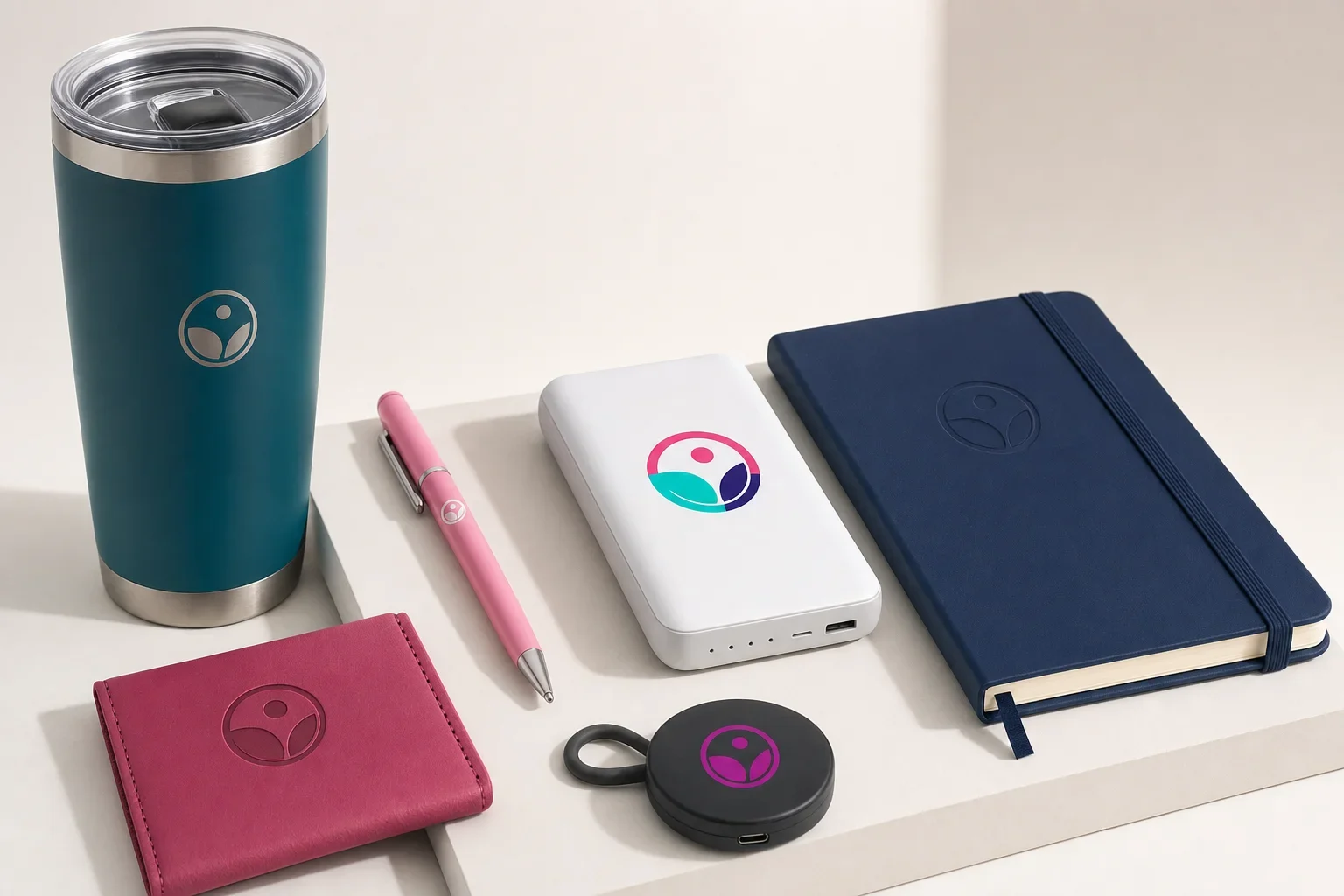
Debossing presses a design into the surface of a product, creating a recessed impression. Embossing creates a raised design. Hot stamp uses heat and foil or pigment to apply a design to a surface.
These methods are often used on notebooks, journals, leatherette items, folders, padfolios, packaging, and select premium products.
They usually create a more subtle, tactile look than a printed logo. This can be useful when you want the branding to feel refined instead of loud.
Deboss, Emboss, and Hot Stamp
These methods are often chosen for a subtle, premium, textured finish.
Deboss
Pressed into the surface for a recessed, understated look.
Emboss
Raised from the surface for a dimensional, tactile effect.
Hot Stamp
Applies foil or pigment with heat for a polished decorative finish.
For more detail, read our guide to deboss vs emboss.
Dye Sublimation
Dye sublimation uses heat to transfer dye into compatible materials. It is commonly used for full color designs on products such as polyester apparel, banners, towels, lanyards, mugs, mouse pads, and certain coated products.
Sublimation is useful when the artwork needs to be bright, colorful, or cover a larger area. It works best on compatible materials, usually white or light-colored polyester or specially coated items.
It is not the right method for every product, but when it fits, it can create vivid full color designs.
How Logo Color Affects Decoration Method
The number of colors in your logo can affect which decoration methods are available and how much the order costs.
Simple one-color logos usually have the most flexibility. Multi-color logos may require transfers, full color printing, decals, or another method that can reproduce the design accurately. Gradients, shadows, photographs, and fine detail may limit the available options even more.
Logo Complexity and Decoration Method
The more complex the artwork, the more important the decoration method becomes.
Simple Artwork
- One or two solid colors
- Clean shapes
- Readable text
- Works with many methods
Complex Artwork
- Many colors
- Gradients or shadows
- Tiny details
- May need full color or simplified artwork
If you are wondering why each print color can affect cost, read our guide on why each print color costs more.
How Product Material Affects Decoration
The product material is one of the biggest factors in decoration method. Fabric, metal, plastic, glass, silicone, leatherette, wood, paper, ceramic, and coated materials all behave differently.
This is why the same logo may be screen printed on a tote bag, embroidered on a polo, engraved on a tumbler, pad printed on a pen, and debossed on a notebook.
Common Product Materials and Decoration Options
Actual options vary by product, but these are common pairings.
Cotton and Fabric
Screen printing, transfers, embroidery, DTG, DTF, or sublimation depending on the fabric.
Stainless Steel
Laser engraving, screen printing, pad printing, full color print, or decals depending on the item.
Plastic
Pad printing, screen printing, full color digital, decals, or labels depending on the surface.
Paper and Notebooks
Screen printing, full color printing, debossing, foil stamp, or labels depending on the cover.
Leatherette
Deboss, hot stamp, laser engraving, or full color decoration depending on the product.
Ceramic and Glass
Screen printing, decals, full color, etching, or specialty decoration depending on the item.
Why the Product Page May Show Multiple Methods
Some products offer more than one decoration method. That does not mean every method is equally good for every logo.
A product might offer screen printing for simple one-color logos and transfer decoration for multi-color artwork. A bottle might offer laser engraving for a subtle premium look and full color printing for a colorful logo. A notebook might offer debossing for a refined tone-on-tone look and full color printing for a more visible design.
If you see multiple options and are not sure which one to choose, that is normal. The available methods are possibilities, not a test you have to pass.
We review the method before production
If the selected decoration method is not the best fit for your logo or product, Purple Pie Promos will review it before production and help guide the order. The goal is to make sure the final product looks good, not to make you guess your way through decoration terminology.
Common Decoration Method Mistakes
Most decoration issues happen when the method, product, and artwork are not matched correctly. Fortunately, many of these issues can be caught before production with proper review.
- Choosing screen printing for a logo that needs too many colors or too much detail
- Expecting laser engraving to reproduce a full color logo
- Using artwork with tiny text that will not print or embroider clearly
- Choosing embroidery for a design that is too detailed or too large
- Assuming every product can use every decoration method
- Ignoring product material, texture, shape, or imprint area
- Using low-resolution artwork instead of vector artwork when required
- Expecting exact color matching across every material and decoration method
Decoration Method Checklist
Before choosing a decoration method, use this checklist to understand what matters most.
Decoration Method Selection Checklist
A strong decoration choice should fit the product, artwork, and desired finished look.
Product
What item is being decorated, and what methods are available for that product?
Material
Is the item fabric, metal, plastic, glass, ceramic, paper, leatherette, or another material?
Logo Colors
Is the design one color, several colors, or full color?
Artwork Detail
Does the logo include small text, thin lines, gradients, shadows, or photos?
Finished Look
Should the final result be bold, subtle, premium, colorful, textured, or tone-on-tone?
Review
Has the artwork and decoration method been reviewed before production?
The Bottom Line
The best decoration method depends on the product, material, artwork, quantity, and desired finish. Screen printing, transfers, embroidery, laser engraving, pad printing, full color digital printing, decals, debossing, embossing, hot stamp, and sublimation all have different strengths.
You do not need to know every technical detail before ordering. It is helpful to understand the basics, but Purple Pie Promos reviews the artwork, product, imprint area, and decoration method before production so the final product has the best chance of looking right.
Choose the product first, then match the decoration
The best decoration method is the one that works for your product, your logo, and the impression you want to create.
You do not have to be a decoration expert. That is part of what we help with.
Need help choosing the right decoration method?
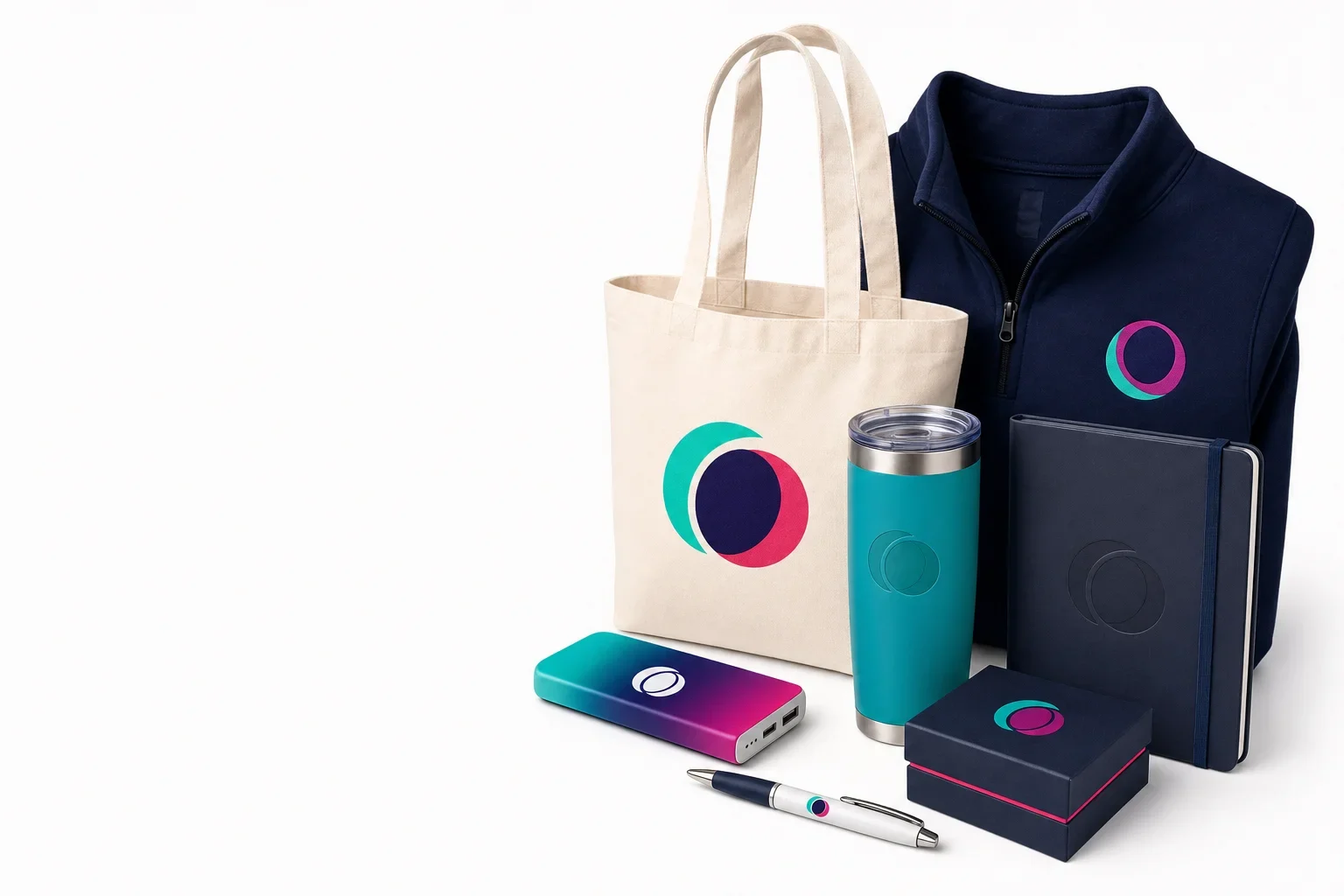
Purple Pie Promos can help review your logo, product, imprint area, and available decoration options so your finished promotional products look clean, professional, and appropriate for the item.
Request Decoration Help