

Quick Answer
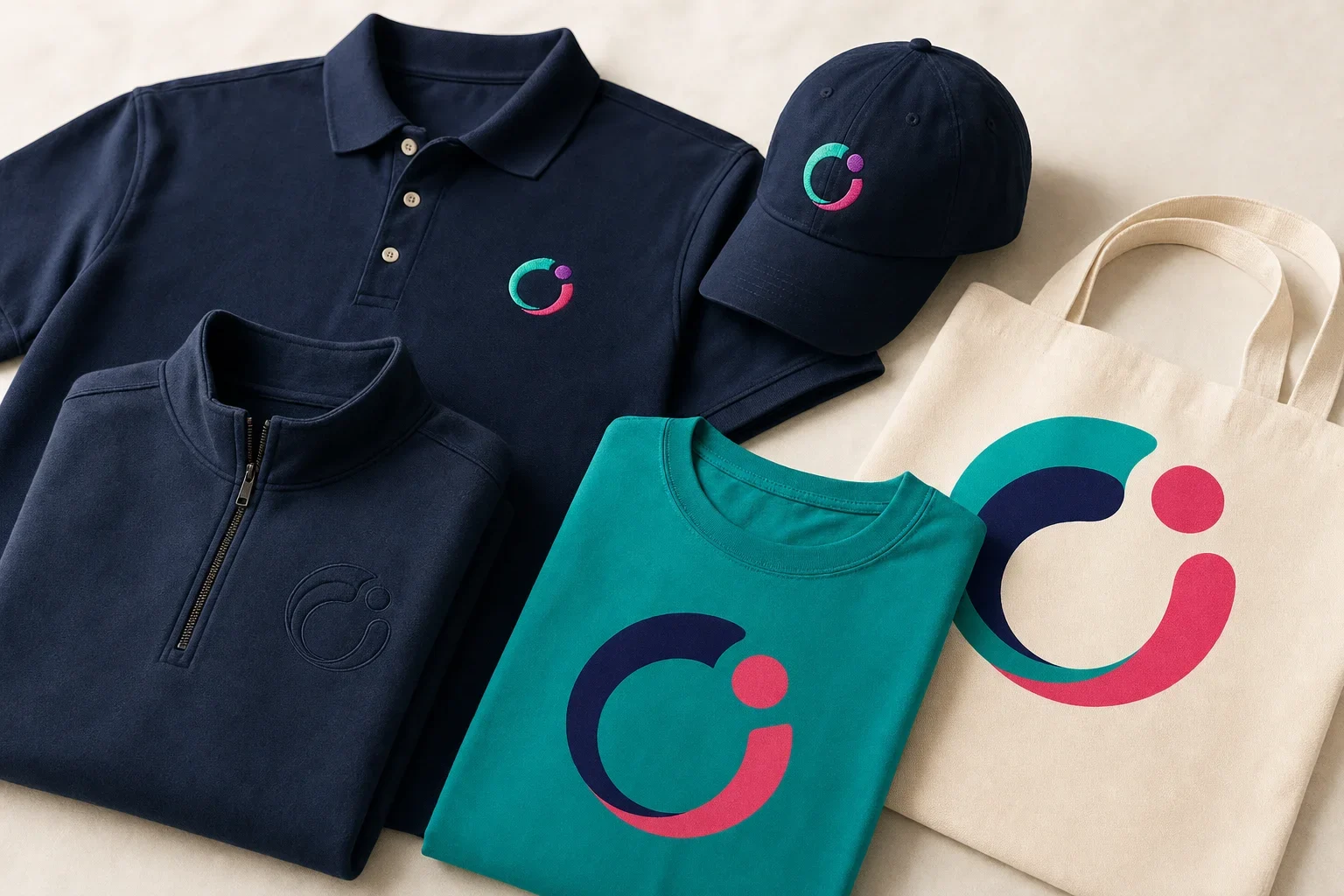
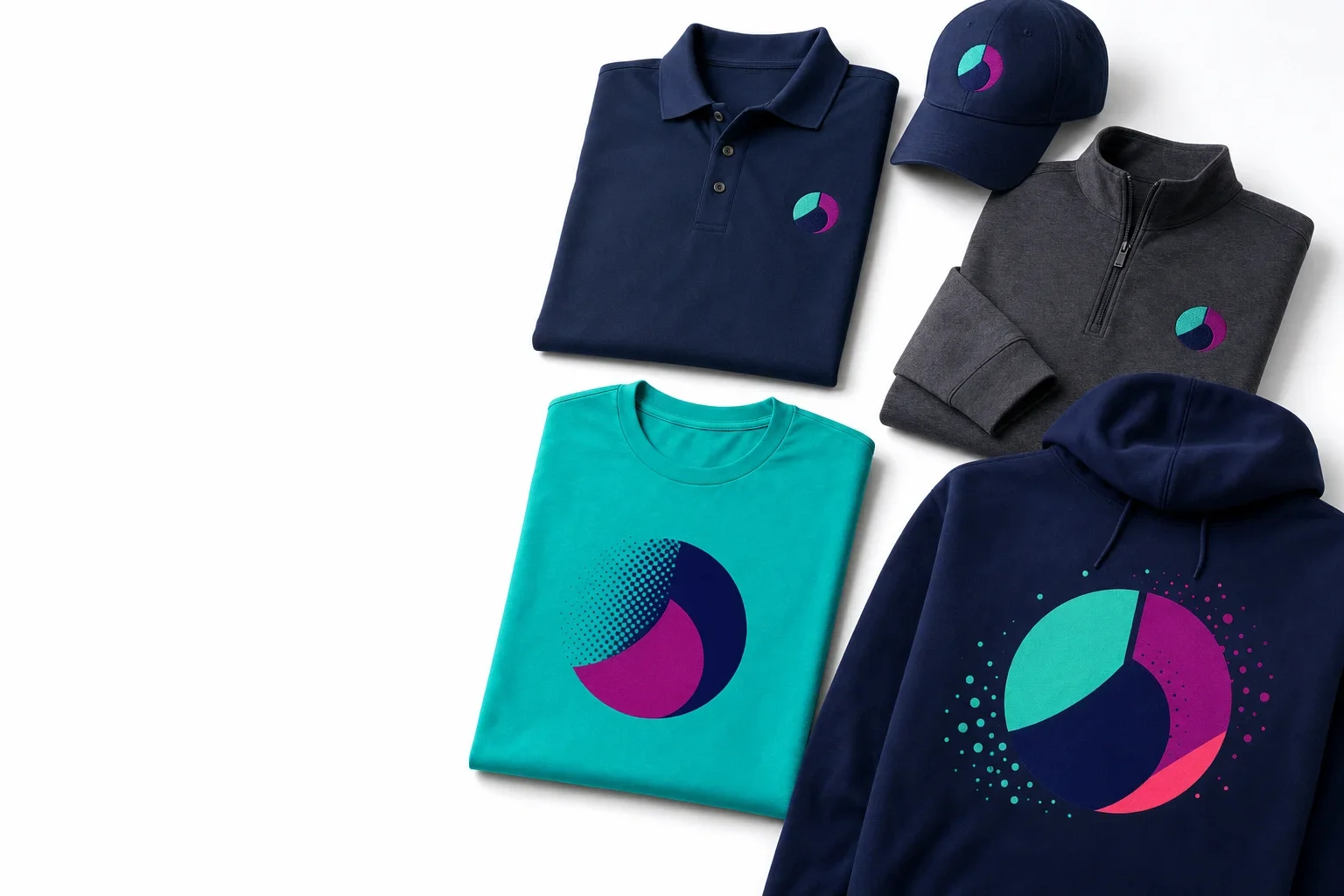
Embroidery is usually best for polos, hats, jackets, quarter zips, vests, bags, and premium apparel where you want a professional, textured look. Screen printing is usually best for t-shirts, sweatshirts, event apparel, large designs, and bold printed graphics. Embroidery has a higher perceived value, but it does not handle tiny text, gradients, shadows, photographs, or very small details as well as printing. Screen printing is better for large, flat, graphic designs, especially when the artwork is simple and the quantity is higher.
Embroidery and screen printing can both create great custom apparel, but they create very different results.
Embroidery uses thread stitched into the garment. It has texture, dimension, and a more premium feel. Screen printing uses ink applied to the garment surface. It is flat, bold, and often better for larger graphics or casual apparel.
The right choice depends on what you are decorating. A small logo on a polo shirt may look much better embroidered. A large design on the front of a t-shirt may make much more sense screen printed. A detailed logo with tiny text or gradients may need to be simplified for embroidery, while screen printing or another print method may preserve the design more accurately.
This guide explains the difference between embroidery and screen printing, when each method works best, and what to watch for before placing an apparel order.
You do not need to choose perfectly
If you are not sure whether your logo should be embroidered or screen printed, Purple Pie Promos reviews your artwork, garment, imprint area, and available decoration options before production. If your logo has small details, gradients, tiny text, or other elements that may not embroider well, we will help guide you before the order moves forward.
What Is Embroidery?
Embroidery uses thread to stitch your logo or design directly into the garment or product. Because the design is made from thread, embroidery has a raised, textured feel that looks more dimensional than a printed logo.
Embroidery is commonly used on polos, hats, jackets, quarter zips, fleece, vests, bags, uniforms, workwear, and premium apparel. It is often chosen when the finished product should feel professional, durable, or higher value.
Before a logo can be embroidered, it usually needs to be digitized. Digitizing converts the artwork into stitch instructions that tell the embroidery machine how to sew the design. This is one reason embroidery behaves differently than printing. A logo that looks perfect on a screen may need adjustments to work well in thread.
Embroidery at a Glance
A strong choice when you want a polished, textured, higher-value apparel look.
Best For
Polos, hats, jackets, quarter zips, fleece, vests, uniforms, bags, and premium apparel.
Strengths
Raised texture, professional appearance, higher perceived value, and a durable finished look.
Watch Out For
Tiny text, gradients, shadows, photographs, thin lines, and very small design details.
What Is Screen Printing?
Screen printing uses ink pushed through a mesh screen to print a design onto a garment. It is one of the most common methods for decorating t-shirts, sweatshirts, event apparel, uniforms, tote bags, and other fabric items.
Screen printing works especially well for simple artwork with solid colors. It can be a strong option for larger designs, bold graphics, and larger quantities.
Because screen printing uses ink instead of thread, it can handle certain artwork styles that embroidery cannot reproduce well, especially large flat graphics, simple event designs, and logos that need to stay smooth rather than stitched.
Screen Printing at a Glance
A strong choice for bold printed artwork, event apparel, and larger designs.
Best For
T-shirts, sweatshirts, event shirts, team apparel, large front or back designs, and simple printed logos.
Strengths
Bold color, smooth printed finish, practical for larger graphics, and cost-effective for many larger orders.
Watch Out For
Multiple print colors, setup costs, gradients, small orders, and product-specific color limits.
Embroidery vs Screen Printing: Main Differences
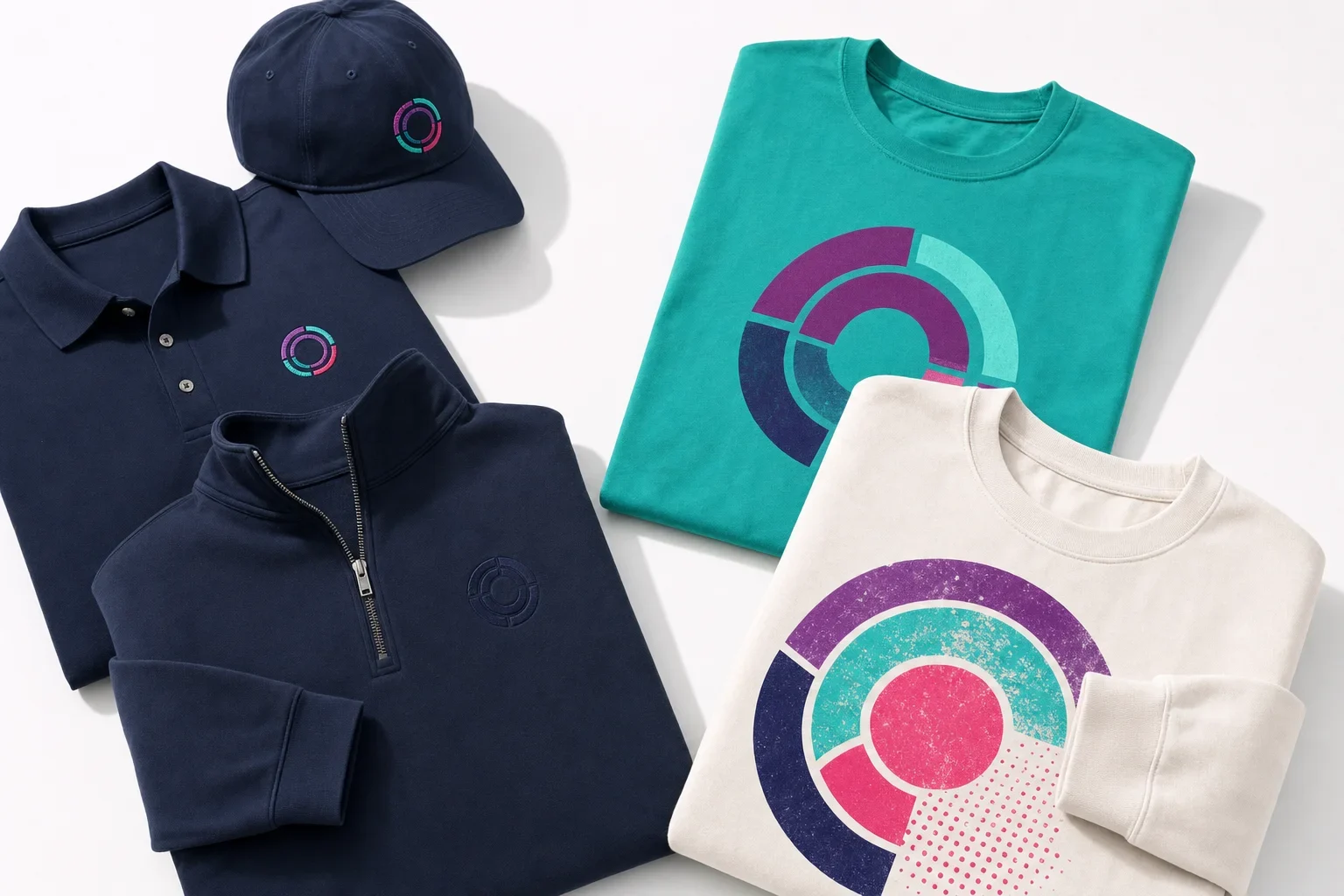
The biggest difference is the finished look. Embroidery is stitched. Screen printing is printed.
That simple difference affects everything else: texture, perceived value, artwork limitations, product compatibility, cost structure, design size, and how the finished apparel feels.
Embroidery vs Screen Printing
Both methods can look great, but they are best for different apparel goals.
Embroidery
- Raised stitched texture
- Higher perceived value
- Great for polos, hats, jackets, and uniforms
- Best for clean, simplified logos
Screen Printing
- Flat printed ink
- Great for bold graphics
- Useful for t-shirts, sweatshirts, and events
- Better for larger printed designs
When Embroidery Is Usually Best
Embroidery is usually best when the apparel should feel polished, professional, and higher value. It is a strong choice for company uniforms, employee apparel, executive gifts, retail-style apparel, client-facing staff apparel, and brand name clothing.
Embroidery can make a logo feel more permanent and refined because the design is physically stitched into the garment. This is why embroidery is so common on polos, jackets, quarter zips, hats, vests, and workwear.
For employee gifts, embroidery can also feel less promotional when used tastefully. A small tone-on-tone embroidered logo on a black hoodie or a discreet back yoke placement can feel much more wearable than a large printed logo across the chest.
Good Fit for Embroidery
Embroidery works best when the logo is clean and the garment should feel elevated.
Professional Apparel
Polos, button-downs, jackets, vests, quarter zips, and uniforms.
Headwear
Caps, beanies, visors, and hats often look strong with embroidery.
Premium Gifts
Employee apparel, client gifts, milestone gifts, and brand name apparel.
Subtle Branding
Tone-on-tone thread and discreet placements can make apparel feel more retail-inspired.
When Screen Printing Is Usually Best
Screen printing is usually best when the design is larger, flatter, bolder, or more graphic. It is commonly used for event t-shirts, fundraiser apparel, team shirts, uniforms, staff shirts, school apparel, and large front or back designs.
If the artwork is meant to cover a large area, screen printing often makes more sense than embroidery. A big embroidered design can become heavy, stiff, expensive, or uncomfortable, while a printed design can stay flatter and more appropriate for casual apparel.
Screen printing also works well when the design uses simple solid colors and the order quantity makes setup practical.
Good Fit for Screen Printing
Screen printing works best when the artwork is bold, flat, and larger than a typical embroidered logo.
T-Shirts
Great for events, schools, teams, staff shirts, and casual branded apparel.
Large Designs
Better for full-front, full-back, or large graphic layouts.
Simple Printed Logos
Works well for solid shapes, clean artwork, and one-color or limited-color designs.
Larger Quantities
Can be cost-effective when setup is spread across many pieces.
Why Embroidery Has Higher Perceived Value
Embroidery often feels more premium because it has physical texture. The thread catches light, sits above the garment surface, and gives the logo a finished, dimensional look.
That raised stitched effect can make apparel feel more expensive than a flat print, even when the logo is small. This is one reason embroidered polos, jackets, and hats are common for uniforms, corporate apparel, client-facing staff, and employee gifts.
Perceived value matters most when the item is meant to be worn repeatedly, gifted, or used in professional settings. A simple embroidered logo on a quality garment can feel more polished than a large printed logo on the same item.
Helpful way to think about it
If the apparel should feel like a uniform, employee gift, retail-style item, or premium piece, embroidery often makes sense. If the design should feel like a bold event graphic, screen printing may be better.
Artwork Limitations: Small Details, Gradients, and Tiny Text
This is one of the most important differences between embroidery and screen printing.
Embroidery is made from thread, not ink. Thread has physical thickness. That means tiny text, thin lines, small details, gradients, shadows, and photographic effects do not translate the same way they do on a screen or printed piece.
A logo with small text may need to be enlarged, simplified, or removed for embroidery. A gradient may need to be converted into solid thread colors. A detailed icon may need to be simplified so it does not turn into a stitched blob, which is not an official decoration term but absolutely should be.
Screen printing can handle some flat graphic details better than embroidery, but it has its own limitations, especially with many colors, gradients, and very fine detail depending on the product and print method.
Artwork That Can Be Difficult for Embroidery
Embroidery works best when the artwork can be translated cleanly into stitches.
Tiny Text
Small letters can close up or become unreadable when stitched.
Thin Lines
Very fine lines may need to be thickened or simplified.
Gradients
Thread colors are solid, so gradients usually need to be simplified or approximated.
Shadows
Soft shadows and glow effects rarely translate cleanly into standard embroidery.
Photographs
Photo-style artwork is usually better suited to printing than standard embroidery.
Very Small Icons
Small details may need to be enlarged, simplified, or removed.
Logo Size: Small Chest Logo vs Large Front Design
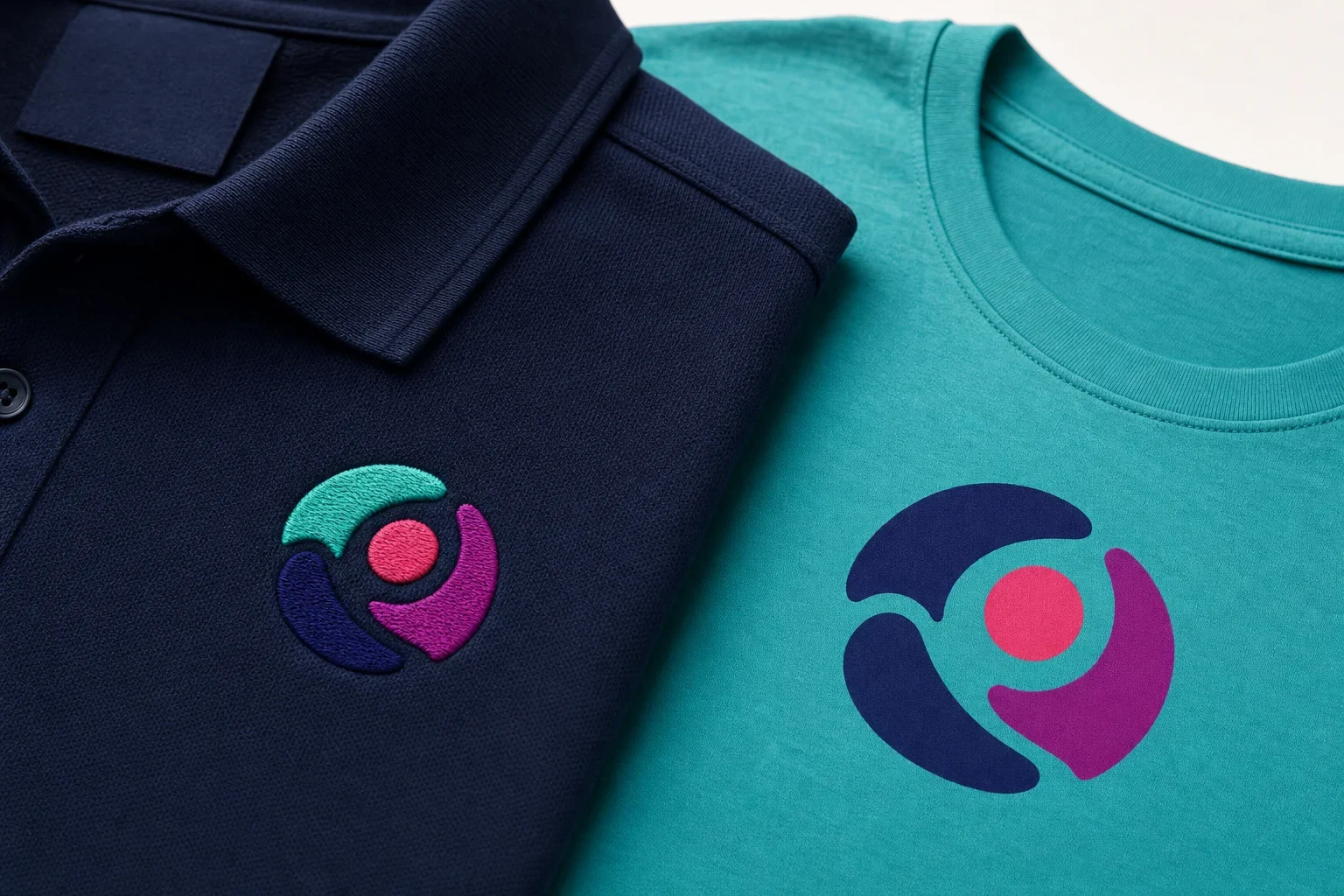
Embroidery is often best for smaller logo placements, such as a left chest logo, hat front, sleeve, cuff, back yoke, or bag panel. These placements let embroidery look polished without becoming too heavy.
Screen printing is usually better for larger designs, such as full-front t-shirt graphics, full-back event designs, sponsor layouts, and bold promotional artwork.
A large embroidered design can become stiff, expensive, and uncomfortable. A small screen printed left chest logo can work, but it may not have the same premium feel as embroidery on a polo or jacket.
Logo Size and Placement
The size and location of the artwork can point you toward the better method.
Embroidery Works Well For
- Left chest logos
- Hat fronts
- Sleeves and cuffs
- Back yoke placements
Screen Printing Works Well For
- Large front graphics
- Full-back designs
- Event shirts
- Bold promotional artwork
Which Method Is Better for Polos?
Embroidery is usually the preferred choice for polos because it creates a professional, uniform-ready look. A small embroidered left chest logo is one of the most common decoration choices for company polos.
Screen printing can be used on some polos, but it is usually less common for a professional uniform look. Depending on the fabric, texture, and logo, screen printing may not look as polished as embroidery.
If the polo is for sales teams, office staff, trade show staff, field employees, or client-facing uniforms, embroidery is often the better choice.
Which Method Is Better for T-Shirts?
Screen printing is usually the stronger choice for t-shirts, especially when the design is larger, more casual, or event-focused.
T-shirts are often used for events, schools, fundraisers, staff shirts, giveaways, volunteer apparel, and team apparel. These designs may include large front or back artwork that would not make sense as embroidery.
Embroidery can work on t-shirts in some cases, especially for small logos, but it may add weight and texture to a lightweight garment. If the shirt is thin, soft, or casual, a printed logo may feel better.
Polos vs T-Shirts
The garment type often guides the decoration method.
Polos
- Embroidery is often preferred
- Professional uniform look
- Great for left chest logos
- Higher perceived value
T-Shirts
- Screen printing is often preferred
- Better for large graphics
- Great for events and teams
- Flatter, casual look
Which Method Is Better for Hats?
Embroidery is very common on hats because the raised stitched look works well on structured and unstructured caps, beanies, visors, and other headwear.
Hats also have limited decoration space, which usually favors clean, simplified artwork. Tiny text and fine details may need to be removed or adjusted for embroidery.
Some hats may support patches, transfers, or specialty decoration, but standard embroidery remains one of the most popular options for branded headwear.
Which Method Is Better for Hoodies and Jackets?
Both embroidery and screen printing can work on hoodies and jackets, but they create different looks.
Embroidery is often better for small logos, premium employee gifts, quarter zips, jackets, vests, and subtle branding. Screen printing is often better for large hoodie graphics, team designs, event artwork, or more casual promotional apparel.
For employee gifts, subtle embroidery can be especially effective. Tone-on-tone embroidery on a hoodie or jacket can feel more wearable than a large high-contrast logo.
Cost Differences Between Embroidery and Screen Printing
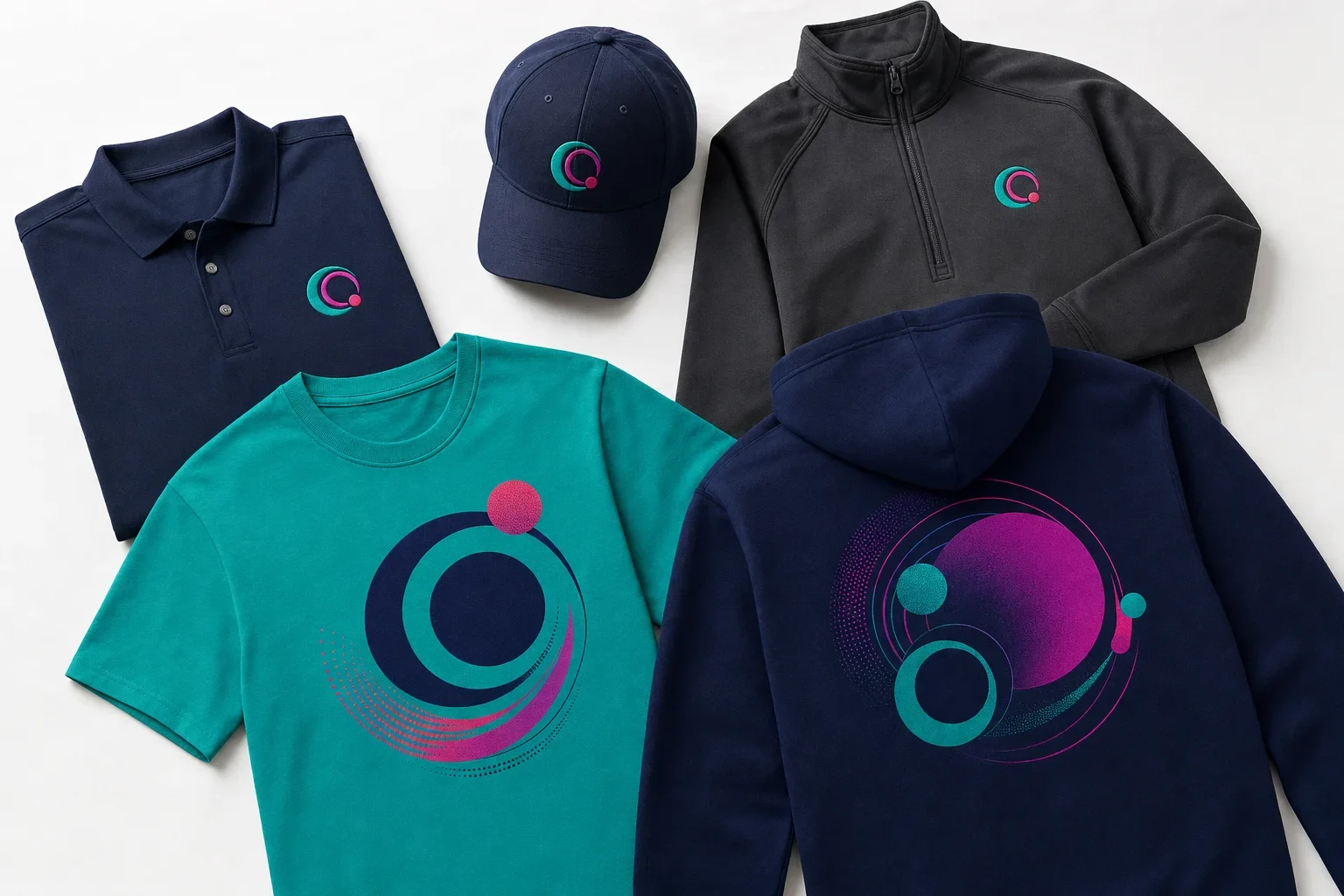
Embroidery and screen printing are priced differently.
Embroidery cost is often affected by stitch count, logo size, complexity, number of locations, and setup or digitizing requirements. A larger embroidered design usually requires more stitches, which can increase cost and production time.
Screen printing cost is often affected by quantity, number of colors, number of print locations, setup, and print size. Larger quantities can make screen printing more cost-effective because setup is spread across more pieces.
There is no universal rule that embroidery or screen printing is always cheaper. The right comparison depends on your exact garment, design, and quantity.
What Affects Cost?
Embroidery and screen printing have different cost drivers.
Embroidery Cost Factors
- Stitch count
- Logo size
- Digitizing
- Garment type
Screen Print Cost Factors
- Quantity
- Number of colors
- Print locations
- Setup and screens
Can Embroidery Be Full Color?
Standard embroidery uses thread colors, so it is not the same as full color printing. Traditional embroidery is usually best for clean logos with a limited number of thread colors.
That said, full color embroidery options are becoming available from some suppliers and decorators. These newer options are designed to create more colorful embroidered designs than traditional thread-only embroidery may allow.
Full color embroidery can be exciting, but it does not mean every full color logo will work on every garment. Product availability, artwork type, stitch detail, fabric, decoration area, and supplier capabilities still matter.
Future topic: full color embroidery
Full color embroidery deserves its own guide because it is different from standard embroidery, screen printing, transfers, and full color digital printing. We will cover when it works, what it looks like, and what limitations still apply in a separate article.
Subtle Embroidery for Employee Gifts
Embroidery can be especially strong for employee gifts because it supports subtle, tasteful branding.
Employees often prefer apparel they can wear without feeling like a walking billboard. A black embroidered logo on a black hoodie, navy thread on a navy quarter zip, or a small logo on the sleeve, cuff, or back yoke can make the item feel more retail-inspired.
For employee appreciation, subtle embroidery often works better than a large high-contrast logo. It still connects the apparel to the company, but it feels more wearable outside work.
Subtle Embroidery Ideas
Tone-on-tone and discreet placements can make employee apparel feel more premium.
Tone-on-Tone
Black thread on black apparel, navy on navy, or tonal stitching for a refined look.
Back Yoke
A discreet placement below the collar on the back of a shirt or jacket.
Sleeve or Cuff
Subtle placement that feels more retail-inspired than a large front logo.
Small Chest Logo
Classic, professional, and appropriate for polos, jackets, and quarter zips.
What If My Logo Has Too Much Detail for Embroidery?
If your logo has too much detail for embroidery, it may need to be simplified. That does not mean your logo is bad. It just means it was likely designed for screens or print, not thread.
Common embroidery adjustments include removing tiny text, thickening thin lines, simplifying icons, reducing gradients to solid thread colors, or using a different logo version for apparel.
Many companies have a simplified version of their logo for embroidery. This can be a smart branding move, not a compromise.
We review embroidery artwork before production
Purple Pie Promos reviews your logo before production to help identify details that may not embroider clearly. If a simplified version, different placement, larger size, or alternate decoration method would work better, we will help guide you before the order moves forward.
Common Mistakes When Choosing Embroidery or Screen Printing
Most problems happen when the artwork, garment, decoration method, and finished expectation do not match.
- Choosing embroidery for tiny text that will not stitch clearly
- Expecting gradients or shadows to look the same in thread as they do on screen
- Using a large embroidered design that becomes heavy or stiff
- Choosing screen printing when the apparel should feel more premium or professional
- Choosing embroidery for photo-style artwork or highly detailed illustrations
- Using a thin, lightweight t-shirt for a stitched logo that may feel too heavy
- Ignoring stitch count, logo size, or garment fabric
- Using a large printed logo on employee apparel when subtle branding would be more wearable
Embroidery vs Screen Printing Checklist
Before choosing between embroidery and screen printing, use this checklist to think through the order.
Embroidery vs Screen Printing Checklist
A strong decoration choice should fit the artwork, garment, and intended use.
Garment
Is it a polo, hat, jacket, t-shirt, hoodie, fleece, or bag?
Logo Size
Is the design small and refined, or large and graphic?
Artwork Detail
Does the logo include tiny text, thin lines, gradients, shadows, or photos?
Finished Look
Should the garment feel premium and professional or bold and casual?
Quantity
Is this a small premium order or a larger apparel run?
Review
Has the artwork been reviewed for embroidery or screen printing before production?
The Bottom Line
Embroidery and screen printing are both excellent decoration methods, but they work best in different situations.
Embroidery is usually better for polos, hats, jackets, quarter zips, uniforms, and premium apparel because it creates a raised, textured, higher-value look. Screen printing is usually better for t-shirts, sweatshirts, event apparel, large graphics, and bold printed designs.
If your logo includes small details, gradients, shadows, photographs, or tiny text, it may need to be simplified for embroidery or printed instead. Purple Pie Promos reviews your artwork and decoration options before production so the method makes sense for the garment and logo.
Choose embroidery for polish, screen printing for bold graphics
Embroidery feels premium and professional. Screen printing works beautifully for larger, flatter, more graphic designs.
The best choice is the one that fits the garment, the logo, and how the apparel will actually be worn.
Need help choosing embroidery or screen printing?
Purple Pie Promos can review your logo, garment, placement, artwork detail, and decoration options to help determine whether embroidery, screen printing, transfer, or another method makes the most sense.
Request Apparel Decoration Help