

Quick Answer
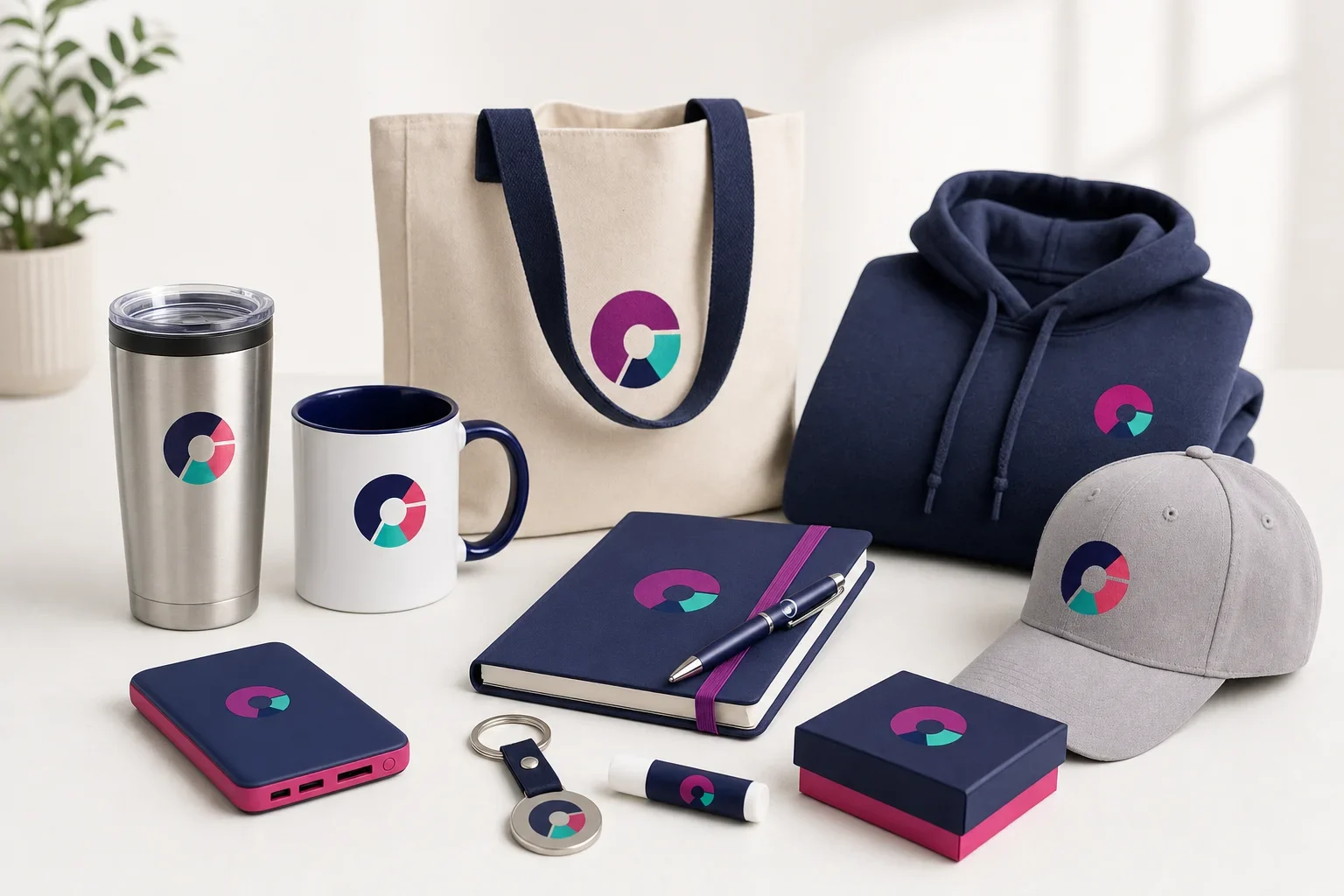
Promotional products are custom items decorated with a logo, message, design, or brand mark. Businesses, schools, nonprofits, healthcare organizations, teams, events, and government agencies use them for giveaways, employee gifts, client appreciation, trade shows, onboarding kits, uniforms, fundraising, and everyday brand visibility. Popular examples include custom pens, tote bags, drinkware, apparel, notebooks, tech accessories, hats, bags, awards, and corporate gifts.
Promotional products can seem simple from the outside. Pick an item, add a logo, hand it out. Easy enough, right?
But once you start ordering, tiny questions begin to multiply like pens in a junk drawer. What product should you choose? Will people actually use it? Can your logo fit? What does “imprint area” mean? Is a proof the same as a sample? Why do some products have minimum quantities? Why does one decoration method work on a tumbler but not a tote bag?
This FAQ answers the beginner questions customers often ask before placing a custom promotional product order. If you are new to ordering branded products, this is a good place to start.
What Are Promotional Products?
Promotional products are physical items customized with a logo, name, message, design, or brand mark. They are used to promote a business, organization, event, school, nonprofit, team, campaign, or cause.
The most common examples include pens, tote bags, t-shirts, polos, hats, water bottles, mugs, notebooks, keychains, magnets, lip balm, tech accessories, calendars, bags, awards, and corporate gifts.
Some promotional products are simple giveaways. Others are more polished gifts. Some are used by customers. Some are used by employees. Some are given away at events. Others become uniforms, onboarding kits, sales tools, thank-you gifts, or branded supplies for daily business use.
Promotional Products Can Be Many Things
The best item depends on who will receive it, where it will be used, and what you want it to accomplish.
Giveaways
Pens, magnets, tote bags, keychains, stickers, and small event items that are easy to hand out in quantity.
Apparel
T-shirts, polos, hoodies, jackets, hats, uniforms, and staff apparel decorated with a logo or message.
Drinkware
Water bottles, tumblers, mugs, travel cups, and insulated drinkware for daily use, events, and gifts.
Corporate Gifts
Higher-value branded gifts for clients, employees, executives, partners, donors, and VIP recipients.
Event Supplies
Lanyards, badges, bags, notebooks, signage items, table covers, and giveaways for conferences or trade shows.
Workplace Items
Branded notebooks, pens, mugs, apparel, bags, and supplies employees can use in the office or in the field.
Why Do Businesses Use Promotional Products?
Businesses use promotional products because useful items can keep a brand visible in everyday life. A digital ad disappears quickly. A useful mug, pen, tote, shirt, notebook, or water bottle can sit on a desk, travel to meetings, go to the gym, live in a car, or get used again and again.
Promotional products can help with brand awareness, customer appreciation, employee engagement, event traffic, lead generation, referrals, loyalty, fundraising, and professional presentation.
The goal is not just to put a logo on something. The goal is to choose an item that makes sense for the audience and gives the recipient a reason to keep it.
Common Reasons to Order Promotional Products
Different goals call for different products, budgets, and decoration choices.
Do Promotional Products Actually Work?
Promotional products can work very well when they are useful, relevant, and matched to the right audience. A product people keep and use has a better chance of creating repeated brand exposure than an item that feels random or disposable.
The key is choosing the right item for the situation. A cheap pen may work perfectly for a front desk or large event. A premium tumbler may be better for a client gift. A branded tote may work well at a conference. A hoodie may be great for employee appreciation. A notebook may be useful for training, schools, or onboarding.
For a deeper look at strategy, read our guide on why promotional products work.
What Can I Put My Logo On?
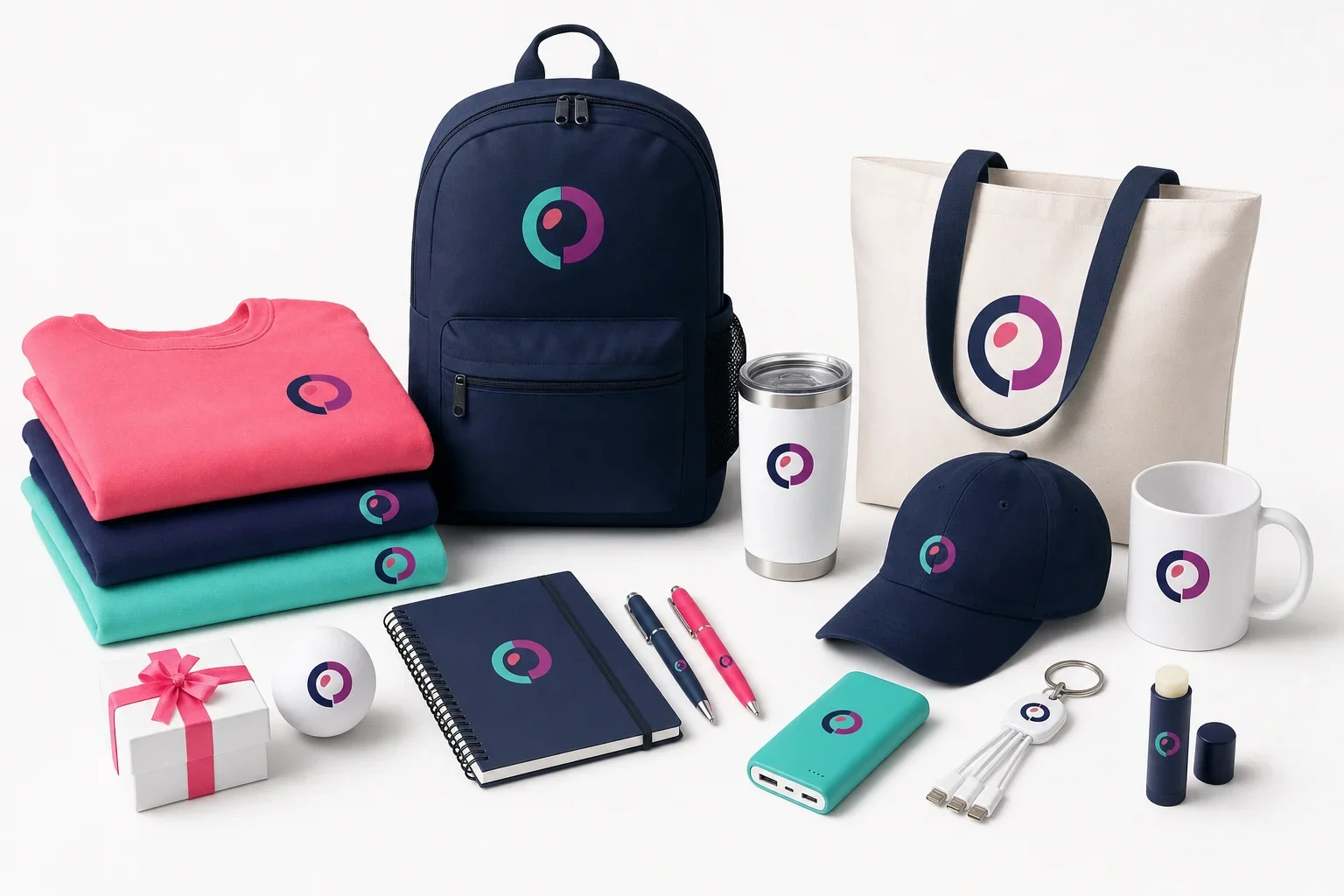
You can put your logo on thousands of different products, including apparel, drinkware, bags, writing instruments, office items, tech accessories, wellness products, outdoor items, food gifts, awards, event supplies, and more.
Not every product can be decorated the same way. The material, shape, imprint area, color, texture, and decoration method all affect what is possible. A logo that works on a tote bag may need a different setup for a tumbler, hat, pen, notebook, or jacket.
If you are not sure where to start, choose the product based on the audience first. The logo placement and decoration method can be reviewed after the product direction is clear.
How Do I Choose the Right Promotional Product?
Start with the recipient and the goal. The best promotional product is not always the newest, trendiest, or most expensive item. It is the item that makes sense for the person receiving it.
Ask yourself where the product will be used, how long you want it to last, how it will be distributed, and what impression you want to create.
How to Choose a Promotional Product
A good product choice starts with the audience, not the logo.
Audience
Who will receive the item? Customers, employees, students, donors, trade show attendees, patients, or prospects?
Purpose
Is the product meant to attract attention, thank someone, support an event, drive referrals, or build loyalty?
Usefulness
Will the recipient actually use it, wear it, drink from it, carry it, write with it, or keep it nearby?
Distribution
Will the item be mailed, handed out at an event, placed in a welcome kit, used by staff, or shipped to clients?
Budget
Do you need a large quantity of affordable items, fewer premium gifts, or a mix of both?
Timing
Do you have enough time for proofing, production, shipping, and any event deadline?
For more help, read How to Choose Promotional Products.
What Are the Most Popular Promotional Products?
Popular promotional products include pens, tote bags, t-shirts, polos, hoodies, hats, water bottles, tumblers, mugs, notebooks, journals, lanyards, keychains, magnets, stickers, lip balm, hand sanitizer, tech accessories, bags, calendars, and corporate gifts.
Popularity depends on the audience and use case. A construction company may love hats, safety items, workwear, and drinkware. A tech company may prefer power banks, cables, backpacks, notebooks, and premium desk items. A healthcare office may need pens, magnets, pill boxes, wellness items, and staff apparel. A real estate office may use closing gifts, signs, keychains, notepads, and tote bags.
There is no single best promotional product for every business. The best choice is the one that fits the campaign.
Are Cheap Promotional Products Bad?
No. Affordable promotional products are not automatically bad. Low-cost items can be very effective when they are practical and used in the right setting.
A simple pen can be perfect for a front desk. A magnet can work well for service businesses. A tote bag can be useful at an event. A small giveaway can help you reach a large audience without overspending.
The issue is not price alone. The issue is whether the item feels useful, appropriate, and worth keeping. A budget-friendly product that gets used is usually better than a more expensive item that does not fit the audience.
For more ideas, read our guide to budget-friendly promotional products.
When Should I Choose a Premium Promotional Product?
Premium promotional products make sense when the recipient list is smaller, the relationship is more valuable, or the gift needs to make a stronger impression.
Premium items are often used for client appreciation, employee recognition, executive gifts, donor gifts, onboarding kits, sales meetings, holiday gifts, milestone gifts, and VIP events.
Examples may include high-quality drinkware, premium bags, name-brand gifts, jackets, tech products, curated gift sets, leatherette items, notebooks, awards, and branded gift boxes.
Budget Giveaway vs. Premium Gift
Both can be effective. The right choice depends on quantity, audience, and purpose.
Budget Giveaway
- Best for large audiences
- Good for trade shows and community events
- Lower cost per item
- Easy to distribute in quantity
Premium Gift
- Best for smaller recipient lists
- Good for clients, employees, and VIPs
- Higher perceived value
- More memorable when chosen well
How Far in Advance Should I Order Promotional Products?
It is best to order as early as possible, especially if you have an event date. Promotional products usually require artwork review, proofing, production, and shipping. Some items may also require setup time, decoration scheduling, inventory checks, or special handling.
Exact timelines vary by product, quantity, decoration method, supplier, proof approval, shipping method, and season. Rush options may be available on some items, but they are not guaranteed for every product.
If the products are for a trade show, conference, school event, fundraiser, holiday gift, or company deadline, build in extra time. The calendar is sneaky. It wears quiet shoes.
What Is a Minimum Order Quantity?
A minimum order quantity is the smallest number of units that can be ordered for a specific product or decoration method. For example, one product may have a minimum of 50 pieces, while another may require 100, 250, or more.
Minimums exist because custom production requires setup, artwork preparation, decoration equipment, labor, and handling. The minimum helps make the production process practical for the supplier.
Minimum quantities vary widely by product. Some items have low minimums, while others require higher quantities. If you only need a small number of items, Purple Pie Promos can help look for products that fit lower-quantity needs when available.
Can I Order Just One Custom Promotional Product?
Sometimes, but not always. Many promotional products have minimum order quantities because they are produced in batches. A single custom item may be possible for certain products, but it is not standard across the promotional products industry.
If you need one sample, one gift, or a very small quantity, the available options may be more limited. The product, decoration method, supplier, and setup requirements all matter.
What Is an Imprint Area?
The imprint area is the space on the product where your logo or design can be decorated. Every product has its own imprint area based on its shape, material, size, and decoration method.
A pen may have a narrow imprint area. A tote bag may have a larger flat imprint area. A tumbler may allow a small front imprint, a wrap imprint, engraving, or another decoration option depending on the item. A hat may have limits because of seams, curves, panels, and embroidery constraints.
Imprint area matters because a logo that looks great on a screen may become too small, too detailed, or too hard to read when placed on a product.
For more detail, read How Large Can My Logo Print?.
What Is a Decoration Method?
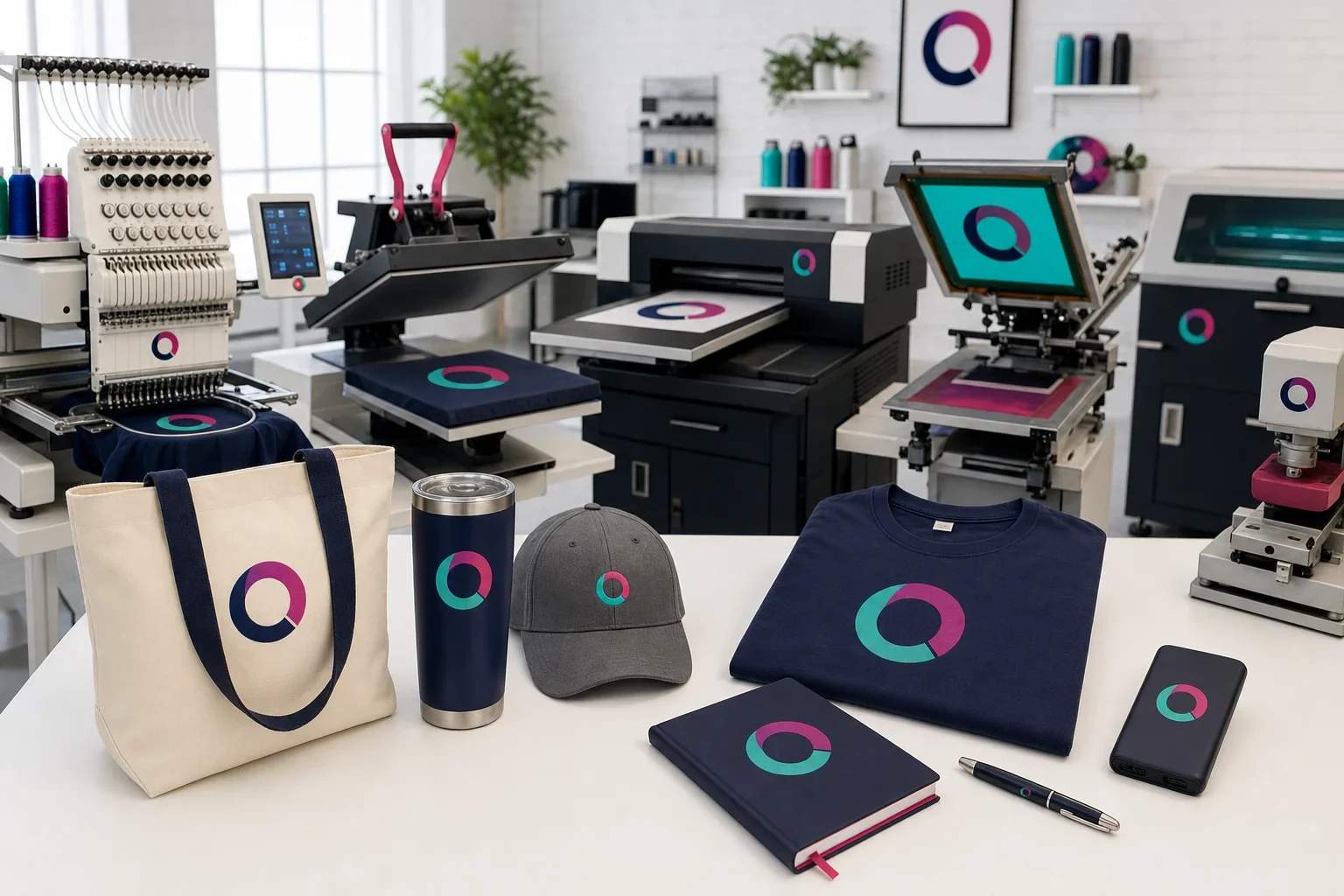
A decoration method is the process used to apply your logo or design to the product. Common methods include screen printing, embroidery, laser engraving, pad printing, full color digital printing, transfers, decals, sublimation, debossing, embossing, and hot stamp.
The best method depends on the product, material, artwork, imprint area, color count, quantity, and desired look.
You do not need to choose perfectly on your own. Purple Pie Promos reviews your artwork, product, imprint area, and decoration method before production. If the artwork needs adjustment or another method would produce a better result, we help guide you before the order moves forward.
For more help, read Which Decoration Method Should I Choose?.
What Artwork File Should I Send?
Send the best artwork file you have. Vector artwork is usually best for logos because it can be resized without becoming blurry. Common helpful file types may include AI, EPS, SVG, or a vector PDF.
High-resolution PNG or JPG files can work for some full color methods, but screenshots, tiny website logos, social media images, and email signature graphics are often not production-ready.
A PDF can contain vector artwork, but not every PDF is actually vector. Sometimes a low-resolution image is simply placed inside a PDF, which does not improve the artwork quality.
For more detail, read What Is Vector Artwork? and What File Types Can I Upload?.
What If My Logo Is Blurry?
A blurry logo usually means the artwork is low resolution, too small, copied from a website, compressed, screenshotted, or not built in a scalable format.
Sometimes a blurry file can be used as a reference, but it may not be ready for production. If a sharper file is needed, Purple Pie Promos will let you know before the order moves forward.
For more help, read Why Does My Logo Look Blurry? and Why Artwork Quality Matters.
What Is a Proof?
A proof is a visual preview that shows how your artwork is expected to appear on the product. It may show placement, size, imprint color, and general layout.
A proof is important because it gives you a chance to review the logo, spelling, placement, color notes, and overall appearance before production begins.
A proof is not always an exact physical sample, and it does not automatically fix poor artwork. It is a review step that helps confirm the order details before production.
For more detail, read What Is a Print Proof? and Proofs FAQ.
Can You Match My Brand Colors?
Brand color matching may be possible depending on the product, material, decoration method, ink, thread, product color, and supplier capabilities. Pantone colors are often used to help standardize color communication.
However, exact color matches are not always possible on every product. A logo color can look different on fabric, metal, plastic, glass, paper, ceramic, or dark-colored products. Engraving does not print a color at all. Embroidery uses thread. Full color printing may vary by material and production process.
If brand color is important, provide Pantone colors if you have them. Purple Pie Promos can help review what is realistic for the product and method selected.
For more detail, read What Are Pantone Colors?, Can You Match My Brand Colors?, and Why Do Colors Look Different on Products?.
Can I Use Multiple Logo Colors?
Often, yes. Whether multiple colors can be used depends on the product and decoration method.
Some screen print or pad print options may be limited to one color. Other products may allow two, three, four, or full color decoration. Transfers, full color digital printing, decals, sublimation, and some other methods may be better for colorful designs.
Multiple print colors can also affect cost because each color may require additional setup, production time, or a different decoration process.
For more detail, read Why Does Each Print Color Cost More? and Full Color Digital vs Full Color Transfer.
Why Do Product Colors, Materials, and Decoration Methods Matter?
The same logo can look different on different products because every material behaves differently. Ink may look different on cotton than it does on plastic. Thread has a different texture than print. Laser engraving reveals or marks the product surface instead of adding full color ink. A dark product may need additional steps to make a logo visible.
This is why product selection and decoration method are connected. A product is not just a blank object. It has a surface, shape, texture, color, and imprint area that affect the final result.
Can I See a Sample Before Ordering?
Samples may be available for some products, depending on the item, supplier, inventory, timing, and whether you need a blank sample or a decorated sample.
A blank sample can help you evaluate size, material, color, feel, and general quality. A decorated pre-production sample may be possible on some orders, but it can add time and cost and is not available for every product or timeline.
If you are ordering for an important event, a premium gift, or a large project, ask about sample options early in the process.
How Much Do Promotional Products Cost?
Promotional product pricing depends on the item, quantity, decoration method, number of imprint colors, setup requirements, shipping, rush needs, packaging, and any special services.
In general, larger quantities often reduce the per-item cost, but the total order cost is higher. Premium products cost more per item, but they may create a stronger impression for smaller recipient lists.
When comparing products, look beyond the item price alone. Decoration, setup, shipping, timing, and usefulness all matter.
Why Does Quantity Affect Pricing?
Custom promotional products require setup before production. Artwork may need to be reviewed, proofs prepared, machines set up, screens created, embroidery files digitized, print processes configured, or products prepared for decoration.
Because of that setup, larger quantities can often spread those costs across more pieces. This is why the per-item price often goes down as quantity increases.
That does not mean you should always order more. It means quantity should be balanced against your actual distribution plan, storage space, budget, and campaign goals.
What Is Setup?
Setup refers to the preparation needed to decorate a product. Depending on the method, setup may include preparing artwork, creating a screen, digitizing embroidery, configuring a printer, preparing a transfer, setting up engraving equipment, or making the product ready for production.
Setup requirements vary by product and decoration method. They are one reason custom promotional products have different pricing than plain retail items.
What Is the Difference Between Promotional Products and Corporate Gifts?
Corporate gifts are a type of promotional product, but they are usually higher-value, more personal, or more curated than standard giveaways.
A promotional product might be a pen, tote bag, magnet, or event giveaway. A corporate gift might be an insulated tumbler, premium backpack, jacket, gift set, award, tech product, gourmet item, or name-brand item sent to a smaller group of clients or employees.
For more help choosing higher-value gifts, read Best Corporate Gifts.
What Promotional Products Are Best for Trade Shows?
Trade show promotional products should be easy to carry, useful during or after the event, and appropriate for the audience. Popular options include tote bags, pens, notebooks, lanyards, water bottles, tech accessories, badge holders, mints, hand sanitizer, lip balm, magnets, and small giveaways.
For trade shows, it can be helpful to use a mix of broad giveaways and higher-value items for qualified leads. Not every attendee needs the same item.
For more ideas, read Best Promotional Products for Trade Shows.
What Promotional Products Are Best for Employees?
Employee promotional products should feel useful, comfortable, and connected to the work experience. Popular options include apparel, drinkware, notebooks, pens, backpacks, lunch bags, desk items, tech accessories, blankets, hats, jackets, wellness items, and welcome kits.
Employee gifts work best when they are not just logo items, but items people would actually want in their day.
For more ideas, read Best Promotional Products for Employee Appreciation and Employee Welcome Kit Ideas.
What Promotional Products Are Best for Customers?
Customer promotional products should match the relationship. A simple giveaway may be enough for broad awareness. A thoughtful thank-you gift may be better for loyal customers, repeat buyers, referrals, or long-term clients.
Useful options include drinkware, bags, calendars, magnets, pens, notebooks, apparel, tech accessories, home items, food gifts, and seasonal gifts.
Are Eco-Friendly Promotional Products Available?
Yes. Eco-friendly promotional products may include items made with recycled materials, reusable products, bamboo, organic cotton, recycled paper, wheat straw, recycled plastic, reusable bags, refillable bottles, and other lower-waste options.
Eco-friendly claims can vary by product, material, and supplier, so it is important to review the specific item details rather than assuming every “green” product is the same.
For more ideas, read Eco-Friendly Promotional Products.
Can Purple Pie Promos Help Me Choose?
Yes. Purple Pie Promos can help you narrow down products based on your audience, budget, timeline, quantity, event, artwork, and goals.
You do not need to know the perfect item before reaching out. Sometimes the best starting point is simply knowing who the product is for and what you want it to do.
Helpful details to share
If you are asking for product ideas, include your audience, event date, approximate quantity, budget range, product preferences, logo colors, shipping deadline, and whether you want simple giveaways, premium gifts, apparel, kits, or something specific.
Common Promotional Product Mistakes
Promotional products work best when they are planned around the audience, timeline, artwork, and purpose. These are some common mistakes to avoid.
- Choosing an item only because it is cheap
- Waiting too long before an event deadline
- Using blurry or low-quality artwork
- Trying to fit too much text into a small imprint area
- Choosing a product without thinking about how it will be distributed
- Assuming every product can use every decoration method
- Expecting exact color matches on every material and item
- Ordering a trendy product that does not fit the audience
- Forgetting about shipping time, proof approval, and production time
- Not reviewing the proof carefully before approval
Promotional Products Checklist
Before ordering promotional products, use this checklist to organize the basics.
Before You Order
A little planning helps avoid delays, artwork issues, and last-minute product panic.
Goal
What should the product do? Build awareness, thank someone, support an event, or promote a campaign?
Audience
Who will receive it, and what would they actually keep or use?
Quantity
How many pieces do you need, including extras for staff, late additions, or replacements?
Artwork
Send the best logo file you have, preferably vector artwork when available.
Timeline
Allow time for artwork review, proof approval, production, shipping, and event delivery.
Budget
Think about total project cost, not just item price. Decoration and shipping matter too.
The Bottom Line
Promotional products are custom branded items used to promote businesses, events, organizations, schools, nonprofits, teams, and campaigns. They can be simple giveaways, useful everyday items, employee gifts, uniforms, corporate gifts, trade show tools, or appreciation pieces.
The best promotional product is the one that fits your audience, purpose, budget, timeline, and artwork. A small item can work beautifully when it is useful and well matched to the recipient. A premium gift can make a stronger impression when the relationship calls for it.
Start with the person receiving the product
The strongest promotional products are chosen around the audience first, then matched with the right logo placement, decoration method, quantity, and timeline.
You do not need to know every product or printing term before ordering. Purple Pie Promos can help guide the process from idea to finished product.
Need help choosing promotional products?
Purple Pie Promos can help you find useful branded products for trade shows, employee gifts, customer appreciation, events, onboarding kits, corporate gifts, schools, nonprofits, healthcare, and everyday business promotion.
Request Product Ideas