


Quick Answer
Dark shirts often cost more to print because the ink has to be made visible on a dark background. In many screen printing jobs, that means printing a white underbase first, flash curing it, then printing the logo colors on top. That can require extra screens, extra ink, extra setup, extra alignment, and more production time. The shirt color, artwork, decoration method, fabric, and number of print colors all affect the final price.
It can be confusing when the same logo costs more on a black shirt than on a white shirt. The design may be identical. The quantity may be identical. The shirt style may be almost identical. So why does the price change?
The short explanation is that dark fabric changes how ink behaves. A color that looks bright on a white shirt can look dull, muddy, or nearly invisible on a black, navy, charcoal, forest green, maroon, or other dark garment.
To make the print stand out, the decorator may need to add extra production steps. The most common step is a white underbase, which acts like a foundation beneath the visible logo colors. That underbase helps bright colors stay bright instead of sinking into the dark fabric like a tiny logo ghost disappearing into the laundry void.
This guide explains why dark shirts can cost more to print, what an underbase is, why flash curing matters, and when another decoration method may make more sense.
You do not need to figure this out alone
Purple Pie Promos reviews your artwork, garment color, fabric, imprint area, and available decoration options before production. If a dark shirt needs an underbase, if the logo should be simplified, or if another method would produce a better result, we help guide you before the order moves forward.
Why Dark Fabric Changes the Print
Printing on a white or light shirt is usually more straightforward because the garment color does not fight the ink as much. The light background helps the printed colors appear bright and visible.
Dark shirts are different. The garment color can show through the ink, especially when the ink is thin, transparent, light-colored, or printed directly onto the fabric without a base layer.
For example, bright teal ink printed directly onto a white shirt may look clean and vibrant. That same teal ink printed directly onto a black shirt may look darker, duller, or less accurate.
Light Shirt vs Dark Shirt Printing
The garment color affects how printed ink appears.
Light Shirts
- Ink is easier to see
- Colors often appear brighter
- May need fewer print layers
- Often simpler to produce
Dark Shirts
- Fabric color can show through
- Colors may need a white base
- May need extra ink layers
- Often requires more setup
What Is a White Underbase?
A white underbase is a layer of white ink printed underneath the visible logo colors. It helps block the dark shirt color so the colors printed on top can appear brighter and more accurate.
Think of it like painting a wall. If you paint a bright color over a dark wall, the color may not look right unless you prime the wall first. The underbase acts like that primer for the print.
On dark shirts, the underbase can be one of the biggest reasons the job costs more. It may require its own screen, its own ink, its own print pass, and its own curing step before the other colors are printed.
How an Underbase Works
A white base layer can help logo colors stand out on dark fabric.

Why the Underbase Adds Cost
The underbase is not just a little extra white ink. It can add another production layer to the job.
In screen printing, each color layer may need its own screen. If the logo has three colors and the shirt is dark, the job may need an additional screen for the white underbase. That means more artwork preparation, more setup, more registration, more ink, more testing, and more cleanup.
Even if the logo only has one visible color, a dark shirt may still need white ink underneath that color to make it show properly.
What the Underbase Can Add
The extra cost usually reflects real production work.
Another Screen
The white base may require its own prepared screen or stencil.
More Ink
White ink is printed first so the visible colors have a brighter foundation.
More Setup
The underbase must be aligned with the colors printed on top.
More Curing
The base layer may need to be flash cured before additional colors print.
More Testing
Test prints help make sure the colors are visible and aligned correctly.
More Cleanup
Additional screens, ink, and tools may need cleaning after production.
What Is Flash Curing?
Flash curing is a quick heating step used during screen printing. It partially cures or dries a layer of ink before the next layer is printed.
On dark shirts, the white underbase may be printed first and then flash cured. This helps prevent the next colors from mixing into the wet white ink and helps the print layers stack more cleanly.
Flash curing takes equipment, time, and attention. It can also affect how the shirt feels because more ink layers can make the print area feel heavier or more noticeable.
Why Flash Curing Matters
Flash curing helps layered prints stay clean and bright.
Why Multi-Color Logos Cost More on Dark Shirts
Multi-color logos can already require more setup because each print color may need its own screen. On a dark shirt, the underbase may add another layer on top of that.
For example, a three-color logo on a light shirt may need three print colors. The same three-color logo on a dark shirt may need those three colors plus a white underbase. That can mean four screens or four production layers, depending on the print method and artwork.
The more layers involved, the more important alignment becomes. Each screen has to register correctly so the underbase sits under the colors without peeking out around the edges.
For more detail, read our guide on why each print color costs more.
Color Layers on Dark Shirts
Dark shirts can add a hidden layer beneath the visible logo colors.
Light Shirt Example
- Color 1
- Color 2
- Color 3
- Fewer layers in many cases
Dark Shirt Example
- White underbase
- Color 1
- Color 2
- Color 3
Why Alignment Is More Important on Dark Shirts
When a white underbase is printed under the logo colors, it needs to line up carefully with the design. If it is slightly too large or slightly misaligned, a white edge can show around the printed logo.
This is one reason dark shirt printing can involve more test prints and more careful setup. The printer may need to adjust the screens so the base layer and top colors land correctly.
Artwork with fine outlines, tight registration, small details, or multiple colors can make this more time-consuming.
Registration on Dark Shirts
The base layer and color layers need to line up cleanly.
Base Layer
The white underbase needs to sit under the visible colors.
Color Layers
The printed colors must align with the underbase and each other.
Test Prints
Testing helps catch alignment issues before the full order runs.
Fine Detail
Small outlines and tight artwork can require more careful registration.

Why White Ink Can Be More Difficult
White ink is often thicker and more opaque than many colored inks because it needs to block the garment color underneath. That opacity is what helps the print show up on dark fabric.
Because white ink can be thicker, it may require more careful handling, printing pressure, curing, and testing. It can also affect the feel of the print, especially when used as an underbase beneath other colors.
This is another reason dark shirt printing can take more production attention than a simple one-color print on a light shirt.
Does Every Dark Shirt Need an Underbase?
No. Not every dark shirt needs an underbase. It depends on the artwork, shirt color, ink color, desired look, decoration method, and product.
A black ink print on a dark gray shirt may not need a white base if the goal is a subtle tone-on-tone look. A white logo on a black shirt may simply use white ink. A bright full color design on a black shirt is more likely to need an underbase or another full color decoration method.
The question is not just “Is the shirt dark?” The question is “What does the design need to look like on that dark fabric?”
Helpful way to think about it
If the logo needs to look bright, bold, or color-accurate on a dark shirt, extra production steps may be needed. If the logo is meant to be subtle, the setup may be different.
Why Dark Shirts Can Affect Print Feel
Because dark shirts may need more ink layers, the print can sometimes feel thicker than the same design on a light shirt.
A white underbase plus top colors can add more material to the garment. Larger designs, solid color blocks, and multiple print layers may feel more noticeable on the shirt.
This does not mean dark shirt prints are bad. It just means design size and artwork style matter. A large solid rectangle will usually feel heavier than a smaller logo or a design with open space.
What Affects Print Feel?
The more ink coverage a design needs, the more noticeable the print may feel.
Underbase
A white base layer can add thickness under the visible logo colors.
Print Size
Larger designs usually feel more noticeable than small logos.
Solid Coverage
Big blocks of ink can feel heavier than artwork with open space.
Fabric Type
Cotton, blends, fleece, and performance fabrics can all feel different when printed.
Why Fabric Type Matters
The shirt color is important, but the fabric also matters.
Cotton, polyester, cotton-poly blends, fleece, performance fabrics, and tri-blends can all print differently. Some fabrics absorb ink differently. Some stretch more. Some are heat sensitive. Some dark polyester garments can have dye migration, where the garment dye affects the printed color.
This is why two dark shirts may not print exactly the same even if they look similar online. The garment material, color, and decoration method all work together.
Dark Shirt Fabric Factors
The fabric can affect cost, method, feel, and color results.
Cotton
Often a common screen printing choice, but dark colors may still need an underbase.
Polyester
May need extra care because heat and dye migration can affect the print.
Blends
Can vary depending on the mix, finish, stretch, and garment color.
Fleece
Hoodies and sweatshirts may require different handling than lightweight tees.
Dark Shirts and Full Color Artwork
Full color artwork on dark shirts can be especially complex. If the design includes gradients, photographs, many colors, or small details, traditional screen printing may not be the best option.
Depending on the garment, quantity, and artwork, a transfer, DTF, DTG, or another full color method may be a better fit. These methods may still have their own requirements for dark garments, but they can sometimes handle colorful artwork more practically than separating many screen print colors.
For more detail, read our guides on screen printing vs DTG vs DTF, screen printing vs transfers, and full color digital vs full color transfer.
Dark Shirt Artwork Choices
The right method depends on how complex the artwork is.
Simpler Artwork
- One or two solid colors
- Bold logo shapes
- Limited detail
- May work well with screen printing
Complex Artwork
- Full color design
- Gradients or shadows
- Photo-style graphics
- May need a transfer, DTG, or DTF
Can You Save Money by Choosing a Lighter Shirt?
Sometimes, yes. If your artwork is bright, colorful, or uses multiple print colors, choosing a white or light-colored shirt may reduce the need for an underbase and extra print layers.
That does not mean light shirts are always cheaper in every situation, but they can simplify printing for certain designs.
If your budget is tight and the shirt color is flexible, it is worth comparing dark and light garment options. A heather gray, white, natural, light blue, or pastel shirt may print more easily than black or navy.
Budget tip
If you want a colorful logo and the shirt color is flexible, ask whether a lighter garment could simplify the decoration. Sometimes the simplest path is choosing a shirt color that helps the artwork instead of wrestling it in the ink swamp.
Can You Save Money by Simplifying the Artwork?
Often, yes. A one-color version of your logo may be less expensive to print than a full color or multi-color version, especially on dark apparel.
For example, instead of printing a three-color logo with an underbase, you might choose a white-only version, a tone-on-tone version, or a simplified mark.
Simplified artwork can still look professional. In some cases, it can look more stylish and wearable than a busy full color logo.
Ways to Simplify Dark Shirt Printing
Small artwork choices can affect cost, feel, and final appearance.
Use One Color
A white or light one-color print can be simpler than a multi-color logo.
Remove Gradients
Solid artwork is usually easier to produce than soft fades or shadows.
Use Open Space
Artwork with less solid coverage may feel lighter on the garment.
Consider Tone-on-Tone
Subtle prints can look premium without needing bright color coverage.
Is Printing on Dark Shirts Worth It?
Absolutely, when dark shirts fit the audience, brand, and design.
Dark shirts are popular because they are wearable, practical, and often more flattering than white shirts. Black, navy, charcoal, and dark heather shirts can feel more retail-inspired and less like basic event apparel.
The key is understanding that dark shirts may need more production work to get the print right. When planned properly, dark apparel can look excellent.
Why Dark Shirts Are Still Popular
Dark apparel can be worth the added production steps when it fits the campaign.
Wearable
Dark shirts often feel easier to wear repeatedly than white event shirts.
Retail Feel
Black, navy, and charcoal garments can feel more polished and modern.
Strong Contrast
Bright logos can look bold and memorable when printed correctly.
Brand Fit
Dark apparel may better match some brands, teams, events, or uniforms.

Common Mistakes With Dark Shirt Printing
Most issues happen when dark garment printing is treated the same as light garment printing. The shirt color, artwork, ink opacity, print method, and fabric all need to be considered together.
- Assuming the same logo will cost the same on white and black shirts
- Forgetting that bright colors may need a white underbase
- Using full color artwork without considering transfers, DTG, DTF, or other methods
- Choosing very large solid print areas without considering print feel
- Using tiny details that make registration more difficult
- Expecting exact screen color matches on dark fabric without review
- Choosing polyester or performance fabrics without considering dye migration or heat sensitivity
- Waiting too long to order when dark apparel and multi-layer decoration may need extra production planning
Dark Shirt Printing Checklist
Before choosing dark shirts for a custom apparel order, use this checklist to understand what may affect pricing and production.
Dark Shirt Printing Checklist
A strong dark apparel order should match the garment, artwork, method, and budget.
Shirt Color
Is the garment black, navy, charcoal, dark green, maroon, or another dark color?
Artwork Colors
Does the logo need bright colors, white ink, or full color reproduction?
Underbase
Will the design need a white base layer so the colors show clearly?
Print Method
Is screen printing, transfer, DTF, DTG, embroidery, or another method the best fit?
Print Feel
Will the design size and ink coverage feel comfortable on the garment?
Fabric Type
Is the garment cotton, polyester, fleece, blend, or performance fabric?
The Bottom Line
Dark shirts can cost more to print because they often need extra steps to make the logo visible and accurate. A white underbase, flash curing, additional screens, more ink, careful registration, test prints, and fabric-specific considerations can all affect the final price.
That does not mean dark shirts are a bad choice. In many cases, they are more wearable, more stylish, and more aligned with the brand. They just need the right decoration plan.
Purple Pie Promos reviews your artwork, garment color, fabric, imprint area, and decoration options before production so your dark apparel order is set up with the right method and expectations.
Dark shirts are not just white shirts in disguise
They often need extra ink, extra setup, and extra care so the logo shows clearly.
The best results come from matching the shirt color, artwork, fabric, and decoration method before production begins.
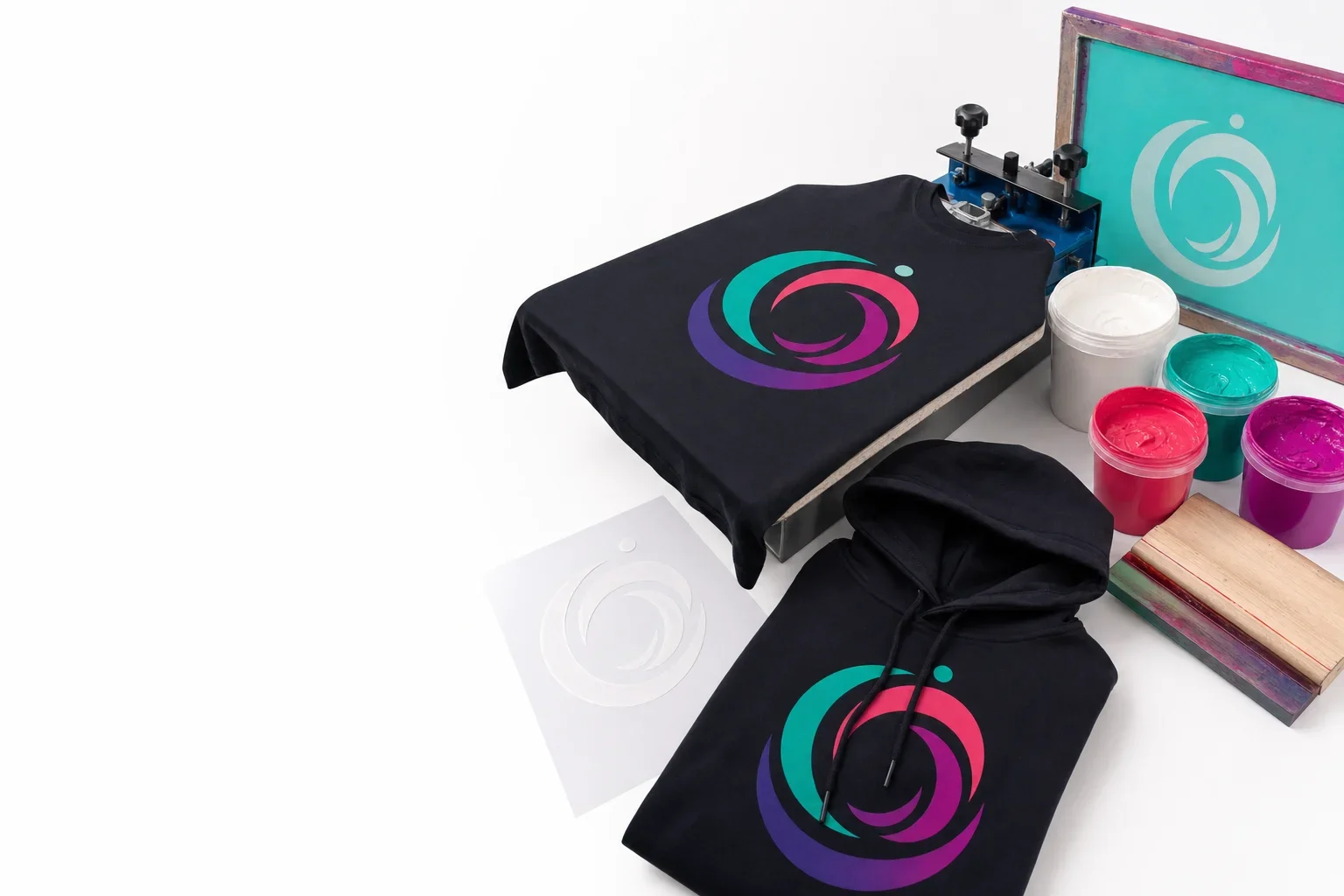
Need help printing on dark shirts?
Purple Pie Promos can review your logo, shirt color, fabric, quantity, and decoration options to help determine whether screen printing, transfer, DTG, DTF, embroidery, or another method makes the most sense.
Request Apparel Decoration Help