

Quick Answer
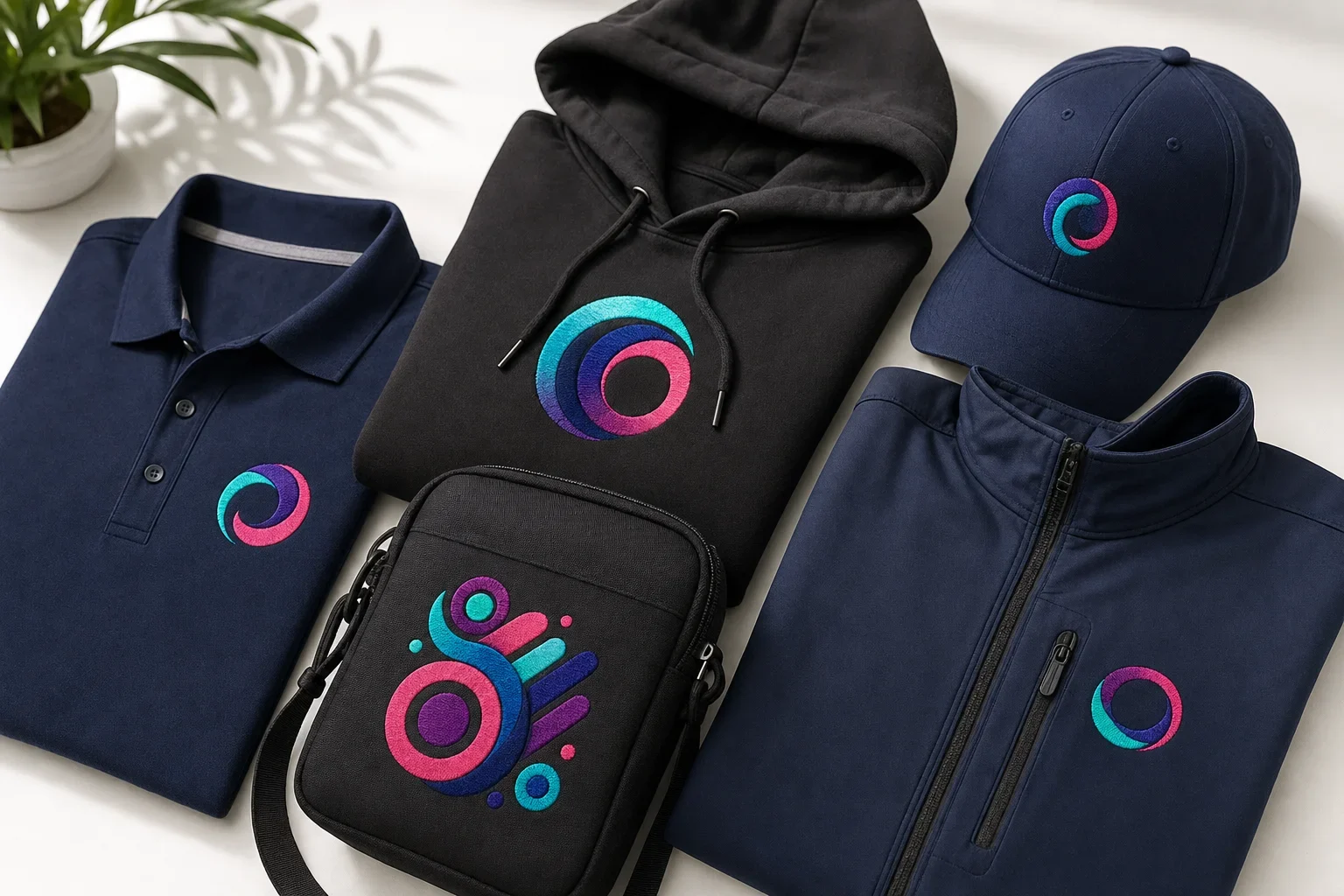
Full color embroidery is an advanced embroidery option that can create more color variation than traditional embroidery. Standard embroidery uses pre-dyed thread colors, while some full color embroidery systems use digitally colored thread or specialized production methods to create gradients, shading, and more complex color effects. It can be a good option when you want the higher perceived value of embroidery with more color detail, but it is not the same as full color printing and is not available on every product.
Traditional embroidery is beautiful, durable-looking, and premium, but it has always had one major limitation: thread colors.
With standard embroidery, a logo is stitched using a set number of thread colors. That works very well for clean logos, simple icons, bold text, and professional apparel. But it can become difficult when a logo has gradients, shading, many colors, or artwork that was originally designed for digital or print use.
Full color embroidery is a newer option that helps bridge that gap. It gives embroidery more color flexibility while still keeping the texture and perceived value of a stitched logo.
That does not mean every full color logo can suddenly be embroidered perfectly on every garment. Full color embroidery is still embroidery. It uses stitches, fabric, thread, digitizing, and equipment. Small details, tiny text, fabric texture, stitch direction, and product compatibility still matter.
You do not need to know if your logo qualifies
If you are interested in full color embroidery, Purple Pie Promos can review your artwork, product, and decoration options before production. Some logos are great candidates, some need simplification, and some may still be better suited for screen printing, transfers, DTG, DTF, or full color digital printing.
How Full Color Embroidery Is Different From Traditional Embroidery
Traditional embroidery uses thread colors selected before production. A logo may be stitched with two, three, four, or more thread colors depending on the design, machine setup, and supplier capabilities.
Full color embroidery uses newer technology or specialized processes to create a wider range of color effects. Depending on the system, this may involve digitally coloring thread, changing thread color more dynamically, or using a process that allows gradients and more complex color transitions.
The result is embroidery that can look more colorful and detailed than standard thread-color embroidery.
Traditional Embroidery vs Full Color Embroidery
Both are stitched decoration methods, but they handle color differently.
Traditional Embroidery
- Uses selected thread colors
- Best for clean logos
- Great for polos, hats, jackets, and uniforms
- Limited with gradients and many color transitions
Full Color Embroidery
- Allows more color variation
- Can support gradients or shading effects
- Still has stitched texture
- Availability depends on product and supplier
Why Full Color Embroidery Is Exciting
Full color embroidery is exciting because it gives companies a way to combine two things customers often want: more colorful artwork and a premium embroidered look.
In the past, a logo with gradients, shading, or many colors might have needed to be simplified for embroidery or switched to a print method. With full color embroidery, some of those designs may have more options.
This can be especially useful for brands that want embroidery but do not want to lose the personality of a colorful logo.
Why Companies Like Full Color Embroidery
It can make embroidered apparel feel more colorful, modern, and brand accurate.
Is Full Color Embroidery the Same as Full Color Printing?
No. Full color embroidery and full color printing are very different.
Full color printing uses ink, toner, dye, or transfer materials to reproduce artwork on a surface. It can often handle photographs, gradients, tiny color shifts, and detailed artwork more directly.
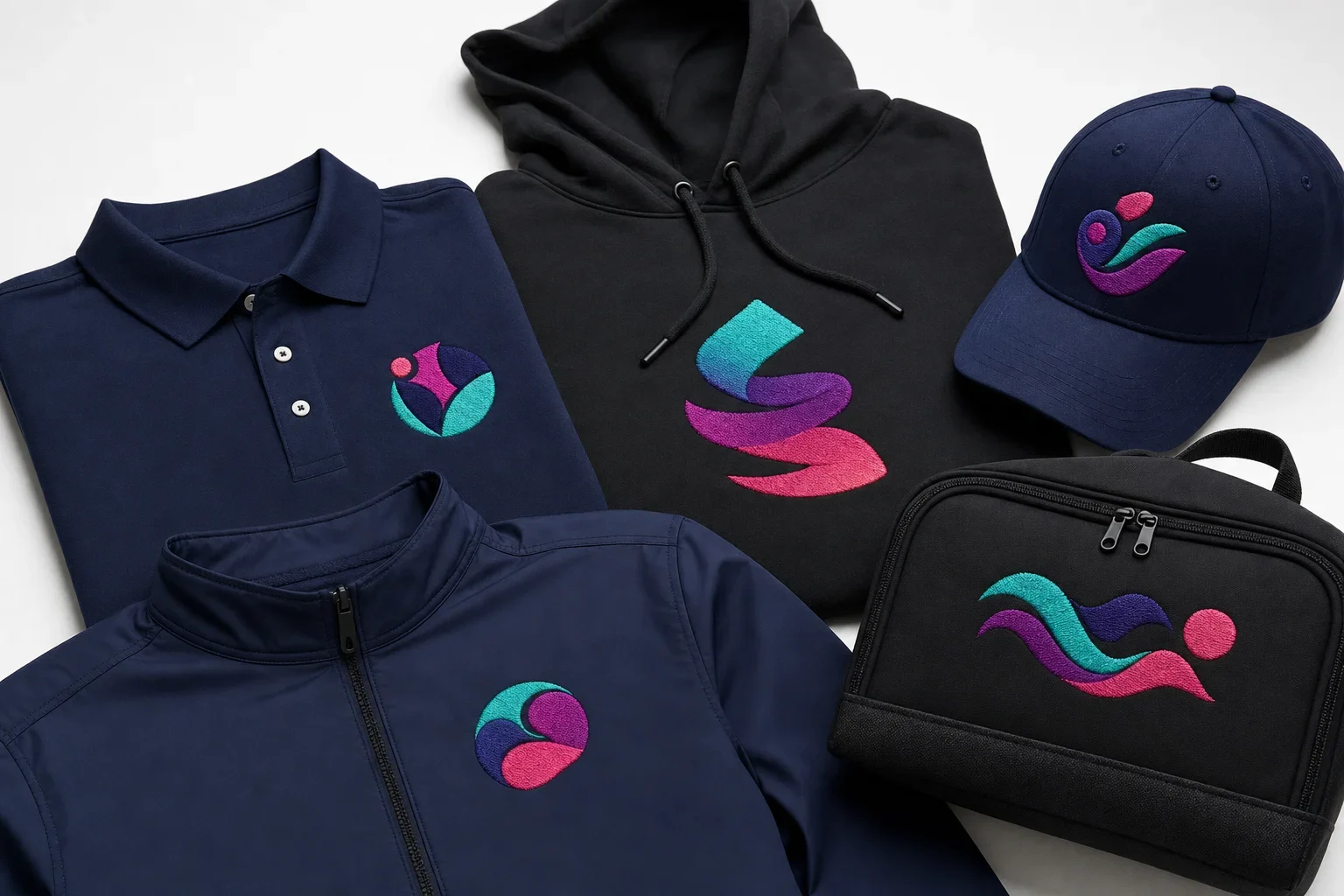
Full color embroidery still uses thread and stitches. That gives it texture and dimension, but it also means the design must be translated into stitch paths. The final result will look embroidered, not printed.
That is usually the point. Full color embroidery is not trying to be a flat printed graphic. It is trying to create a more colorful stitched version of a design.
Full Color Embroidery vs Full Color Printing
One is stitched. One is printed. They create different finished looks.
Full Color Embroidery
- Uses thread and stitches
- Raised, textured finish
- Premium apparel feel
- Still limited by stitch detail
Full Color Printing
- Uses ink, dye, or transfer material
- Flatter printed finish
- Better for photo-style artwork
- Can handle more tiny visual detail
When Full Color Embroidery Works Best
Full color embroidery works best when you want the premium feel of embroidery but need more color flexibility than traditional embroidery offers.
It can be useful for logos with color transitions, gradients, dimensional icons, colorful brand marks, mascots, badges, patches, and artwork that would lose too much character if simplified into only a few thread colors.
It is also useful when the item itself should feel more elevated than a printed garment.
Good Fit for Full Color Embroidery
Full color embroidery works best when colorful artwork still needs a premium stitched feel.
Colorful Logos
Useful when the brand mark has more color variation than standard embroidery can easily support.
Premium Apparel
Great for polos, jackets, quarter zips, vests, hats, and employee gifts when available.
Gradient Effects
Can help create color transitions that traditional thread colors may not reproduce smoothly.
Retail-Inspired Gifts
Good for apparel that should feel more polished and less like standard printed swag.
When Full Color Embroidery May Not Be the Best Choice
Full color embroidery is not the right answer for every design. If the artwork is extremely detailed, photographic, filled with tiny text, or needs exact print-like reproduction, a print method may still be better.
Embroidery, even full color embroidery, has physical limitations. Thread has thickness. Stitches need space. Fabric moves. Very small details can still disappear or become unclear.
It may also not be available on every product or every order. Product compatibility, supplier capabilities, machine availability, quantity, and timeline all matter.
Potential Limits of Full Color Embroidery
It is more flexible than traditional embroidery, but it is still embroidery.
Tiny Text
Very small lettering can still become unreadable when stitched.
Photo Detail
Photographs and highly detailed artwork may be better suited for full color printing.
Availability
Not every product, supplier, or order quantity supports full color embroidery.
Exact Color Matching
Color results can vary by thread, fabric, technology, lighting, and production process.
Artwork Still Matters
Full color embroidery can be more forgiving with color than traditional embroidery, but artwork quality still matters.
A blurry logo, low-resolution image, tiny detail, or overly complex design may not stitch cleanly. The artwork still needs to be reviewed, digitized, and adjusted for embroidery.
Digitizing is especially important because the file must tell the embroidery machine how the design should stitch. Stitch direction, density, underlay, color transitions, and small details all affect the final result.
Full color does not fix bad artwork
A low-quality logo will not automatically become crisp because it is being embroidered in full color. Clean artwork, proper digitizing, and product review still matter.
Small Details, Gradients, and Text
Full color embroidery can help with gradients and color transitions, but it does not remove every embroidery limitation.
Tiny text is still challenging. Very thin lines can still need to be thickened. Small icons can still need simplification. A gradient may be possible, but it may not look exactly like the digital file on your screen.
The goal is to create a strong embroidered interpretation of the artwork, not necessarily a perfect printed copy.
What May Need Adjustment?
Some artwork details still need embroidery-friendly review.
Small Text
May need to be enlarged, removed, or replaced with a simpler mark.
Thin Lines
May need to become thicker so they can stitch cleanly.
Gradients
May need special digitizing and may still appear different than a printed gradient.
Tiny Icons
May need simplification so details do not collapse in thread.
What Products Work Well With Full Color Embroidery?
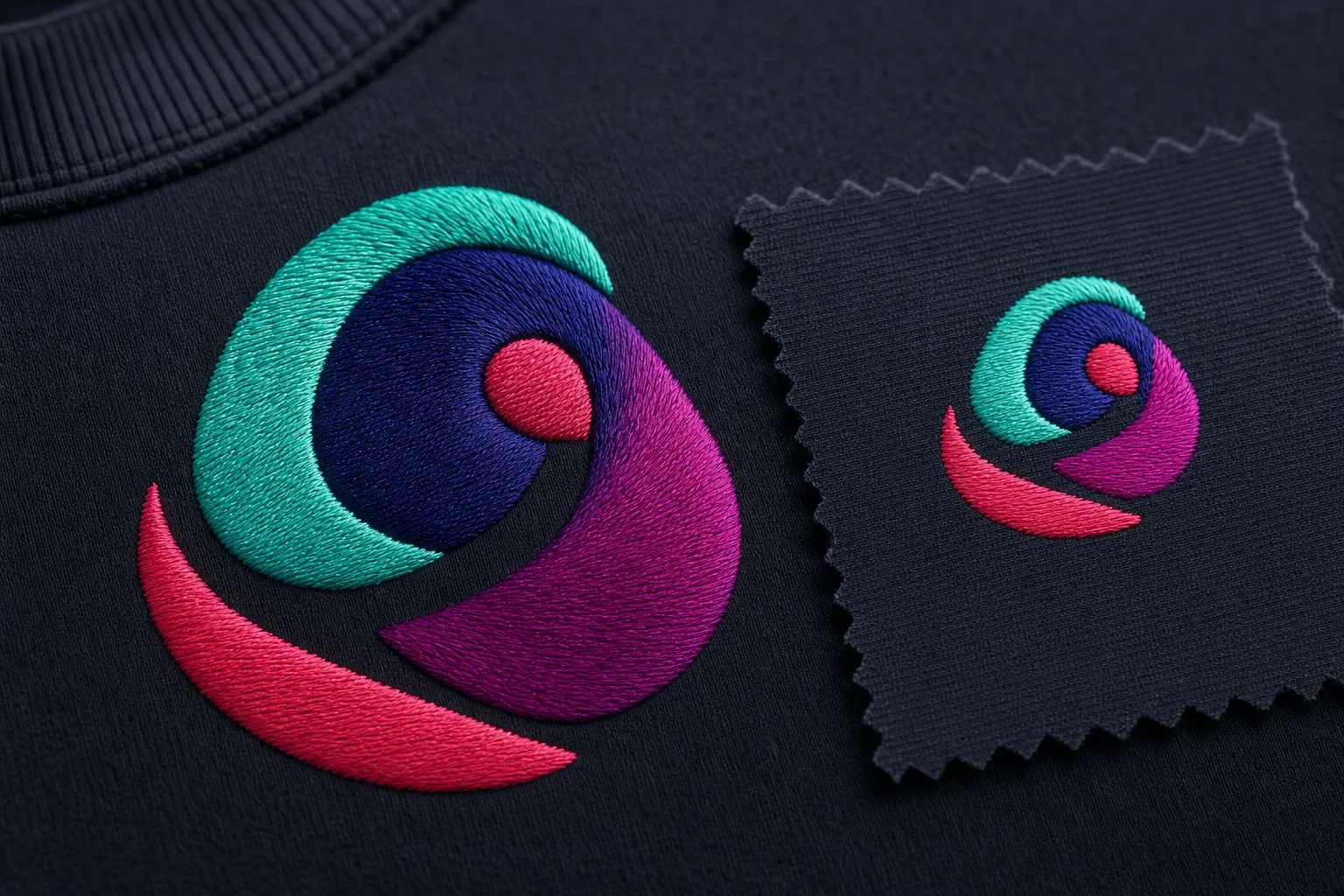
Full color embroidery is usually considered for apparel and soft goods where embroidery already makes sense. That may include polos, jackets, quarter zips, hats, vests, bags, patches, and premium employee gifts.
Availability will depend on the supplier and product. Some items may support standard embroidery but not full color embroidery. Some may support full color embroidery only in certain imprint areas or quantities.
Potential Product Fits
Availability varies, but these are common places where colorful embroidery may make sense.
Polos
Useful for colorful logos that still need a professional left chest look.
Jackets
Good for premium apparel, employee gifts, and client-facing uniforms.
Hats
Works when the logo is colorful but still simple enough for headwear decoration.
Bags
May work for premium totes, backpacks, pouches, and soft goods when available.
Patches
Can be useful when colorful embroidery is desired on a patch-style decoration.
Employee Gifts
Great for apparel that should feel more retail-inspired and premium.
Full Color Embroidery for Employee Gifts
Full color embroidery can be especially interesting for employee gifts because it can make apparel feel more elevated and less generic.
Employees often appreciate apparel that looks like something they would buy or wear outside work. A colorful embroidered mark can feel more premium than a flat print, especially when the logo placement is subtle.
For employee apparel, consider tone-on-tone embroidery, sleeve embroidery, back yoke placement, small chest embroidery, or a more refined colorful embroidered logo instead of a large front print.
Employee Gift Uses
Full color embroidery can support colorful branding without making apparel feel too promotional.
Premium Hoodies
A small colorful embroidered mark can feel more retail-inspired than a large print.
Quarter Zips
Great for professional employee gifts with a polished logo treatment.
Jackets
Useful for outdoor teams, corporate gifts, field staff, and milestone awards.
Caps
Colorful embroidery can work well when the artwork is simplified for the small area.
Full Color Embroidery vs Patches
Sometimes a colorful embroidered look may be achieved with a patch rather than direct embroidery on the garment. Patches can be embroidered separately and then applied to apparel, bags, hats, or other products.
Patches may be useful when the artwork needs more structure, a badge-like look, or a decoration that can be applied to multiple product types.
Direct embroidery and patches each have their own advantages. The best choice depends on the product, artwork, quantity, desired finish, and supplier capabilities.
Direct Embroidery vs Patch
Both can create a premium stitched look, but they are applied differently.
Direct Embroidery
- Stitched directly into the item
- Great for polos, hats, jackets, and bags
- Clean professional look
- Product compatibility matters
Patch
- Created separately, then applied
- Badge-like appearance
- Can add structure to colorful artwork
- Useful across multiple product types
Color Matching and Full Color Embroidery
Full color embroidery can offer more color flexibility than standard embroidery, but exact color matching should still be discussed before production.
Thread, fabric, lighting, dyeing technology, and stitch density can all affect how colors appear. A color on a computer screen may look different once it is stitched into fabric.
If your brand colors are strict, mention that early so the artwork and production options can be reviewed.
Color expectations matter
Full color embroidery can create more colorful results, but it is still a physical decoration method. Color may vary depending on thread, fabric, lighting, and production process.
Cost and Availability
Full color embroidery is a newer and more specialized option, so it may not be priced the same as standard embroidery.
Cost can depend on the product, stitch count, decoration size, artwork complexity, digitizing, equipment, supplier, and quantity. Availability may also vary by product category, garment type, production facility, and timeline.
For some orders, standard embroidery may be the better value. For other orders, especially premium apparel or colorful brand marks, full color embroidery may be worth considering.
What Affects Full Color Embroidery Cost?
Specialized embroidery can involve more variables than standard logo stitching.
Full Color Embroidery vs Standard Embroidery vs Printing
When choosing a decoration method, it helps to think about what matters most: premium feel, color detail, artwork accuracy, cost, or product compatibility.
Which Method Should You Consider?
The right method depends on the artwork and the finished look you want.
Standard Embroidery
Best for clean logos, professional apparel, hats, polos, jackets, and simple thread-color designs.
Full Color Embroidery
Best when you want a stitched premium look with more color variation than standard embroidery.
Screen Printing
Best for bold, flat, simple graphics on t-shirts, sweatshirts, and event apparel.
DTF or Transfers
Best for colorful artwork, detailed designs, and many apparel orders where full color printing is needed.
Common Full Color Embroidery Mistakes
Full color embroidery can be impressive, but it works best when expectations are realistic. It is not magic thread sorcery, even if it feels close.
- Expecting full color embroidery to look exactly like a printed photo
- Using tiny text that cannot stitch clearly
- Assuming every embroidered product supports full color embroidery
- Ignoring fabric texture, stretch, thickness, or garment construction
- Expecting perfect screen-to-thread color matching
- Using overly complex artwork without review or simplification
- Choosing a large stitch area without considering weight or stiffness
- Assuming full color embroidery is always better than standard embroidery or printing
Full Color Embroidery Checklist
Before choosing full color embroidery, use this checklist to decide whether it makes sense for your order.
Full Color Embroidery Checklist
A strong full color embroidery project should fit the artwork, product, and desired finish.
Artwork
Does the logo have color variation that would benefit from full color embroidery?
Detail Level
Is the design simple enough to translate into stitches clearly?
Product
Is the garment or item compatible with full color embroidery?
Placement
Will the embroidery size and location work well on the product?
Color Expectations
Are you comfortable with stitched color effects rather than exact print reproduction?
Review
Has the artwork been reviewed before production?
The Bottom Line
Full color embroidery is a newer decoration option that can create more colorful stitched designs than traditional embroidery. It can be a great choice when you want the premium texture of embroidery with more color variation, gradients, or visual interest.
It is not the same as full color printing, and it is not available on every product. Small text, fine details, fabric, placement, digitizing, cost, and supplier availability all still matter.
If you are not sure whether your logo is a good fit for full color embroidery, Purple Pie Promos can review your artwork and product options before production.
Full color embroidery adds color to a premium stitched look
It can be a great option when standard embroidery feels too limited, but the product still needs the texture and perceived value of stitching.
The best results come from matching the artwork, garment, embroidery method, and expectations before production begins.
Need help with full color embroidery?
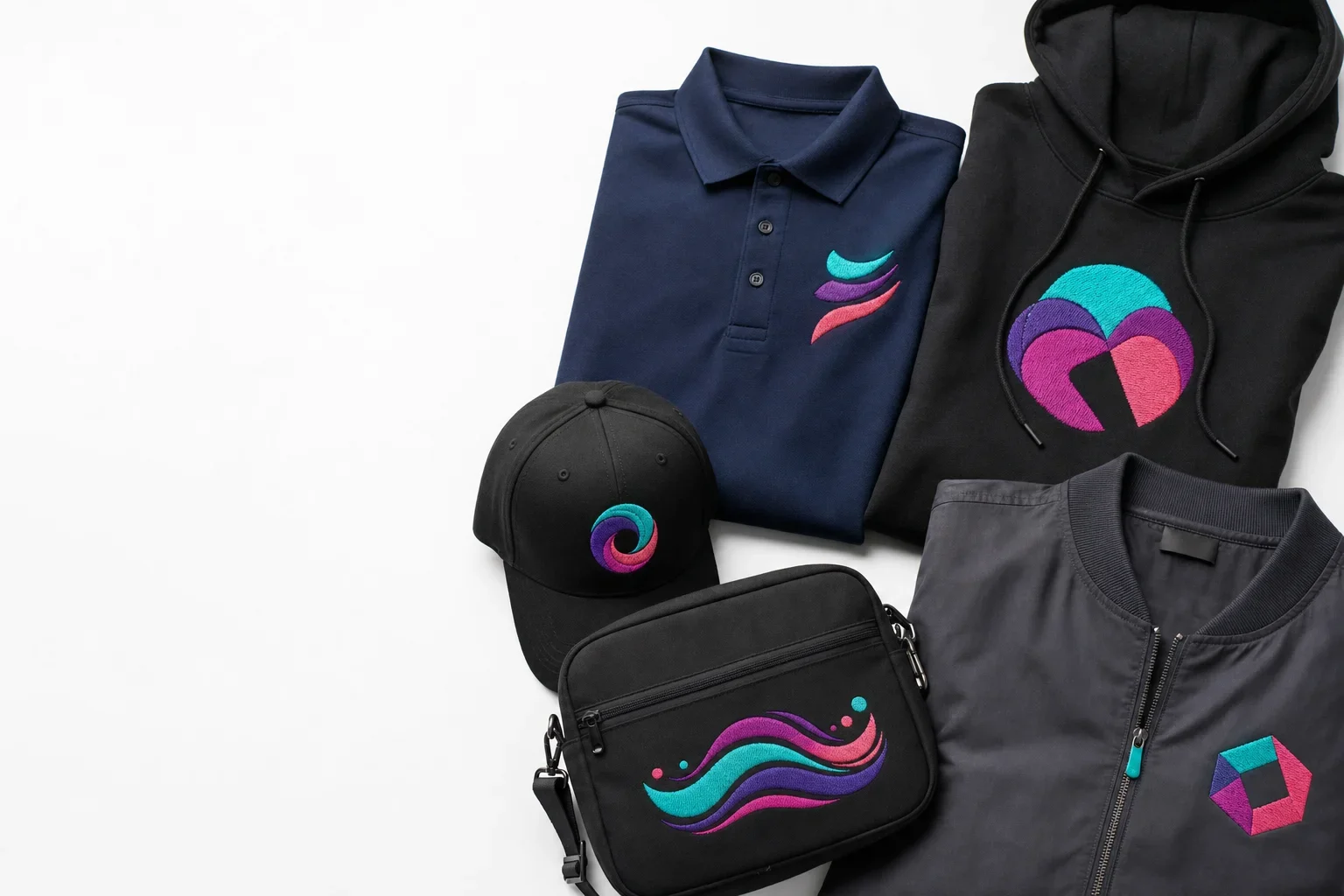
Purple Pie Promos can review your artwork, garment, placement, and decoration options to help determine whether full color embroidery, standard embroidery, screen printing, transfer, or another method makes the most sense.
Request Embroidery Help