

Quick Answer
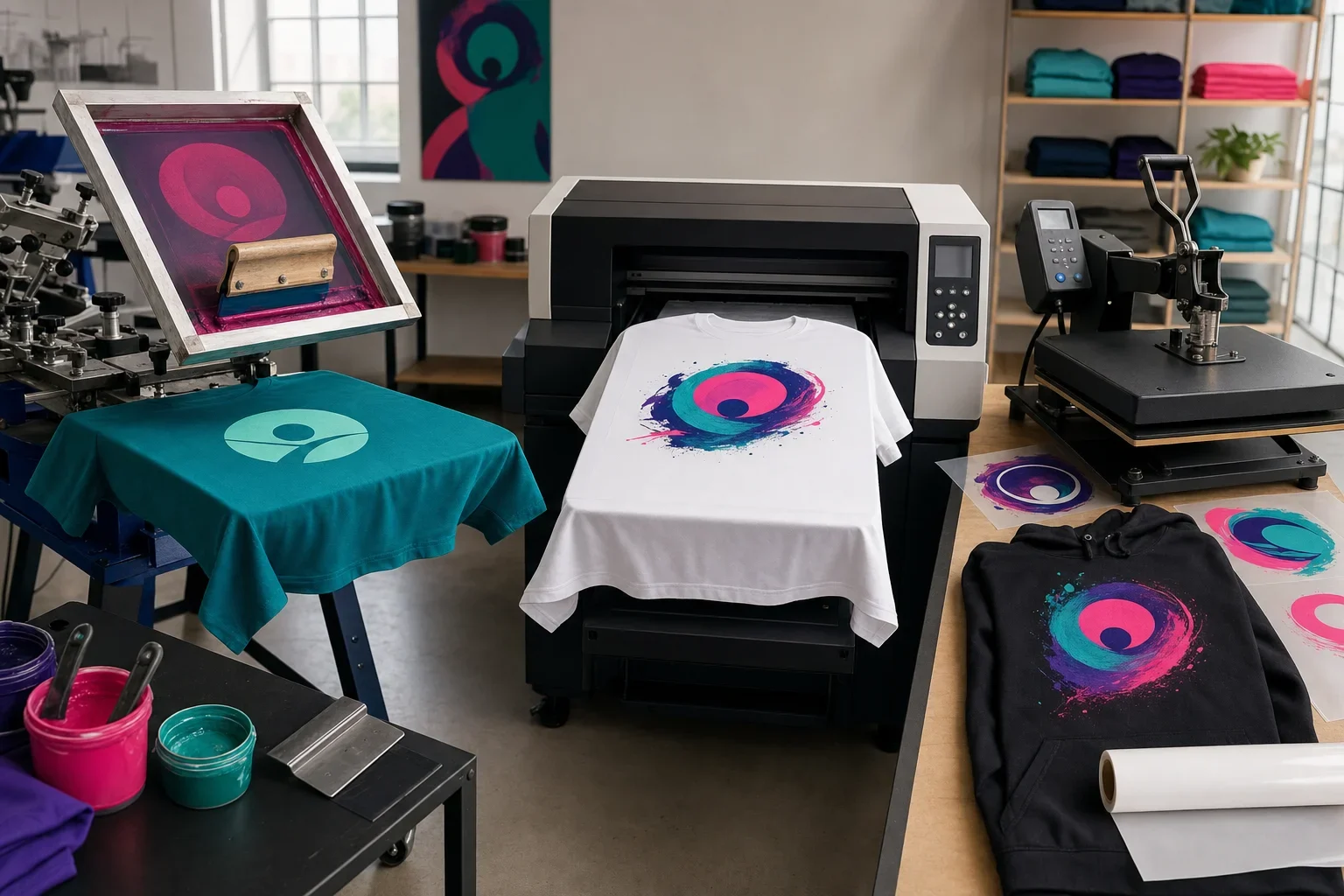
Screen printing is often best for simple designs, solid colors, and larger apparel orders. DTG, or direct-to-garment printing, is useful for detailed full color artwork printed directly onto compatible garments. DTF, or direct-to-film printing, uses a printed transfer that is applied to the garment and can work well for colorful designs, smaller quantities, and many fabric types. The best method depends on the artwork, garment, quantity, and desired finish.
If you are ordering custom t-shirts, hoodies, polos, or apparel, you may see decoration options like screen printing, DTG, and DTF. These methods can all put a logo or design on fabric, but they do it in different ways.
The confusing part is that there is no single “best” method for every order. A simple one-color logo on 500 shirts may be perfect for screen printing. A colorful illustration on a small run of shirts may make more sense with DTG or DTF. A dark hoodie with a detailed design may need a method that handles color, opacity, and fabric differently.
This guide explains how screen printing, DTG, and DTF compare, when each method works best, and why your artwork and garment choice matter so much.
You do not need to choose perfectly
When you order apparel from Purple Pie Promos, you do not need to know every technical detail before getting started. We review your artwork, garment, quantity, imprint area, and available decoration options before production. If the selected method is not the best fit for your design, we will help guide you toward an option that makes more sense.
What Is Screen Printing?
Screen printing is one of the oldest and most common methods for decorating apparel. It uses ink pushed through a mesh screen to apply a design to the garment.
Each color in the design may require its own screen, which is why screen printing is especially efficient for simple artwork with one or a few solid colors. It is commonly used for t-shirts, sweatshirts, tote bags, uniforms, event shirts, team apparel, and larger apparel orders.
Screen printing can produce bold, durable-looking prints, but it is not always the best option for highly detailed artwork, gradients, photographs, or designs with many colors.
Screen Printing at a Glance
A strong choice for simple, bold artwork and larger apparel quantities.
Best For
Simple logos, solid colors, large apparel orders, event shirts, uniforms, and bold designs.
Strengths
Bold color, familiar finish, strong durability, and cost efficiency on many larger runs.
Watch Out For
Many colors, gradients, photos, tiny details, and small orders with multiple print colors.
What Is DTG Printing?
DTG stands for direct-to-garment printing. With DTG, the artwork is printed directly onto the fabric using specialized garment printing equipment.
DTG is often used for detailed designs, full color artwork, illustrations, smaller apparel runs, and artwork that would be difficult or expensive to separate into individual screen print colors.
Because DTG prints directly onto the garment, it can have a softer feel than some transfer methods, especially on compatible fabrics. It is commonly associated with cotton or cotton-rich garments, but the best results depend on the specific fabric, shirt color, artwork, and equipment.
DTG at a Glance
A useful option for detailed full color artwork on compatible garments.
Best For
Detailed graphics, full color designs, small runs, illustrations, and artwork with many colors.
Strengths
Good for complex artwork, no need for separate screens, and can create a soft print feel.
Watch Out For
Fabric compatibility, garment color, pretreatment, color vibrancy, and large order efficiency.
What Is DTF Printing?
DTF stands for direct-to-film printing. With DTF, the artwork is printed onto a special film, prepared with adhesive powder, and then transferred onto the garment with heat and pressure.
DTF is popular because it can handle full color designs, fine detail, and a wide range of apparel types. It can be useful for small to medium orders, colorful logos, dark garments, and designs that may not be ideal for traditional screen printing.
Because DTF is a transfer, the print can sit more on top of the fabric compared with DTG. The feel depends on the design size, garment, transfer quality, and application.
DTF at a Glance
A flexible option for colorful designs and many apparel types.
Best For
Full color logos, dark garments, small or mid-size runs, detailed designs, and mixed apparel orders.
Strengths
Works with many fabrics, handles colorful artwork, and can be practical for smaller quantities.
Watch Out For
Print feel, large solid areas, heat sensitivity, garment texture, and long-term wear expectations.
Screen Printing vs DTG vs DTF: Main Differences
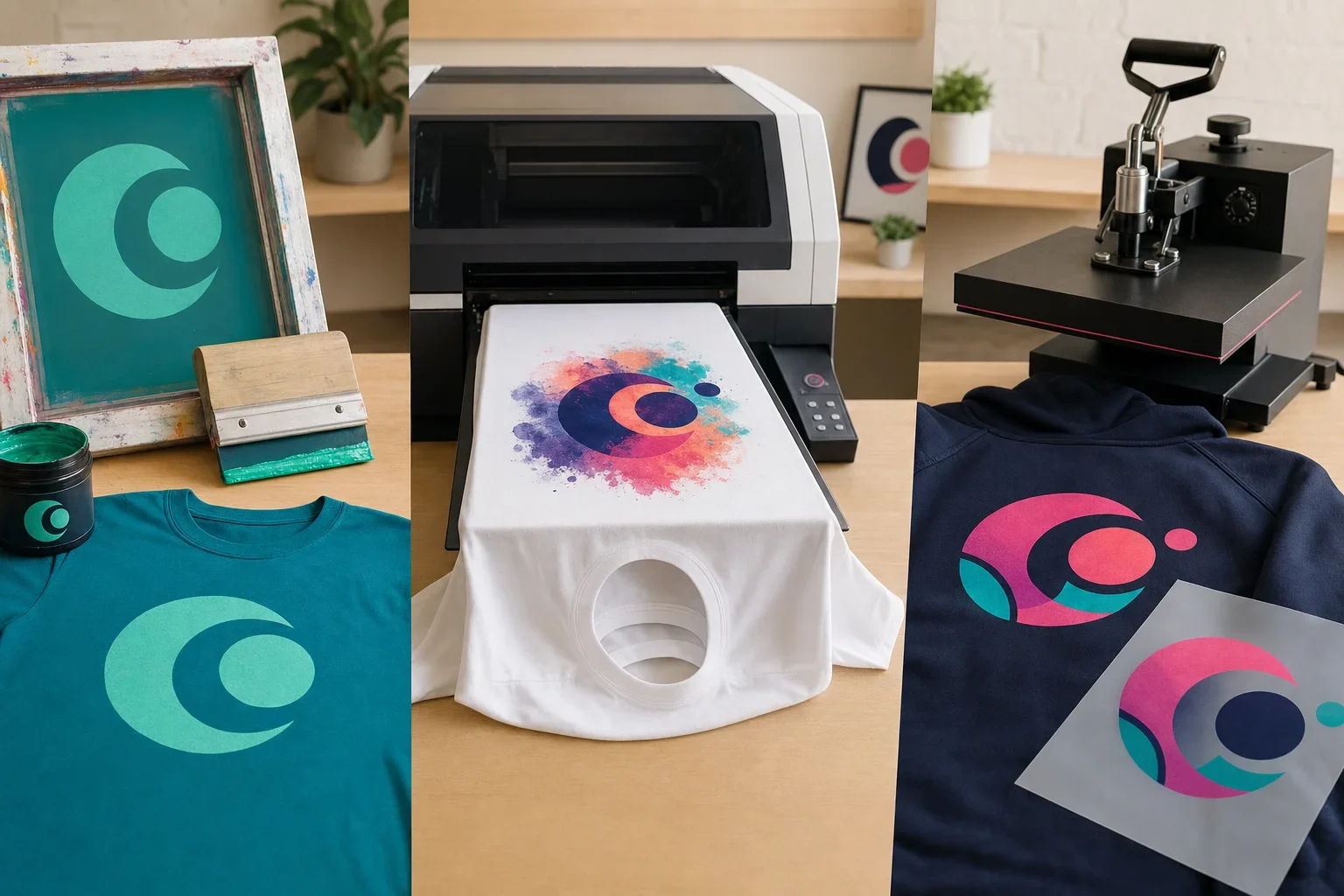
The main difference is how the design is applied to the garment. Screen printing uses screens and ink. DTG prints directly onto the garment. DTF prints the design onto film and transfers it to the garment.
That difference affects cost, feel, color capability, detail, garment compatibility, and the type of order each method is best suited for.
Screen Printing vs DTG vs DTF
A simple side-by-side view of how the methods are commonly used.
Screen Printing
Best for: Simple artwork, solid colors, larger quantities, event shirts, uniforms, and bold designs.
Consider: Each color may add setup and cost, so colorful designs can become more complicated.
DTG
Best for: Full color artwork, detailed graphics, small runs, and compatible cotton-rich garments.
Consider: Fabric, garment color, and pretreatment can affect the finished result.
DTF
Best for: Colorful designs, dark garments, small to mid-size orders, and many fabric types.
Consider: It is a transfer, so the feel can be different from ink printed directly into fabric.
Which Method Is Best for Simple Logos?
For simple logos with one or two solid colors, screen printing is often a strong choice, especially when the order quantity is high enough to make setup worthwhile.
Simple artwork can also work with DTF or DTG, but those methods are usually more helpful when the design has color complexity or the order quantity is smaller.
If your logo is clean, bold, and one color, screen printing may give you a classic, cost-effective result on many apparel items.
Simple Logo Rule of Thumb
Simple artwork usually gives you the most decoration flexibility.
Good Fit for Screen Printing
- One-color logo
- Solid shapes
- Clean text
- Larger quantity
May Need Another Method
- Many colors
- Gradients or shadows
- Photographic details
- Small quantity with complex art
Which Method Is Best for Full Color Artwork?
For full color artwork, DTG or DTF is often a better fit than traditional screen printing. These methods are designed to handle more color and detail without requiring a separate screen for every print color.
DTG can work well when the garment and artwork are compatible. DTF can be especially useful when you need colorful designs on a wider range of fabric types or darker garments.
Screen printing can handle multiple colors in some cases, but each additional color may increase setup, cost, and complexity. For very detailed or colorful designs, a full color method may make more sense.
Helpful way to think about it
If your design looks like a logo with a few solid colors, screen printing may work. If it looks more like an illustration, photo, gradient-heavy graphic, or colorful artwork, DTG or DTF may be the better conversation.
Which Method Is Best for Dark Shirts?
Dark shirts can be more complicated than light shirts because the ink or decoration needs enough opacity to stand out. If the print is not opaque enough, the shirt color can show through and make the design look dull.
Screen printing on dark garments may require a white underbase beneath the colors. DTG on dark garments may require pretreatment and a white base layer. DTF can work well on dark garments because the transfer includes the printed design and adhesive system needed to show up on the fabric.
This is one reason dark garments can sometimes cost more to decorate than light garments. The process may require additional steps, materials, or setup to make the design visible and accurate.
For more detail, read our guide on why dark shirts cost more to print.
Why Dark Shirts Need Extra Attention
Dark fabric changes how colors appear and may require additional production steps.
Which Method Feels Best on the Shirt?
Print feel depends on the method, design size, ink or transfer thickness, garment fabric, and how much of the design is solid coverage.
Screen printing can feel soft or heavier depending on the ink, number of layers, and size of the print. DTG often feels soft because the ink is printed directly onto compatible fabric, but results vary by garment and pretreatment. DTF can feel slightly more like a transfer sitting on top of the fabric, especially with larger solid designs.
If the hand feel is important, the artwork should be designed with that in mind. A giant solid rectangle will usually feel heavier than a smaller logo or a design with open space, no matter which method is used.
What Affects Print Feel?
The decoration method matters, but the design itself matters too.
Design Size
Larger prints usually feel more noticeable than smaller logos.
Solid Coverage
Big blocks of ink or transfer material can feel heavier than open artwork.
Fabric Type
Cotton, polyester, blends, fleece, and performance fabrics all interact differently.
Decoration Method
Screen print, DTG, and DTF each create a different surface feel.
Which Method Is Best for Small Orders?
For small apparel orders, DTG and DTF can often be practical because they do not require the same screen setup as traditional screen printing.
Screen printing may still be available for small orders, but it can become less cost-effective when the design has multiple colors or the quantity is low. Since screen printing often involves setup for each color, the setup cost is spread across fewer shirts.
If you need a small number of shirts with colorful artwork, DTG or DTF may be worth considering.
Which Method Is Best for Large Orders?
For larger orders with simple artwork, screen printing is often a strong option because the setup becomes more efficient as the quantity increases.
If the design is simple and the quantity is high, screen printing can provide a classic look and practical pricing. If the design is full color or highly detailed, DTF or another method may still be used depending on the artwork and garment.
The right answer depends on both quantity and design complexity. Large order plus simple artwork often points toward screen printing. Small order plus complex artwork often points toward DTG or DTF.
Quantity and Artwork Complexity
Quantity and design detail often work together when choosing a method.
Often Better for Screen Printing
- Larger quantity
- Simple artwork
- Solid colors
- Repeatable apparel order
Often Better for DTG or DTF
- Smaller quantity
- Full color artwork
- Detailed graphics
- Multiple garment styles
Which Method Is Best for Different Fabrics?
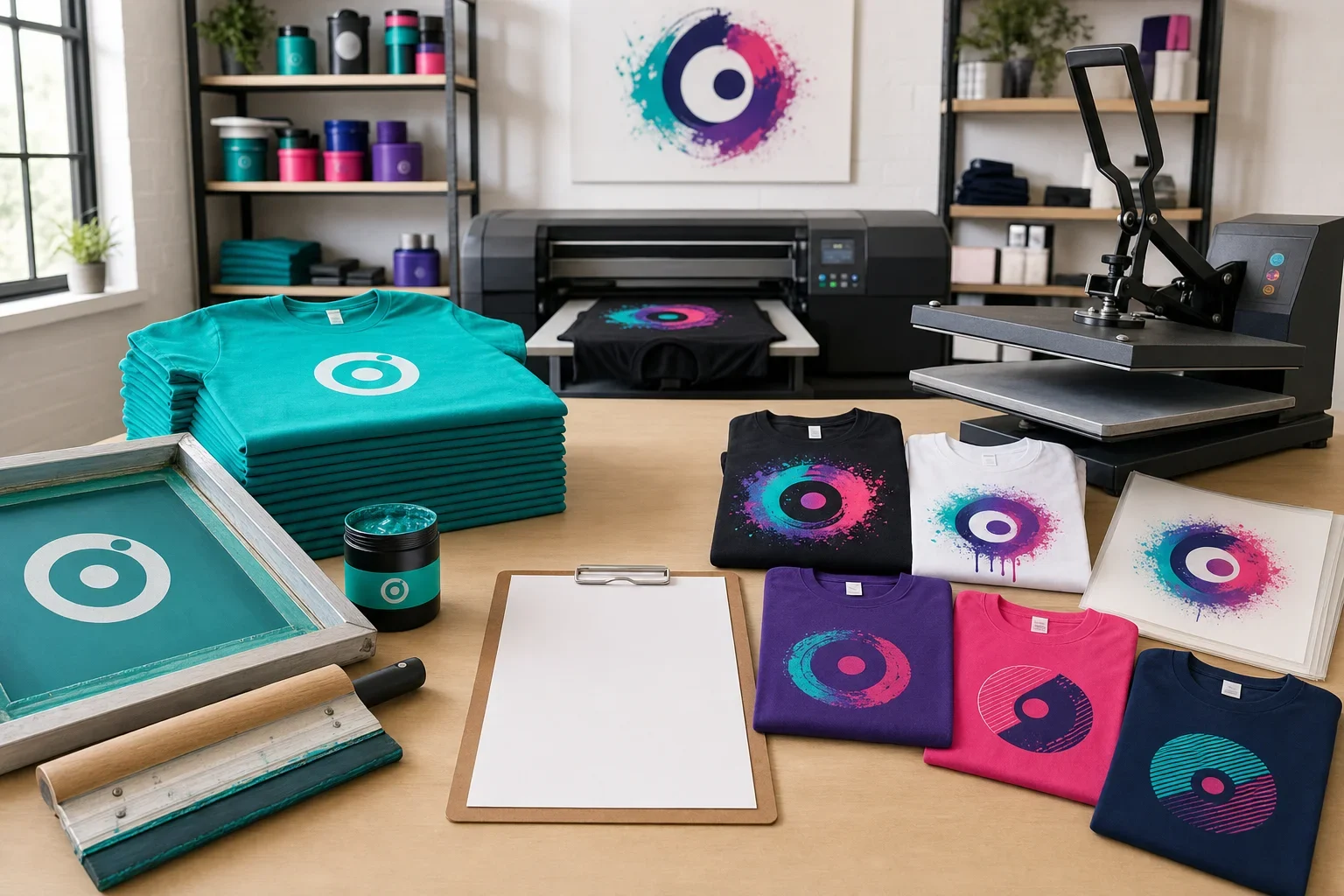
Fabric type can make a big difference. Cotton, polyester, fleece, performance fabrics, blends, and stretch materials do not all decorate the same way.
DTG is often associated with cotton or cotton-rich garments. DTF can work across many fabric types. Screen printing can work on many apparel fabrics, but ink type and garment material still matter.
Performance shirts, fleece, hoodies, and stretchy garments may require different approaches than basic cotton t-shirts.
Fabric Matters
The garment material can affect which decoration method works best.
Cotton T-Shirts
Often compatible with screen printing and DTG, depending on artwork and quantity.
Polyester Shirts
May need special consideration for heat, dye migration, and decoration compatibility.
Fleece and Hoodies
Can be screen printed, transferred, embroidered, or decorated depending on the garment and design.
Performance Apparel
Fabric stretch, heat sensitivity, and finish can affect the best decoration method.
What About Embroidery?
Embroidery is another popular apparel decoration method, but it is different from screen printing, DTG, and DTF. Instead of ink or transfer material, embroidery uses thread stitched into the garment.
Embroidery is often best for polos, hats, jackets, quarter zips, vests, and professional apparel. It is usually not the first choice for large full-front t-shirt graphics or detailed photo-style artwork.
If you are choosing between printed apparel and embroidered apparel, think about the item and the look you want. A left chest logo on a polo may look great embroidered. A colorful event shirt may make more sense printed.
For more detail, read our guide to embroidery vs screen printing.
Cost Differences Between Screen Printing, DTG, and DTF
Cost depends on quantity, artwork, garment, number of colors, print size, decoration location, and setup needs.
Screen printing can be cost-effective for larger orders with simple artwork because the setup cost is spread across more pieces. DTG and DTF can be practical for smaller orders or full color designs because they do not require a separate screen for every color.
However, there is no universal rule that one method is always cheaper. The right comparison depends on your exact order.
What Affects Apparel Printing Cost?
The method is only one part of the final price.
Common Mistakes When Choosing Apparel Decoration
Most apparel decoration mistakes happen when the artwork, garment, quantity, and method are not matched correctly.
- Choosing screen printing for artwork with too many colors or too much detail
- Expecting a full color illustration to price like a one-color logo
- Choosing DTG without considering garment fabric and color
- Choosing DTF without considering print feel or design size
- Using tiny text that may not print clearly
- Using a large solid print area that may feel heavy on the garment
- Ignoring how dark shirts may require extra steps
- Assuming the same method is best for every apparel style
Screen Printing vs DTG vs DTF Checklist
Before choosing an apparel decoration method, use this checklist to understand what matters most.
Apparel Decoration Checklist
A strong decoration choice should fit the artwork, garment, quantity, and desired result.
Artwork
Is the design simple, full color, detailed, photographic, or gradient-heavy?
Colors
How many colors are in the design, and do they need exact reproduction?
Garment
Is the item cotton, polyester, fleece, performance fabric, dark, light, or blended?
Quantity
Is this a small run, medium run, or larger apparel order?
Print Feel
Does the design need to feel soft, bold, durable, lightweight, or premium?
Review
Has the artwork and method been reviewed before production?
The Bottom Line
Screen printing, DTG, and DTF can all be good apparel decoration methods, but they are not interchangeable. Screen printing is often best for simple artwork and larger quantities. DTG is useful for detailed full color artwork on compatible garments. DTF is flexible for colorful designs, dark garments, and many fabric types.
You do not need to solve the decoration puzzle alone. Purple Pie Promos reviews your artwork, garment, quantity, and available decoration options before production so the method makes sense for your order.
Choose the method that fits the artwork and garment
The best apparel decoration method depends on your design, shirt color, fabric, quantity, and the finished look you want.
Simple logo, colorful artwork, dark hoodie, tiny order, giant order: each one may need a different printing path.
Need help choosing the right apparel decoration method?
Purple Pie Promos can help review your logo, garment, quantity, and decoration options so your custom apparel is matched with the method that makes the most sense.
Request Apparel Decoration Help